Policy Breach Does Not Exonerate Insurer From Third-Party Claims: Jharkhand HC
 Copy Link
 Share
 Save
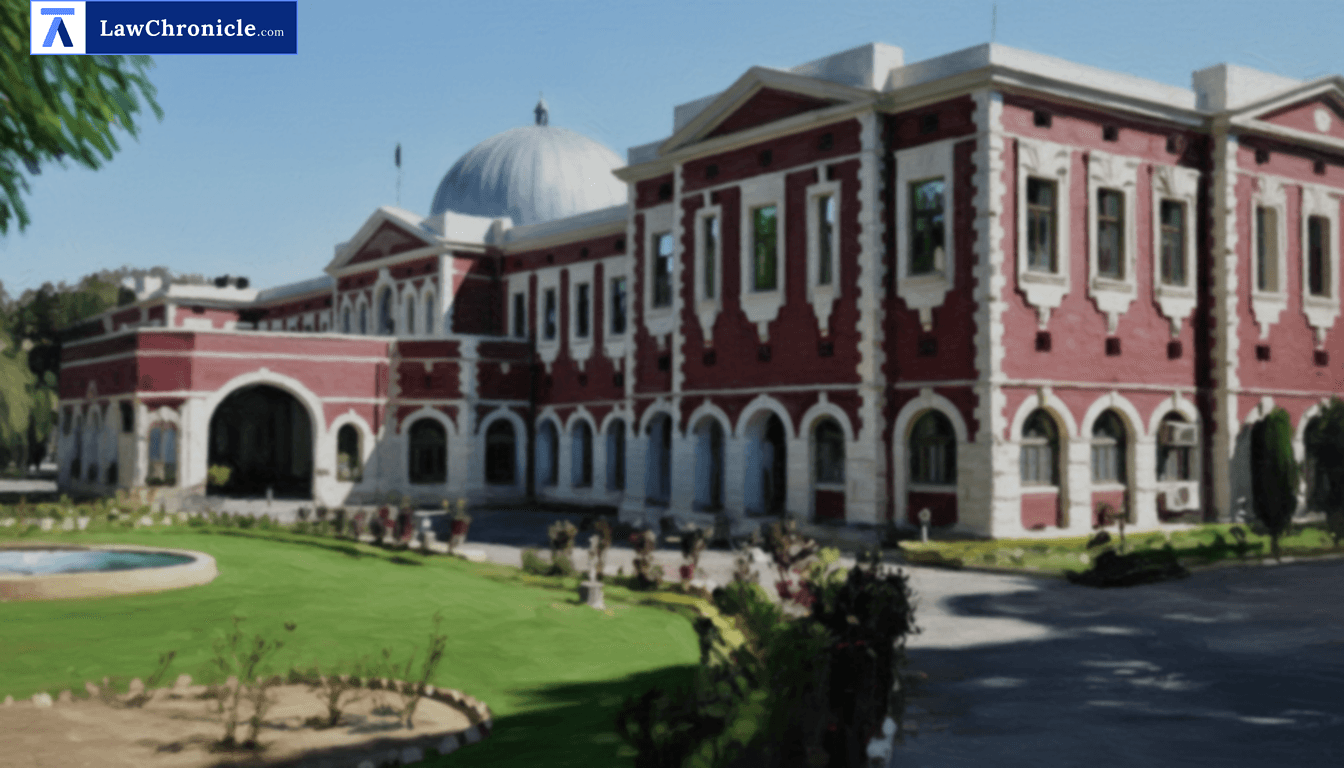
Breach of insurance conditions by a vehicle owner cannot automatically relieve the insurance company of its liability toward third-party accident victims. Upholding the protective umbrella of motor accident compensation laws, the High Court affirmed that insurers must satisfy awards to third parties first before recovering the sums from vehicle owners.
A single-judge bench presided over by Chief Justice M. S. Sonak delivered the judgment addressing cross-appeals filed by the insurer seeking complete exoneration and original claimants seeking enhancement of compensation awarded by the Claims Tribunal, Ranchi.
Key Takeaways
No Automatic Exoneration: Proved policy violations by vehicle owners do not automatically discharge an insurer's financial obligation toward third-party victims.
Pay and Recover Principle: Insurers must satisfy compensation awards to accident victims in the first instance, retaining the liberty to recover the paid amount from default vehicle owners.
Enhanced Financial Relief: Quantum of compensation under motor accident claims must strictly incorporate additions for future prospects and conventional heads, benefiting dependants.
Court's Analysis on Policy Breach and Compensation
The High Court reviewed the Tribunal's finding that the driver of the offending heavy vehicle lacked a valid and effective driving licence on the accident date, along with non-production of route permit and fitness certificate. However, addressing whether such violations grant absolute immunity to the insurance company, the Court held that third-party victims cannot be deprived of compensation due to contractual breaches beyond their control.
Referring to established legal principles laid down in National Insurance Co. Ltd. v. Swaran Singh ( "(2004) 3 SCC 297": 2004 CaseBase(SC) 114), the Court reiterated that complete exoneration is not the ordinary legal consequence of a proven policy breach. The Court noted that the beneficial welfare scheme of motor vehicle compensation cannot be defeated by restrictive contractual interpretations.
Evaluating the quantum of compensation, the Court applied National Insurance Co. Ltd. v. Pranay Sethi ( "(2017) 16 SCC 680": 2017 CaseBase(SC) 551) for future prospects additions and Sarla Verma v. DTC ( "(2009) 6 SCC 121": 2009 CaseBase(SC) 380) for calculating personal expense deductions. Furthermore, conventional damages were restructured in light of Magma General Insurance Co. Ltd. v. Nanu Ram @ Chuhru Ram ( "(2018) 18 SCC 130": 2018 CaseBase(SC) 597).
The Court, in its reasoning, observed: "Victims of road accidents cannot be forced to suffer because of terms in the insurance contract over which they have no control. The beneficial scheme for obtaining some compensation with relative ease and promptitude cannot be frustrated by such strenuous interpretation."
The Court has the following directions:
"The appellant-Insurance Company shall satisfy the enhanced awards at the first instance and shall be entitled to recover the amount from the owner of the truck in accordance with the liberty already granted by the Tribunal and affirmed by this Court.
The direction of the learned Tribunal for deposit of a sum of Rs. 2,00,000/- each in the names of the two minor children of late Somra Tirky (M.A.C. Case No. 164 of 2011) in a Nationalised bank under a fixed deposit scheme, until they attain majority, is hereby affirmed.
The appellant-Insurance Company is directed to deposit the enhanced amounts before the learned Tribunal within eight weeks from today, after due intimation to the learned counsel for the original claimants. Upon such deposit, the learned Tribunal shall permit the claimants to withdraw the amounts in accordance with law.
The learned counsel for the claimants shall furnish the necessary identity and bank particulars before the learned Tribunal for facilitating disbursement of the amount."
Ratio
A proved breach of insurance policy conditions by the insured vehicle owner does not automatically exonerate the insurer from its statutory liability toward third-party accident victims; the insurer remains obligated to satisfy the third-party award in the first instance, subject to its right of recovery from the vehicle owner.
Background
The dispute arose from a fatal road accident on March 11, 2008, involving a truck insured by National Insurance Company Ltd., resulting in the deaths of jeep driver Somra Tirky and khalasi Bishu Lakra. The Claims Tribunal awarded Rs. 7,60,000/- to Somra Tirky's dependants and Rs. 4,17,000/- to Bishu Lakra's dependants, allowing the insurer to recover the amount from the truck owner due to driver licence infirmities.
The insurer appealed for total exoneration from liability, while the legal heirs filed appeals seeking enhancement of compensation. The High Court dismissed the insurer's appeals and allowed the claimants' appeals, enhancing the overall compensation to Rs. 13,01,000/- in Somra Tirky's case and Rs. 7,15,000/- in Bishu Lakra's case, with interest maintained at 7.5% per annum from the date of filing of claim petitions.
Case Details:
Case No.: M. A. No. 381 of 2017
Neutral Citation: 2026:JHHC:26075
Case Title: Batiya Orain and Anr. v. The Divisional Manager, National Insurance Company Ltd. and Anr.
Appearances:
For the Petitioner(s): Mr Nikhil Ranjan, Advocate
For the Respondent(s): Mr Alok Lal, Advocate, Mr Santosh Kumar, Advocate
Source: 2026 CaseBase(JHKD) 2723
Similar Articles

 Breaking News