"Preserve Child’s Magical World": Supreme Court Clarifies Unwed Mother's Child Custody Rights
 Copy Link
 Share
 Save
Who has legal custody when parents are unmarried? Prioritizing a minor child's developmental well-being over parental squabbles, the Supreme Court has ruled that an unwed mother possesses a superior prima facie claim to the interim custody of a child of tender age. Resolving a high-conflict transnational dispute, the Apex Court affirmed that procedural and jurisdictional hurdles must yield to the welfare of the child under parens patriae jurisdiction.
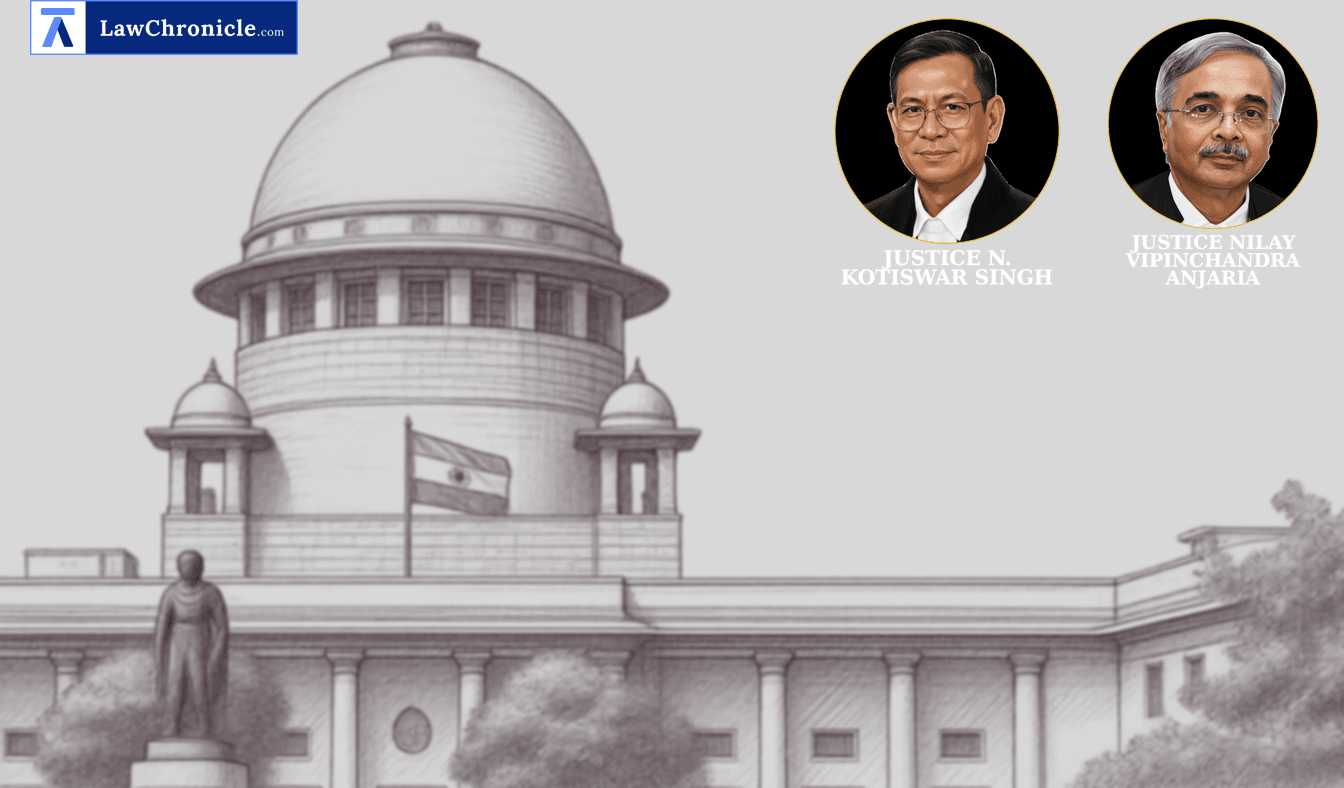
A bench comprising Justice Nongmeikupam Kotiswar Singh and Justice N.V. Anjaria exercised extraordinary powers under Constitution of India, 1950 to resolve an interim custody battle over a four-year-old child between a German mother working in Singapore and an Indian father practicing law in New Delhi. The Bench was considering a Special Leave Petition arising out of habeas corpus proceedings before the Bombay High Court at Goa, while parallel guardianship proceedings were pending before a Family Court in Delhi.
Key Takeaways
Unwed Mother's Child Custody Right: An unwed mother holds a stronger prima facie custodial claim over a young child under common law and international jurisprudence.
Primacy of Parens Patriae Jurisdiction: Procedural laws and jurisdictional disputes must yield to the child's paramount welfare during custody conflicts.
Mandatory Mirror Orders: Transnational relocation requires securing a 'mirror order' from the foreign court to protect the visitation rights of the non-custodial parent.
Interlocutory Nature of Custody Orders: Custody arrangements are dynamic and interlocutory, evolving alongside the child's changing developmental needs.
Unmarried Parent's Custody Rights
In its comprehensive analysis, the Supreme Court observed that interim child custody determination must be tested against the triple test of a prima facie case, balance of convenience, and irreparable harm, viewed exclusively through the lens of the child's best interests. Relying on expert assessments conducted by NIMHANS, Bengaluru, the Court stressed that separating a child of tender age from a loving maternal bond risks long-term psychological harm. The Bench observed that "In light of the above well-settled principles, this Court must approach the dispute only from the lens of the best interests of the child. Given the lack of cooperation of the parents with each other as to an interim arrangement during the pendency of the guardianship petition, this Court proposes to exercise its parens patriea jurisdiction to decide an interim arrangement to ensure the child is not exposed to multiple proceedings and the harms that thus follow."
Addressing the father's objections regarding the Court's jurisdiction in a habeas corpus petition when guardianship proceedings under the Guardians And Wards Act, 1890 are pending, the Apex Court held that parens patriae jurisdiction is independent of statutory frameworks. Citing M. Sudakar v. V. Manoharan ( "(2011) 1 SCC 484": 2010 CaseBase(SC) 551) and Nirmala v. Kulwant Singh & Ors ( "2024 INSC 370": 2024 CaseBase(SC) 77), the Supreme Court reiterated that child welfare overrides technical procedural limitations.
Ratio
In custody disputes concerning children born out of wedlock, the biological mother possesses a primary and preferential custodial claim over a child of tender age. Judicial determination of interim custody under parens patriae jurisdiction remains subservient strictly to the child's paramount welfare, overriding statutory, procedural, and territorial limitations.
Background
The case arose from a relationship between a German citizen working in Singapore and an Indian lawyer residing in New Delhi. A minor child was born out of wedlock in New Delhi in July 2022. Following the breakdown of their relationship, the father retained custody of the child in India and allegedly restricted the mother's access. The mother subsequently filed a habeas corpus writ petition before the Goa Bench of the Bombay High Court. While habeas corpus proceedings were pending, the father filed guardianship proceedings in Alipore, West Bengal, which were later transferred by consent to the Patiala House Family Court in New Delhi under the Code of Civil Procedure, 1908. The mother moved the Supreme Court seeking interim custody and permission to relocate the child to Singapore for schooling.
Evaluating precedents including Queen v. Maria Clarke, ABC v. State (NCT of Delhi) ( "(2015) 10 SCC 1": 2015 CaseBase(SC) 516), Vasudha Sethi v. Kiran V. Bhaskar, X1 v. State (NCT of Delhi), Gaurav Nagpal v. Sumedha Nagpal ( "(2009) 1 SCC 42 : (2009) 1 SCC (Civ) 1": 2008 CaseBase(SC) 201), Nil Ratan Kundu v. Abhijit Kundu ( "(2008) 9 SCC 413": 2008 CaseBase(SC) 58), Tejaswini Gaud v. Shekhar Jagdish Prasad Tewari ( "(2019) 7 SCC 42": 2019 CaseBase(SC) 441), Neethu v. Rajesh Kumar, Sharmila Velamur v. V. Sanjay ( "2025 SCC OnLine SC 482": 2025 CaseBase(SC) 77), Rohith Thammana Gowda v. State of Karnataka ( "(2022) 20 SCC 550": 2022 CaseBase(SC) 903), and Smriti Madan Kansagra v. Perry Kansagra ( "(2021) 12 SCC 289": 2021 CaseBase(SC) 215), the Supreme Court emphasized that welfare of the minor overrides statutory parental rights. Furthermore, citing Rajeswari Chandrasekar Ganesh v. State of T.N. and Sheetal Vasant Thakur v. Chirag Arora ( "2026 SCC OnLine SC 1110": 2026 CaseBase(SC) 572), the Supreme Court ruled that the availability of guardianship proceedings does not render a habeas corpus petition infructuous when urgent interim orders are required in the child's best interests.
Granting the mother permission to take the child to Singapore subject to stringent conditions, the Supreme Court directed the mother to deposit Rs. 1 Crore in the Court Registry and obtain a mirror order from a competent court in Singapore, ensuring protective visitation rights for the father under Smriti Madan Kansagra v. Perry Kansagra ( "(2021) 12 SCC 289": 2021 CaseBase(SC) 215).
Case Details:
Case No.: Criminal Appeal No. OF 2026 (@Special Leave Petition (Crl.) No. 11625 of 2026)
Neutral Citation: 2026 INSC 1248
Case Title: Helena Anna Maria Lersch v. State of Goa & Anr.
Source: 2026 CaseBase(SC) 10311
Subscribe to Our Newsletter for receiving Weekly Updates on your E-Mail
Similar Articles


 Breaking News