


Preventive Detention Vitiated If Based On Stale Material & Language Barrier: Jammu & Kashmir and Ladakh HC
 Copy Link
 Share
 Save
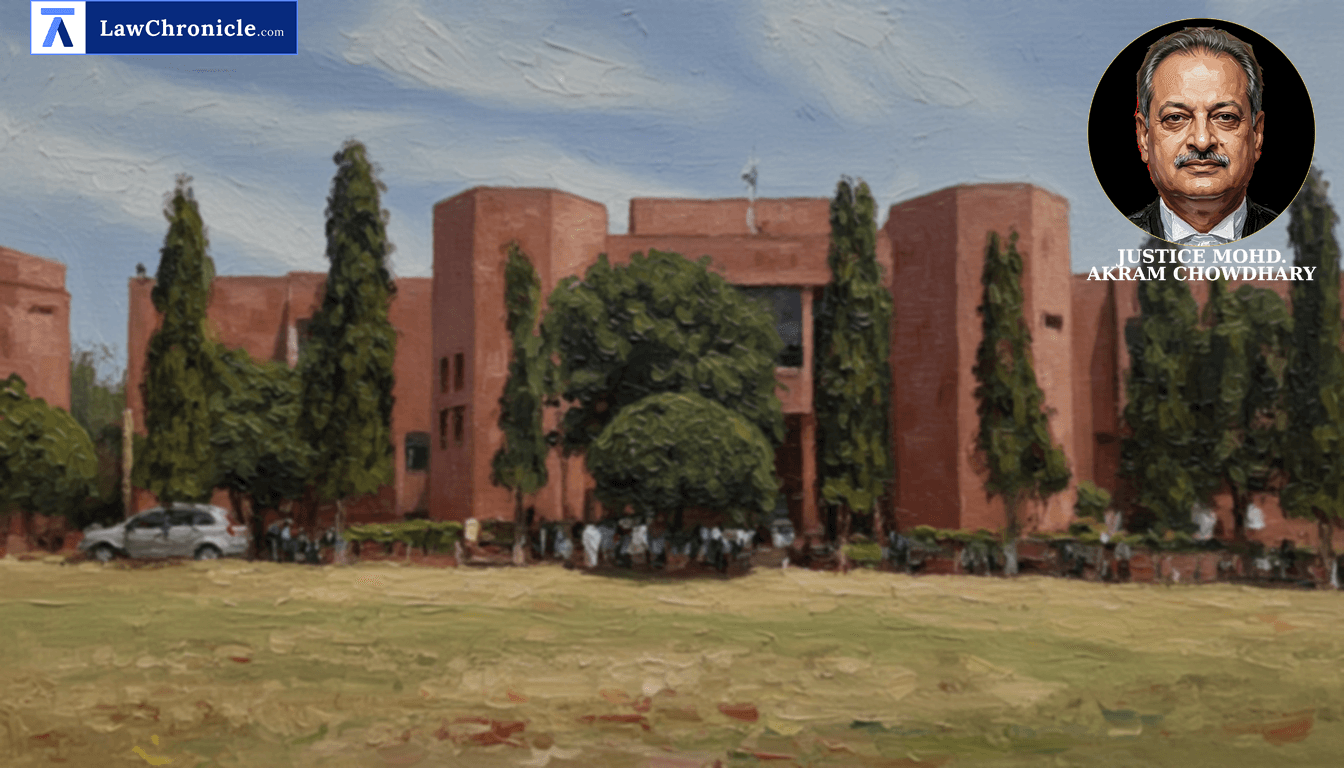
Quashing a preventive detention order based on old cases and general security apprehensions, the High Court of Jammu & Kashmir and Ladakh held that executive detention cannot survive without a live and proximate link to imminent threats. The Court further affirmed that failing to explain detention grounds in a language understood by the detainee directly violates constitutional guarantees under Constitution of India, 1950.
A single-judge bench of Justice M. A. Chowdhary quashed the detention order issued by the District Magistrate, Pulwama, against a local resident under the Jammu and Kashmir Public Safety Act, 1978. The Court scrutinized whether past criminal cases and preventive proceedings under ordinary criminal law could serve as a valid foundation for executive detention without fresh, specific material.
Key Takeaways
- Live Link Essential: Preventive detention orders based on stale criminal cases without a proximate link to future conduct are legally unsustainable.
- Language Barrier Violates Rights: Failure to effectively explain grounds of detention in a language the detainee understands invalidates the order under Constitution of India, 1950.
- Supply of Material Mandatory: Non-supply of relied-upon documents deprives the detainee of making a meaningful constitutional representation.
- General Apprehensions Insufficient: Sweeping references to public events like the Amarnath Yatra cannot substitute for individual-specific threat assessments.
Analyzing the scope of judicial review in executive detention matters, the Court highlighted that while the detaining authority's satisfaction is subjective, it must rest on relevant and contemporary material.
The Court, in its reasoning, observed: "The satisfaction to be arrived at by the detaining authority must not be based on irrelevant or invalid grounds. It must be arrived at on the basis of relevant material, material which is not stale and has a live link with the satisfaction of the detaining authority. The order of detention may refer to the previous criminal antecedents only if they have a direct nexus or link with the immediate need to detain an individual... In the absence of a clear indication of a causal connection, a mere reference to the pending criminal cases cannot account for the requirements of Section 3. It is not open to the detaining authority to simply refer to stale incidents and hold them as the basis of an order of detention."
Examining the constitutional mandate of communicating detention grounds, the bench reaffirmed the legal position established in Khudiram Das v. State of West Bengal ( "(1975) 2 SCC 81": 1974 CaseBase(SC) 273) regarding judicial scrutiny of subjective satisfaction. It further drew upon Sama Aruna v. State of Telangana ( "(2018) 12 SCC 150": 2017 CaseBase(SC) 307) and Khaja Bilal Ahmed v. State of Telangana ( "(2020) 13 SCC 632": 2019 CaseBase(SC) 1524) to emphasize that snapping the live link turns preventive detention into punitive action.
The Court issued the following directions:
"For the foregoing reasons, the petition is allowed. The detention order No. 33/DMP/PSA/25 dated 10.07.2025 passed by respondent No.2-Distrit Magistrate, Pulwama under the Jammu and Kashmir Public Safety Act, 1978, directing preventive detention of the petitioner herein on the ground that his activities are prejudicial to the security of the State, is hereby quashed. The respondents are directed to release the petitioner-detenue namely Suhail Fayaz Najar S/O Fayaz Ahmad Najar R/O Hariparigam, Tehsil Awantipora District Pulwama, forthwith from preventive detention, if his custody is not required in connection with any other case or proceedings in accordance with law."
Ratio
An order of preventive detention is rendered unconstitutional under Constitution of India, 1950 if it relies on stale criminal antecedents lacking a live, proximate causal link to anticipated future conduct, or if the relied-upon documents and grounds are not supplied and explained to the detainee in a language they fully comprehend.
Background
The petitioner had challenged the detention order dated July 10, 2025, passed by the District Magistrate, Pulwama, under the Jammu and Kashmir Public Safety Act, 1978. The state had detained him alleging that he was operating as an OGW for banned outfits LeT/JeM and posed a threat to state security and the Shri Amarnath Ji Yatra.
The petitioner submitted that he was previously implicated in a case under the Unlawful Activities (Prevention) Act, 1967 in 2021, where he was released on bail after charges were dropped, and was later bound down under Sections 107/151 of the Code of Criminal Procedure. He argued that there was no fresh material against him, the documents were never supplied, and the grounds were not explained in his native language. The State contended that the authority was aware of his bail and that preventive proceedings under the Code of Criminal Procedure do not bar invocation of the Jammu and Kashmir Public Safety Act, 1978.
Finding that the detaining authority failed to establish a fresh proximate cause or compliance with constitutional safeguards, the High Court quashed the detention order and ordered his immediate release.
Case Details:
Case No.: HCP No. 298/2025
Case Title: Suhail Fayaz Najar v. Union Territory of J&K & Ors.
Appearances:
For the Petitioner(s): Adv. Waseem Shamas
For the Respondent(s): GA Jehangir Ahmad Dar
Source: 2026 CaseBase(JK) 81
Similar Articles



 Breaking News


