


Gauhati HC quashes detention under NSA citing reliance on stale cases
 Copy Link
 Share
 Save
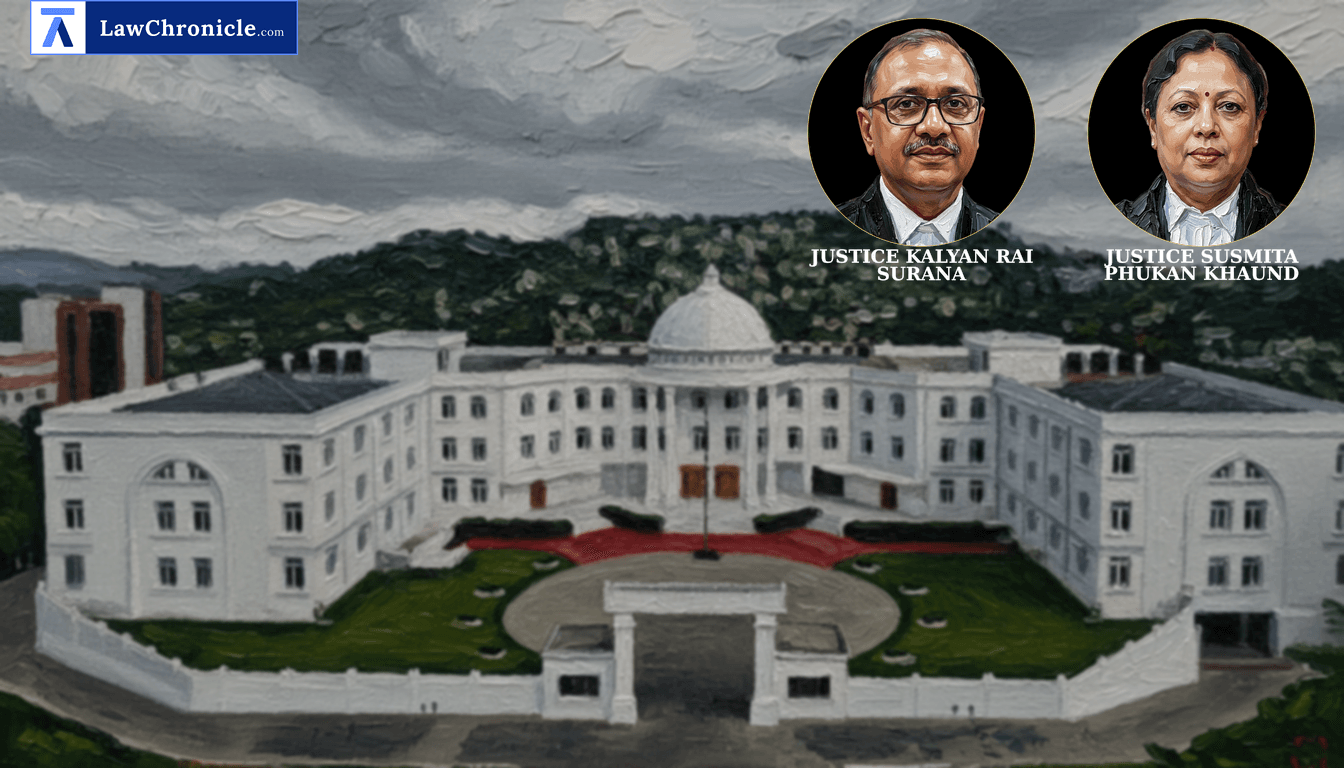
The Gauhati High Court has quashed the preventive detention of a social activist under the National Security Act, 1980, ruling that relying on stale criminal cases and withholding acquittal details constitutes a 'malice in law' that fatally violates constitutional safeguards. The Bench declared that the state cannot use preventive detention as a 'short cut' to bypass the due process of law, especially when the 'live and proximate link' between past activities and the necessity of detention has been snapped by significant delays.
A division bench comprising Justice Kalyan Rai Surana and Justice Susmita Phukan Khaund delivered this landmark judgment while hearing a habeas corpus petition filed under Article 226 of the Constitution of India. The petitioner challenged a detention order passed by the Government of Assam which alleged that his activities were prejudicial to public order and state security.
Key Takeaways
Disclosure of Acquittals Mandatory
Authorities must place all vital facts, including past acquittals or discharges in criminal cases, before the detaining authority to ensure a fair subjective satisfaction.
Stale Incidents Cannot Justify Detention
Old criminal cases and past foreign travels without a 'live and proximate link' to current threats cannot be the legal basis for depriving a citizen of their liberty.
Right to Effective Representation
Detenus have a constitutional right to submit successive representations, especially after gaining access to legal counsel and family, which authorities are bound to consider.
Short-cutting Criminal Law Forbidden
Preventive detention cannot be used as a substitute for ordinary criminal prosecution or as a way to circumvent the effects of a court-granted bail.
Court's Rationale on Stale Cases and Suppression of Facts
The Gauhati High Court observed that out of thirteen cases cited against the petitioner, he had been acquitted or discharged in ten. The sponsoring authority failed to disclose these outcomes to the detaining authority, which the Court found to be a fatal flaw. The Bench was prompted to express that "The lack of complete and full disclosure regarding the status of criminal cases is found to vitiate the detention order on account of malice in law, otherwise there was no other reason to withheld such vital information from the Detaining Authority. The Detaining Authority had also turned its blind eye towards the same by not calling for information about the status of those cases."
Furthermore, the Gauhati High Court noted that the allegations regarding foreign travels and remittances were vague and lacked any evidence of anti-India activities. It emphasized that repetitive foreign visits are not, by themselves, grounds for detention.
Failure to Consider Representations
The Gauhati High Court highlighted that the petitioner's second, more detailed representation, submitted after he was granted legal access by a previous court order, was ignored by the State. Relying on Satyapriya Sonkar v. Superintendent, Central Jail, Naini, the Bench held that the non-disposal of this representation was fatal to the detention.
Ratio
The subjective satisfaction of a detaining authority is vitiated if material facts, such as the acquittal or discharge of the detenu in referred criminal cases, are suppressed or ignored. Furthermore, the use of stale incidents without a proximate link to the detention's purpose, combined with a failure to consider a detenu's representation submitted after obtaining legal assistance, renders the preventive detention unconstitutional under Article 22(5).
Background
The petitioner, Pranab Doley, a social activist, was detained on July 30, 2026, under Section 3(2) of the National Security Act, 1980. The state justified the detention based on 13 criminal cases involving charges of public disorder and alleged suspicious foreign remittances. Doley argued that he was already in judicial custody when the order was passed and that the detention was an attempt to frustrate a bail order he had secured on July 29, 2026.
The petitioner relied on Dharamdas Shamlal Agarwal v. Police Commissioner & Anr. ( "(1989) 2 SCC 370": 1989 CaseBase(SC) 193) to argue that non-consideration of vital facts like acquittals vitiates the order. The Gauhati High Court agreed, noting that the state failed to provide relevant documents like charge-sheets and situation reports (SITREPs) to the detenu, thereby hindering his right to make an effective representation under Francis Coralie Mullin v. Administrator, Union Territory of Delhi & Ors. ( "(1981) 1 SCC 608": 1981 CaseBase(SC) 103). The petition was allowed, and the detention was quashed.
Case Details:
Case No.: W.P.(Crl.)/40/2026
Neutral Citation: 2026:GAU-AS:16313-DB
Case Title: Pranab Doley v. The Union of India and 5 Ors
Appearances:
For the Petitioner(s): Mr. S. Borthakur, senior counsel, Mr. D.K. Agarwala, Mr. S. Dey.
For the Respondent(s): Mr. R. K. D. Choudhury, DY. SGI, Mr. S. Chakraborty, CGC, Mr. D. Mozumdar, Addl. Advocate General, Mr. P. Sarmah, Addl. Sr. G.A.
Source: 2026 CaseBase(GAU) 1608
Similar Articles


 Breaking News


