


Previous Rejection of Condonation Delay Bar Subsequent Appeal: Calcutta HC
 Copy Link
 Share
 Save
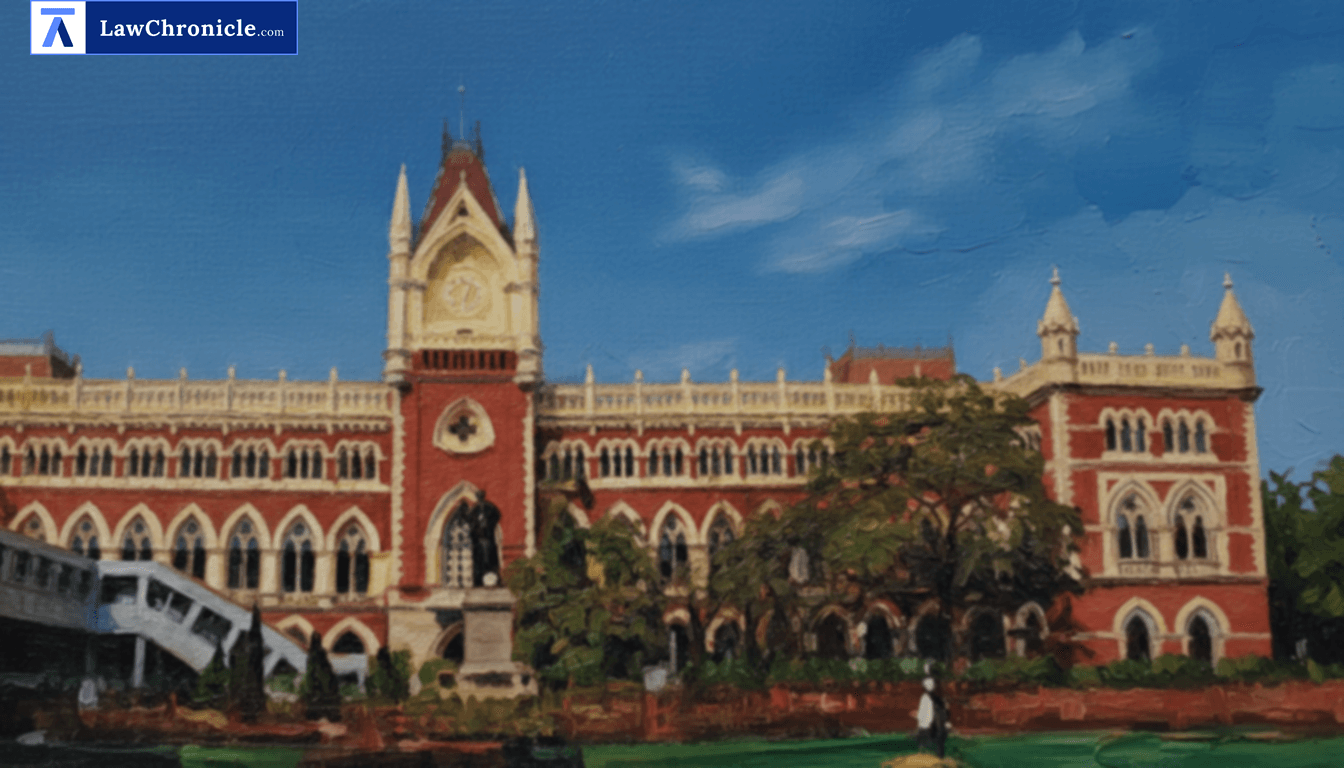
Litigants cannot resurrect dead claims by switching between parallel legal remedies once a court has already refused to condone delays for the same period. The Calcutta High Court has slammed the door on habitual defaulters, ruling that the finality of a delay condonation refusal up to the Supreme Court operates as res judicata, preventing the same period of negligence from being re-argued in a subsequent appeal.
Justice Sabyasachi Bhattacharyya and Justice Sandip Kumar De, sitting as a Division Bench, heard the matter concerning an inordinate delay of over 13 years (4938 days) in filing a first appeal. The appellant sought to justify this massive lapse by citing the pendency of a failed litigation under Order IX Rule 13 of the Code of Civil Procedure. The Court scrutinized whether the failure to get a delay condoned in a miscellaneous proceeding precludes a similar application in a statutory appeal against the same ex parte decree.
Key Takeaways
Res Judicata in Condonation
Once a delay for a specific period is refused to be condoned and affirmed by higher courts, it attains finality and cannot be reopened in a different proceeding for the same overlapping period.
Concurrent Not Consecutive Remedies
Remedies under Order IX Rule 13 and Section 96 of Code of Civil Procedure are simultaneous; waiting for the conclusion of one before filing the other does not automatically entitle a litigant to a condonation of delay.
Limits of Section 14 Protection
Following a failed Order IX Rule 13 application through all tiers of the judiciary does not attract the benefits of Section 14 of the Limitation Act, 1963 if the initial delay was already disbelieved.
No Shelter for Dilatory Tactics
Courts will not exercise discretionary powers to condone delays where the litigant's conduct demonstrates a lack of bona fides and a pattern of habitual default.
Court Rejects Distinction Between Miscellaneous and Appellate Condonation
The appellant argued that the grounds for condonation in the previous application were different and that the dismissal of a delay application in a miscellaneous case does not operate as res judicata for a regular appeal. The Court rejected this, noting that the texture of condonation remains identical for overlapping periods. The Bench observed that the initial delay between 2011 and 2015 had already been rejected by the Trial Court, the High Court, and the Supreme Court.
Regarding the interpretation of N. Mohan vs. R. Madhu ( "(2020) 20 SCC 302": 2019 CaseBase(SC) 3716), the Court clarified that while an appeal is maintainable after a failed Order IX Rule 13 application, it does not grant a license for unlimited delay. The Court, in its reasoning, observed: "Condonation, if refused, whether in respect of a miscellaneous case or an appeal, is equally binding on the parties... The delay for such period, having been refused to be condoned up to the Hon’ble Supreme Court, cannot be reargued, the appellant being barred by the principles of constructive res judicata (even if a different ground is now taken), otherwise by res judicata as well as the doctrine of issue estoppel."
Analysis of Precedents and Article 142
The Bench distinguished the present case from N. Mohan vs. R. Madhu ( "(2020) 20 SCC 302": 2019 CaseBase(SC) 3716), noting that the relief in the latter was granted "in the interest of justice," likely invoking powers under Constitution of India, which do not constitute a binding ratio decidendi. The Court noted that in N. Mohan vs. R. Madhu ( "(2020) 20 SCC 302": 2019 CaseBase(SC) 3716), the Supreme Court specifically warned that an unscrupulous litigant might lose considerable time for the plaintiff by pursuing remedies consecutively rather than simultaneously.
Ratio
When a court of competent jurisdiction refuses to condone a delay for a specific period and such order is affirmed by the highest court, the principle of res judicata and issue estoppel prevents the litigant from seeking condonation for the same overlapping period in a subsequent proceeding, regardless of whether the new proceeding is a miscellaneous application or a statutory appeal.
Background
The dispute originated from an ex parte decree passed on December 05, 2011. The appellant first filed an application to set aside the decree under Order IX Rule 13 of Code of Civil Procedure in September 2015, along with a Section 5 application under Limitation Act, 1963 to condone a 1300-day delay. That application was dismissed in 2024, and subsequent appeals to the High Court and a Special Leave Petition to the Supreme Court were also dismissed. A review petition was also rejected by the Apex Court.
Only after exhausting these remedies did the appellant file the present first appeal, now facing a total delay of 4938 days. The High Court found the appellant to be a "habitual defaulter" and held that citing the pendency of previous frivolous litigation does not constitute "sufficient cause." The Court dismissed the application for condonation of delay and consequently dismissed the appeal as time-barred.
Case Details:
Case No.: FAT 264 of 2025
Neutral Citation: 2026:CHC-AS:1449-DB
Case Title: Himangshu Saha Vs. Birendra Kumar Bhaumik, since deceased, represented by Smt. Pabitra Bhowmik and others
Appearances:
For the Petitioner(s): Mr. Aniruddha Chatterjee, Snr. Adv., Mr. Sounak Bhattacharya, Mr. Manik Lal Poddar, Mr. Anirban Saha Roy
For the Respondent(s): Mr. Debashis Roy, Snr. Adv., Mr. Somnath Maiti
Source: 2026 CaseBase(CAL) 2555
Similar Articles
 Breaking News


