


Statutory Embargo On Stay During Condonation Delay Is Directory Not Mandatory: Calcutta HC
 Copy Link
 Share
 Save
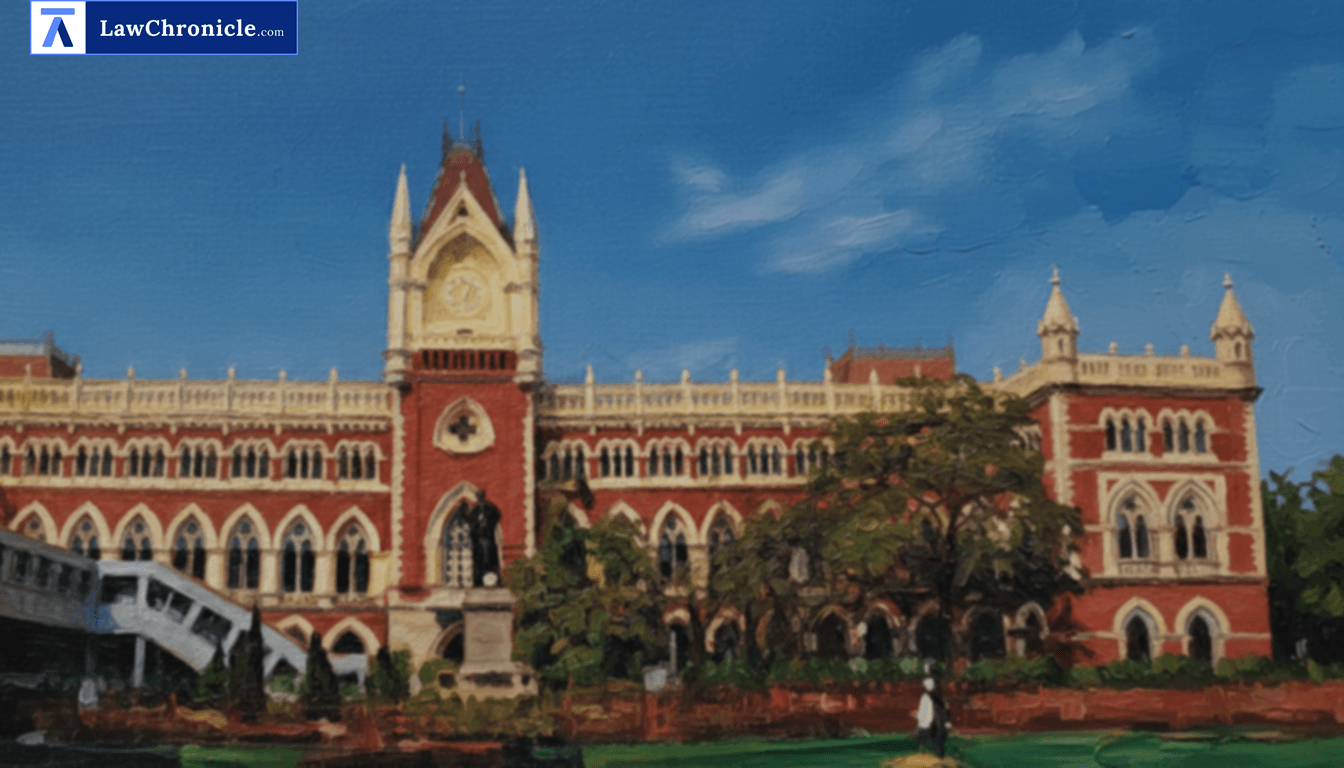
The Calcutta High Court has clarified that the procedural embargo under Code of Civil Procedure, 1908, which prevents a court from staying the execution of a decree during the pendency of a delay condonation application, is not an absolute prohibition. The Court ruled that while courts should ordinarily follow this rule, they possess inherent residuary powers to grant stays in exceptional and extraordinary circumstances to prevent inequitable outcomes.
A single-judge bench of Justice Hiranmay Bhattacharyya delivered the judgment while hearing a revisional application filed by defendants against a District Judge's order that had refused to stay execution proceedings due to the pendency of an application to condone a ten-year delay in filing an appeal.
Key Takeaways
Procedural Law as a Servant of Justice
The court reaffirmed that procedural prescriptions like Order 41 Rule 3A are meant to aid justice, not act as tyrants or obstructions to substantive rights.
Directory Nature of Order 41 Rule 3A(3)
The word "shall" in the provision is construed as directory rather than mandatory, allowing judges to act ex debito justitia in rare cases.
Exceptional Circumstances Required
A departure from the normal rule of not granting a stay before admitting an appeal is only permissible in extraordinary situations where the consequences of inaction would be wholly inequitable.
Execution Timelines Upheld
The ruling reinforces the Supreme Court's mandate that execution proceedings should generally be disposed of within six months, discouraging mechanical stay orders.
Court's Interpretation of Procedural Mandates
The Court analyzed the interplay between Section 96 and Order 41 Rule 3A of the Code of Civil Procedure, 1908. While acknowledging that a time-barred appeal cannot be heard on merits until the delay is condoned, the Court noted that a rigid application of the stay embargo could sometimes lead to irreversible injustice.
The Court, in its reasoning, observed: "The procedural law so dominates in certain systems so as to overpower substantive rights and substantial justice. The humanist rule that procedure should be the handmaid, not the mistress, of legal justice compels consideration of vesting a residuary power in Judges to act ex debito justitia where the tragic sequel otherwise would be wholly inequitable."
However, the Court cautioned that an order of stay should not be passed mechanically. It relied on Sushil Kumar Sen vs. State of Bihar ( "(1975) 1 SCC 774": 1975 CaseBase(SC) 42) and State of Punjab vs. Shamlal Murari to emphasize that procedural law is a "lubricant, not a resistant" in the administration of justice. In the present case, the Court found the petitioners' conduct including a ten-year delay and multiple unsuccessful collateral challenges did not warrant an exception.
The Court has following directions:
"C.O. 1261 of 2026 stands dismissed. There shall be, however, no order as to costs."
Ratio
Order 41 Rule 3A(3) of the Code of Civil Procedure, 1908, despite the use of the word 'shall', is directory and not mandatory. The Court may exercise its residuary power to stay execution of a decree during the pendency of a delay condonation application only in exceptional and extraordinary circumstances where the position would otherwise become irreversible or inequitable.
Background
The dispute arose from an ex parte decree for recovery of possession passed in 2012. The predecessor of the petitioners, Kanailal Mitra, initially sought to set aside the decree under Order 9 Rule 13 of the Code of Civil Procedure, 1908, but the application was dismissed for default in 2016. After years of litigation, including a dismissed objection under Section 47 of the Code of Civil Procedure, 1908, the petitioners filed a Title Appeal in 2022 with a delay of approximately 10 years.
During the pendency of the application for condonation of delay under Section 5 of the Limitation Act, the petitioners sought a stay of the Title Execution Case. The appellate court rejected the stay, citing the prohibition in Order 41 Rule 3A(3). The High Court reviewed the matter, citing Ram Ch. Sinha vs. Sm. Protiva Dutta and Durgapada Patra vs. Estate Officer, SER & Anr. to support the view that the prohibition is not absolute. However, looking at the petitioners' conduct and the precedent in Rahul S Shah vs. Jinendra Kumar Gandhi and others ( "(2021) 6 SCC 418": 2021 CaseBase(SC) 866) regarding the timeline for executions, the High Court held that the petitioners failed to make out an exceptional case for a stay. The Court also noted State of West Bengal vs. Somdeb Bandyopadhayay ( "(2009) 2 SCC 694": 2009 CaseBase(SC) 808) to reiterate that passing interim orders without condoning delay is generally impermissible.
Case Details:
Case No.: C.O. 1261 of 2026
Neutral Citation: 2026:CHC-AS:1682
Case Title: Rathin Mitra & Ors. Vs. Balai Chandra Mitra & Anr.
Appearances:
For the Petitioner(s): Mr. Gopal Chandra Ghosh, Sr. Adv., Mr. Samiran Ghosh, Ms. Rameshwar Sinha, advocates
For the Respondent(s): Mr. Debasish Roy, Sr. Adv., Mr. Snehasis Jana, Mr. Sukanta Das, advocates
Source: 2026 CaseBase(CAL) 2926
Similar Articles

 Breaking News


