


Principles of Natural Justice Mandatory for Stigmatic SPO Disengagements: J&K High Court
 Copy Link
 Share
 Save
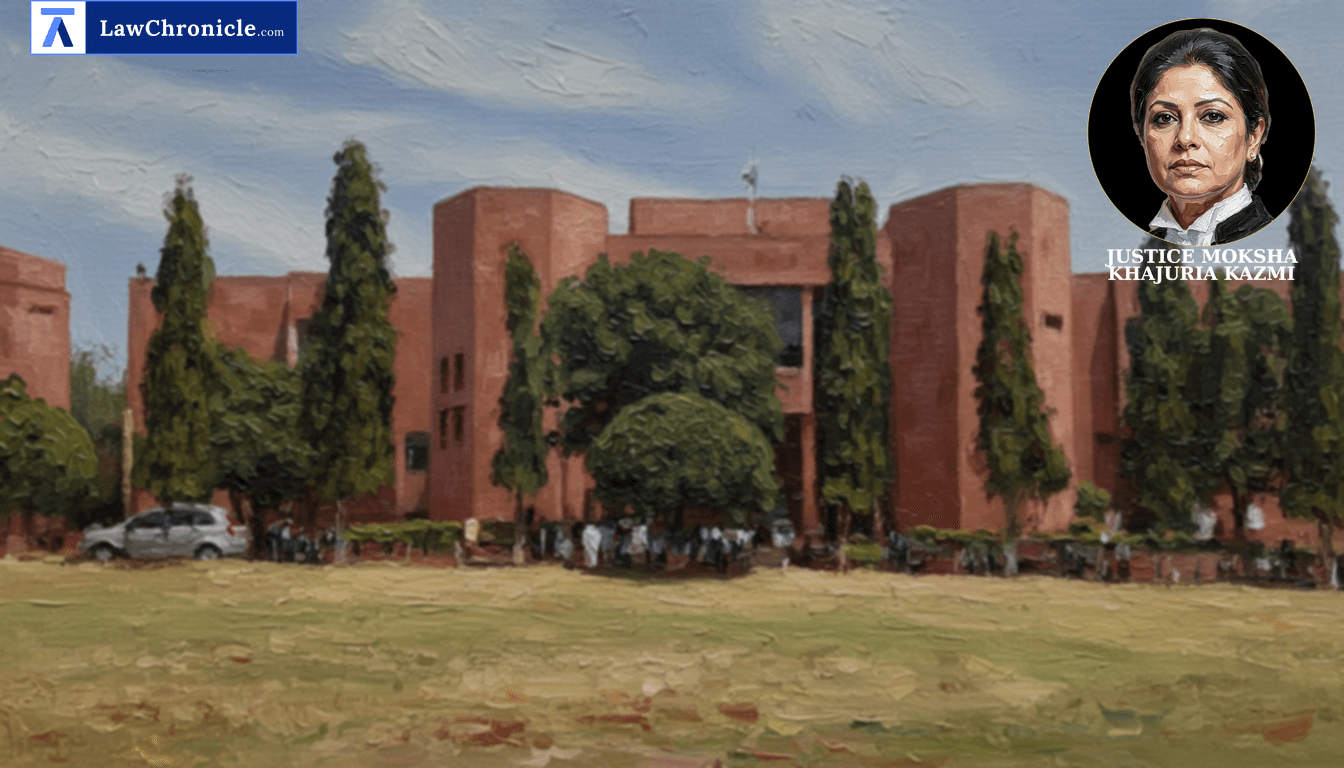
The Jammu & Kashmir and Ladakh High Court has reinforced the constitutional mandate of procedural fairness, ruling that Special Police Officers (SPOs) cannot be summarily terminated on grounds of misconduct without the minimum safeguard of a notice and opportunity to be heard. The Court emphasized that while SPOs hold temporary positions, the attribution of stigma through allegations of negligence or weapon mishandling necessitates a fair inquiry to protect future career prospects.
Justice Moksha Khajuria Kazmi presided over the matter, evaluating a challenge against a 2009 disengagement order involving four SPOs accused of unauthorized weapon exchange and staging a militant attack to cover up an accidental firing incident.
Key Takeaways
Stigmatic Orders Require Natural Justice
Even temporary or contractual employees like SPOs are entitled to the doctrine of audi alteram partem if their termination is based on specific allegations of misconduct rather than mere completion of a task.
Section 18 Safeguards Defined
While Article 311 of the Constitution of India does not apply to SPOs engaged under the J&K Police Act, 1983, they are protected by a minimum requirement of a show-cause notice and a reasonable opportunity to respond.
Re-engagement as Interim Relief
Upon quashing a termination order for procedural violations, the Court may direct immediate re-engagement of the personnel, making their continued service subject to the outcome of a fresh, fair inquiry.
Shift in Discretionary Powers
The ruling restricts the absolute discretion of police authorities to terminate SPOs 'at will' when the termination order carries findings that could hamper the individuals' future employment opportunities.
Due Process Must Precede Punitive Action
The Court observed that although SPOs are engaged on a temporary basis and have no vested right to continue, a disengagement order founded on findings of misconduct is stigmatic in nature. The bench relied on the recent Division Bench precedent in UT of J&K v. Mushtaq Ahmad Shah, which clarified the legal protections available to SPOs under the J&K Police Act, 1983.
The Court, in its reasoning, observed: "The Court accepts that SPOs are engaged on a temporary basis and have no vested right to continue. But the impugned order is not a simple discontinuation. It rests on a finding of misconduct, namely the unauthorised exchange of weapons, and failure to report the incident to the Police station concerned, leading to an accidental fire. Such a finding is stigmatic and affects the petitioners' future prospects. When an order is founded on such a finding, the person affected must be told of the allegation and the material relied upon, and given a fair opportunity to respond."
The Court further noted that the respondents failed to provide evidence of any inquiry where the petitioners were associated or served with notice before the findings were recorded.
Court Directions
The Court issued the following directions: "The petition is allowed and the impugned order dated 10.09.2009, is set aside on the ground of violation of the principles of natural justice. The respondents are at liberty to proceed afresh in accordance with law, after giving the petitioners notice, the material relied upon, a reasonable opportunity of hearing, and to pass a speaking order within a period of six weeks of receiving a certified copy of this order. The petitioners shall be re-engaged within a period of four weeks which shall remain subject to the outcome of the fresh inquiry. Any consequential benefits shall abide by the outcome of the inquiry. The petitioners are directed to extend all cooperation to the respondents in the inquiry."
Ratio
When the disengagement of a Special Police Officer appointed under Section 18 of the J&K Police Act, 1983, is founded upon allegations of misconduct or stigma, the principles of natural justice must be adhered to. The minimum procedural safeguard involves serving a show-cause notice and providing the material relied upon to the affected party, ensuring a fair opportunity to respond before a final decision is taken. Such orders must be speaking orders reflecting the application of mind to the individual's reply.
Background
The case originated in 2009 when four SPOs were disengaged following an incident where one petitioner, Jaswant Singh, sustained a gunshot wound. While the petitioners claimed they were attacked by militants during Independence Day duties, the police department's internal report alleged that the SPOs had illegally exchanged service rifles (AK Rifles and SLRs) and that the injury resulted from an accidental discharge due to mishandling.
The department concluded that the petitioners had fabricated the militant attack story to avoid disciplinary action, leading to their immediate disengagement. The petitioners challenged this in SWP No. 2182/2009, arguing that the order was passed mechanically without an inquiry or a hearing. The High Court, while not expressing an opinion on the facts of the incident, found the process legally flawed due to the lack of natural justice, ultimately setting aside the 2009 order while granting the state liberty to conduct a fresh inquiry.
Case Details:
Case No.: SWP No. 2182/2009
Neutral Citation: 2026:JKLHC-JMU:3232
Case Title: Jaswant Singh & Ors. v. State of J&K and Ors.
Appearances:
For the Petitioner(s): Mr Gagan Basotra, Sr. Advocate with Mr Rohit Kumar Parihar, Advocate
For the Respondent(s): Mrs Monika Kohli, Sr. AAG with Ms Chetna Manhas, Advocate
Source: 2026 CaseBase(JK) 1065
Similar Articles
 Breaking News


