


Prior Binding Decrees Cannot Be Ignored In Possession Disputes: Karnataka HC
 Copy Link
 Share
 Save
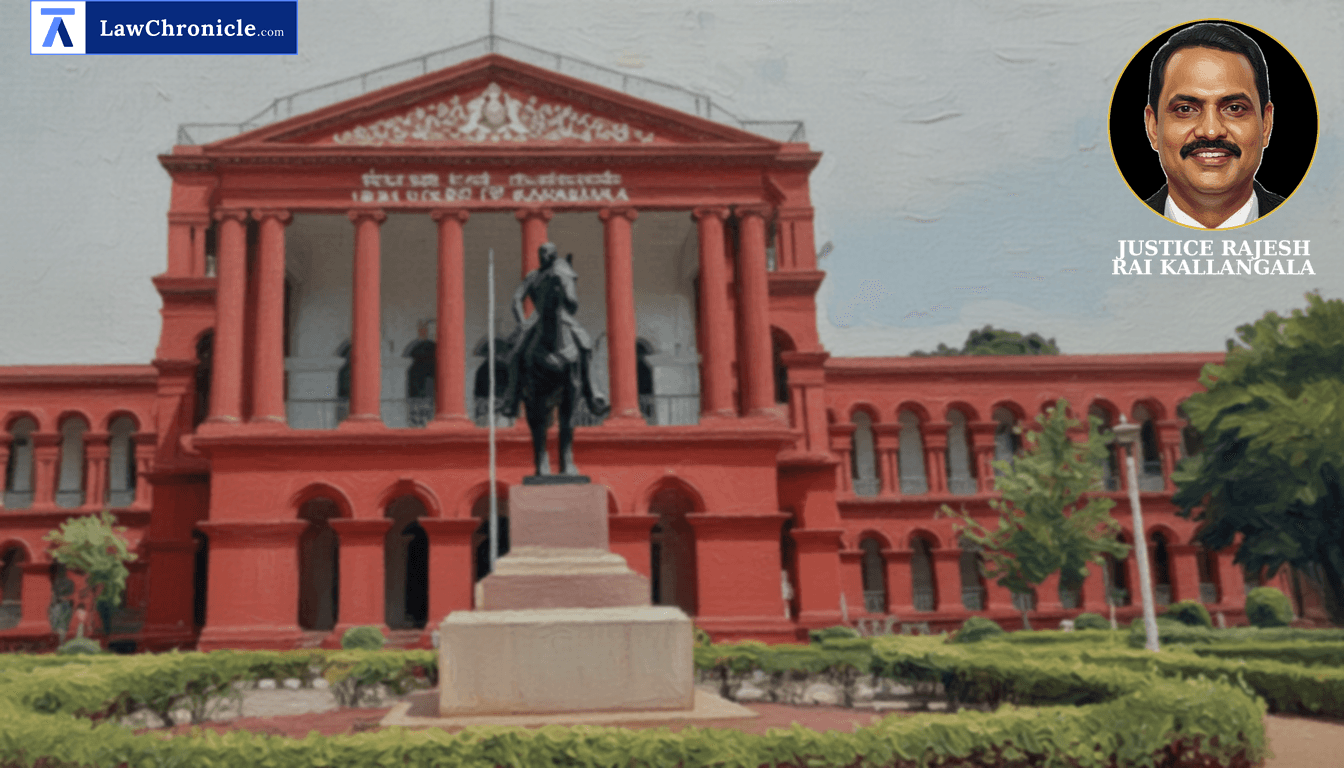
The Karnataka High Court has fortified the sanctity of prior judicial determinations in property disputes, ruling that a trial court’s failure to evaluate a binding permanent injunction decree against a party's predecessors-in-title constitutes a procedural lapse necessitating a fresh trial. This decision underscores that subsequent purchasers cannot easily bypass the legal consequences of defeats suffered by their vendors in previous litigations.
In a significant procedural move, Justice Rajesh Rai K set aside a trial court order that had dismissed a plaintiff’s suit for permanent injunction, emphasizing that the non-production of a General Power of Attorney (GPA) at the trial stage now produced in appeal goes to the very root of the title and lawful possession.
Key Takeaways
Sanctity of Prior Decrees
Binding judicial determinations against vendors operate as significant hurdles for subsequent purchasers claiming independent title.
Impact of Additional Evidence
Documents like a General Power of Attorney that establish the chain of authority are fundamental to adjudicating possession and cannot be overlooked if produced under remedial provisions.
Procedural Fairness in Remand
When critical evidence is introduced at the appellate stage, the matter must be remanded to allow the opposing party a fair opportunity for cross-examination and rebuttal.
The Requirement for Comprehensive Evaluation of Title Chain
The High Court observed that the Trial Court had dismissed the suit primarily because the General Power of Attorney executed by the original owner was not produced. During the appeal, the appellant moved an application under Order XLI Rule 27 of Code of Civil Procedure, 1908 to bring this vital document on record.
The Court, in its reasoning, observed: "Since this document directly impacts the core issue regarding the vendor's authority and goes to the root of the title and lawful possession, its consideration is necessary for a complete and effective adjudication of the dispute."
Furthermore, the Court noted that the appellant had previously secured a decree in O.S. No. 868/2012 against the vendors of the current respondent. The High Court found that the trial court failed to comprehensively evaluate the legal impact of this final decree, which had attained finality.
The Court has following directions:
"(i) The Regular First Appeal is allowed in part.
(ii) The judgment and decree dated 01.03.2019 passed in O.S. No. 7931/2014 by the XXIV Additional City Civil & Sessions Judge, Bengaluru (CCH-6) is hereby set aside.
(iii) The matter is remanded back to the Trial Court (XXIV Additional City Civil & Sessions Judge, Bengaluru) for fresh consideration and disposal in accordance with law.
(iv) The interlocutory application filed by the appellant under Order XLI Rule 27 of CPC for production of additional evidence (General Power of Attorney) is hereby disposed of and the document produced therein is ordered to be transmitted to the Trial Court.
(v) All contentions of the parties are left open. The Trial Court shall afford reasonable opportunity to the plaintiff to mark the additional documents and lead further evidence, if any, as well as afford full opportunity to defendant No. 1 to cross-examine and adduce rebuttal evidence for the same.
(vi) Both parties are directed to appear before the Trial Court on 06.11.2026 without waiting for further notice.
(vii) The Trial Court shall endeavor to dispose of the suit as expeditiously as possible."
Ratio
Where an appellate court admits additional evidence under Order XLI Rule 27 of the Code of Civil Procedure, 1908 that goes to the root of the title, and where a prior binding decree exists between the plaintiff and the defendant's predecessors-in-title, the matter must be remanded for fresh adjudication to preserve the procedural rights of the parties to cross-examine and lead rebuttal evidence.
Background
The dispute pertained to Site No. 27 in Laggere Village, Bengaluru. The appellant (plaintiff) claimed ownership through a 2004 Sale Deed and a 2012 Rectification Deed. She alleged interference by the respondent (defendant No. 1), who claimed to have purchased the same property in 2014 from Smt. Poornima and Smt. Parvathamma.
The appellant argued that she had already won a permanent injunction suit (O.S. No. 868/2012) against those very vendors before they sold the property to the respondent. The respondent contended that the previous decree was ex-parte and that he possessed a superior chain of title originating from a Co-operative Society. The Trial Court had dismissed the appellant's suit due to the absence of the GPA. The High Court, noting the subsequent production of the GPA and the relevance of the 2012 decree, opted to remand the case to ensure a merits-based adjudication.
Case Details:
Case No.: RFA No. 669 of 2019
Case Title: Smt. Shobha v. Sri. Deepak Kumar and Others
Appearances:
For the Petitioner(s): Sri. Nagaraja N, Advocate
For the Respondent(s): Sri. Harsha Kumar Gowda H.R, Advocate for C/R1
Source: 2026 CaseBase(KAR) 26201
Similar Articles


 Breaking News


