


‘Probation does not obliterate conviction’: SC awards compensation on termination of service
 Copy Link
 Share
 Save
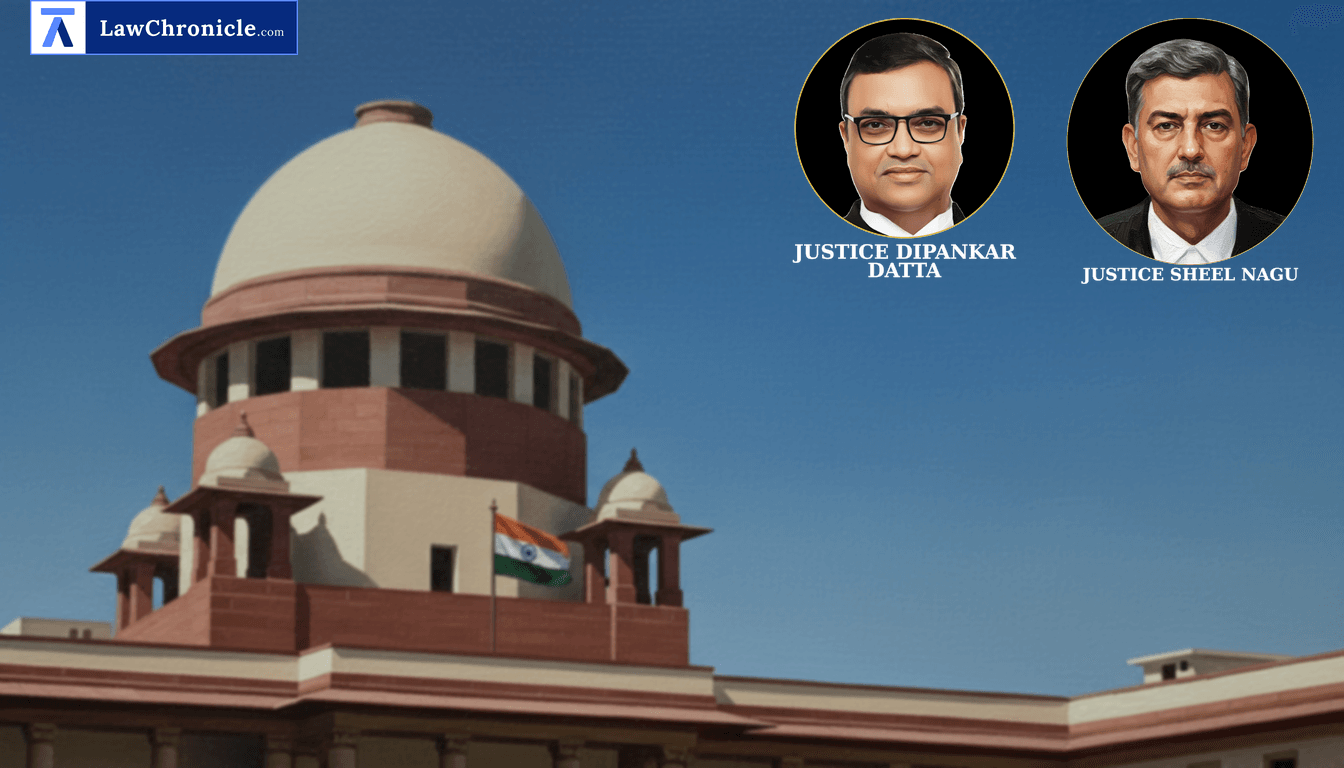
The Supreme Court has held that release on probation does not obliterate conviction or justify reinstatement of service. With Balancing interests, the Apex Court also ruled that termination of service cannot be justified merely on the grounds of an ongoing criminal trial without statutory authority.
A bench of Justice Dipankar Datta and Justice Sheel Nagu considered a civil appeal challenging a second appeal judgment of the High Court of Punjab and Haryana, which had affirmed the dismissal of a public servant's suit for declaration and mandatory injunction.
Key Takeaways
No Automatic Protection to Service Career
Releasing a convict-employee on probation does not erase the conviction or bar the employer from initiating dismissal or removal proceedings.
Pendency of FIR Not Ground for Discharge
Discharging a public employee solely due to the pendency of a criminal case, without statutory authorization or due process, is arbitrary and illegal.
Constitutional Primacy Over Probation Act
Section 12 of the Probation of Offenders Act cannot override constitutional provisions like Article 311 governing the dismissal of civil servants.
Invoking Article 142 for Relief
Where specific relief of reinstatement of service is barred under civil law, damages can be awarded under extraordinary constitutional powers to remedy arbitrary termination of service.
Conviction, Reformation and Reinstatement of Service
The Supreme Court affirmed that probation aims at reformation but does not clear the legal stain of conviction. Addressing the nature of the employee's termination of service, the Bench observed that discharging an individual simply because a criminal case was pending against him lacks legal sanction.
Invalid Termination of Service Pending Criminal Case
The Supreme Court explained the law that "...Section 12 of the 1958 Act is incapable of the construction sought to be put upon it by Mr. Gupta to persuade us hold in the appellant’s favour... Appellant was discharged from service not because of his conviction on a criminal charge but merely on the ground of pendency of the criminal case. He was not given an opportunity of raising his defence. We have not been shown any law which authorises a public employer to either dismiss or remove an employee serving the police for more than a decade solely on the ground of pendency of a criminal case. The act of termination of service, in the circumstances, cannot be justified."
The Court has following directions:
"To do complete justice between the parties, we invoke our power under Article 142 of the Constitution and direct the respondents to pay compensation of Rs.5,00,000/- (Rupees five lakh) only to the appellant within 3 (three) months from date."
Ratio
Release on probation under the Probation Of Offenders Act, 1958 does not obliterate a criminal conviction nor does it remove disqualifications affecting service career under Constitution of the Constitution of India, 1950. However, terminating an employee's service purely on the ground of an under-trial criminal case without statutory authority or procedural fairness remains inherently illegal.
Background
The appellant was appointed as a Special Police Officer in 1991 and was selected as a Constable in 2002. However, he was denied joining and subsequently discharged from service in January 2003 on the sole ground that an FIR under Sections 324/326/34 of the Indian Penal Code, 1860 was pending against him.
He was later convicted by the trial magistrate under Sections 324 and 326 of the Indian Penal Code, 1860. On appeal, the Additional Sessions Judge set aside the conviction under Section 326, maintained the conviction under Section 324, but released him on probation under the Probation Of Offenders Act, 1958, adding a direction that the conviction would not affect his service career, relying on Jaswant Singh vs. The State of Punjab. The High Court of Punjab and Haryana had previously held a similar view in Jaswant Singh vs. The State of Punjab, which the Supreme Court now declared as not laying down the correct law for failing to consider earlier binding precedents.
The trial court decreed the appellant's suit for reinstatement, but the District Judge reversed the decision, and the High Court affirmed the dismissal in a second appeal under Section 100 of the Code of Civil Procedure, 1908.
While examining the precedents, the Supreme Court noted that decisions like Southern Railway v. T.R. Chellapan, Trikha Ram v. V.K. Seth ( "1987 Suppl. SCC 39": 1987 CaseBase(SC) 485), Union of India v. Bakshi Ram ( "(1990) 2 SCC 426": 1990 CaseBase(SC) 72), Karam Singh v. State of Punjab ( "(1996) 7 SCC 748": 1996 CaseBase(SC) 69), DIG of Police v. P.R.K. Mohan, Shankar Dass v. Union of India ( "(1985) 2 SCC 358": 1985 CaseBase(SC) 367), State of Uttar Pradesh v. Ranjit Singh ( "(1999) 2 SCC 617": 1999 CaseBase(SC) 15), Punjab Water Supply Sewerage Board v. Ram Sajivan ( "(2007) 9 SCC 86": 2007 CaseBase(SC) 1019), and Sushil Kumar Singhal v. Punjab National Bank ( "(2010) 8 SCC 573": 2010 CaseBase(SC) 1045) settled that probation does not wash away conviction. While reinstatement was barred under Section 14 of the Specific Relief Act, 1963, the Court held that the initial discharge was arbitrary. Consequently, the Supreme Court exercised its power under Article 142 of the Constitution of India, 1950 to award monetary compensation.
Case Details:
Case No.: Civil Appeal No. 9749 of 2016
Neutral Citation: 2026 INSC 798
Case Title: SPO/Constable IRB Satpal Singh v. State of Punjab & Ors.
Source: 2026 CaseBase(SC) 744
Similar Articles
 Breaking News


