


Youthful Indiscretions Not A Bar To Police Recruitment: Andhra Pradesh HC
 Copy Link
 Share
 Save
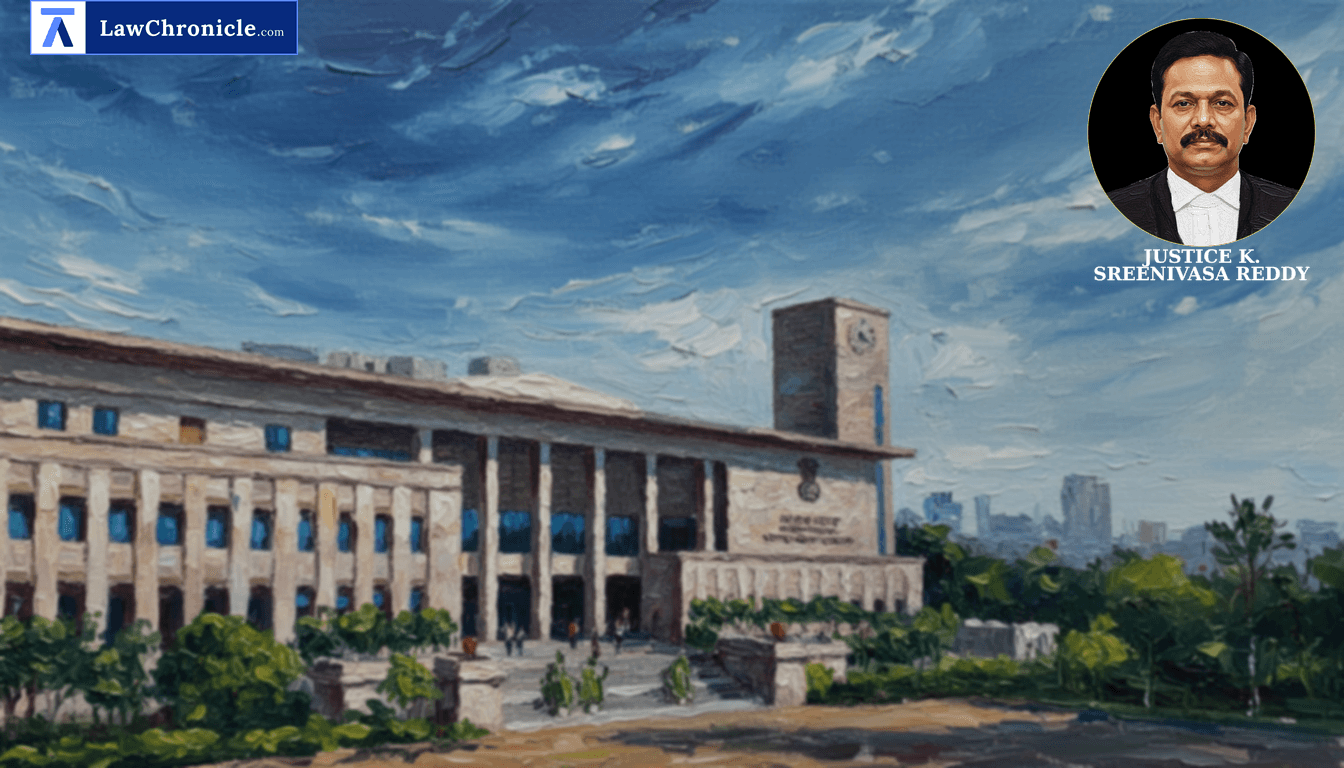
The Andhra Pradesh High Court has quashed the cancellation of a police candidate's selection, ruling that the mechanical disqualification of young applicants for non-disclosure of trivial criminal cases is an arbitrary exercise of power. In a significant win for civil liberties in public employment, the court emphasized that administrative authorities must distinguish between serious moral turpitude and minor private disputes when assessing the suitability of candidates for the police force.
A Single Judge Bench of Justice K Sreenivasa Reddy adjudicated the matter, which had been transferred from the now-abolished Andhra Pradesh Administrative Tribunal. The court was tasked with deciding whether the non-disclosure of a criminal case involving sections 323 and 324 of the Indian Penal Code, 1860 which ultimately ended in an acquittal constituted a valid ground for terminating the petitioner's provisional selection as a Police Constable.
Key Takeaways
- End of Mechanical Disqualifications
The court held that every omission in an attestation form does not warrant a mechanical cancellation of selection, requiring authorities to exercise discretion based on the nature of the offence. - Focus on Nature of Offence
A clear distinction must be made between grave crimes like murder or rape and minor indiscretions or private civil disputes foisted upon young individuals. - Rehabilitative Justice for Youth
The judgment reinforces the principle that minor legal brushes in youth should not become an "indelible stigma" that prevents access to public livelihoods for a lifetime. - Discretion Must Be Objective
Appointing authorities are mandated to consider the result of the prosecution and the overall conduct of the candidate rather than adhering to a rigid, one-size-fits-all formula.
Court's Rationale on Non-Disclosure and Suitability
The court observed that the power to verify antecedents does not imply that every instance of non-disclosure leads to automatic disqualification. Relying on the landmark judgment in Avtar Singh v. Union of India and others ( "(2016) 8 SCC 471": 2016 CaseBase(SC) 405), the court noted that the nature of the acquittal and the requirements of the post are crucial factors in determining suitability.
The Court, in its reasoning, observed: "The authorities are bound to examine whether failure to mention about the involvement in the aforesaid case in the Attestation Form goes to the root of the matter, and that the said case, even if mentioned in the Attestation Form, would have disentitled the petitioner for appointment. Even if the involvement in criminal case is not mentioned in the Attestation Form, the authorities have a duty to see, whether such case even if disclosed in the Attestation Forms, would have disentitled the petitioner for appointment, in view of the nature of offences alleged therein."
Justice Reddy further highlighted that the criminal case against the petitioner arose from a private dispute and ended in acquittal. The court pointed out that the approach should be to condone minor indiscretions as suggested in Commissioner of Police and others v. Sandeep Kumar ( "(2011) 4 Supreme Court Cases 644": 2011 CaseBase(SC) 328), rather than branding young citizens as criminals for the rest of their lives.
Directions Issued to the State
The Court has the following directions:
"Accordingly, the Writ Petition (AT) is allowed. The Memorandum issued by 3rd respondent in R.C.No.519/R&T/GENL.2/2012, dated 10.01.2014, is hereby set aside. The respondents are directed to appoint the petitioner in service for the post of Police Constable SCT PC (Civil) for which he was provisionally selected, pursuant to his participation in the selection process under Notification dated 31.10.2011. The petitioner is entitled for all notional benefits, including pay, seniority and other consequential benefits, however, he is not entitled for the arrears of salary."
Ratio
Non-disclosure of a criminal case in an attestation form is not a per se disqualification for public employment. The appointing authority must objectively assess the gravity of the alleged offence, the circumstances of the implication, the final outcome of the trial (acquittal vs. conviction), and the candidate's general character. If the offence is trivial or arises from a private dispute not involving moral turpitude, and the candidate is otherwise eligible, the suppression of such facts may be condoned in the interest of justice and the right to livelihood.
Background
The petitioner had applied for the post of SCT Police Constable (Civil) following a 2011 notification. Although he cleared the preliminary tests and written examination, his provisional selection was cancelled via a 2014 memorandum. The cancellation was based on his failure to disclose a pending criminal case (CC No. 623 of 2011) in his attestation form. The petitioner argued that the case resulted from a family civil dispute and he was falsely implicated as the fourth accused. He further highlighted that he was eventually acquitted by the trial court in 2015.
The State defended the cancellation, citing the Andhra Pradesh Police (Stipendiary Cadet Trainee) Rules, 1999 and the Andhra Pradesh State and Subordinate Service Rules, 1996, arguing that honesty is a prerequisite for the police force and suppression of material facts is a statutory disqualification. However, the High Court, referencing The State of Andhra Pradesh v. Vadde Pavan Kumar, Dodla Penchalaiah v. The Director General of Police, Andhra Pradesh, Amaravati, and Ravindra Kumar v. State of U.P. ( "2024 SCC OnLine SC 180": 2024 CaseBase(SC) 404), concluded that the offences (Sections 323, 324 IPC) were trivial and the authorities failed to exercise their discretion reasonably.
Case Details:
Case No.: WRIT PETITION (AT) NO.564 OF 2021
Neutral Citation: 2026:APHC:40260
Case Title: Sidda Rama Ganesh Versus The State of AP & Others
Appearances:
For the Petitioner(s): Sri Devavarapu Rambabu
For the Respondent(s): Government Pleader for Services-I
Source: 2026 CaseBase(AP) 16833
Similar Articles

 Breaking News


