


Proof of Mens Rea Essential for Conviction Under Section 308 IPC: Delhi HC
 Copy Link
 Share
 Save
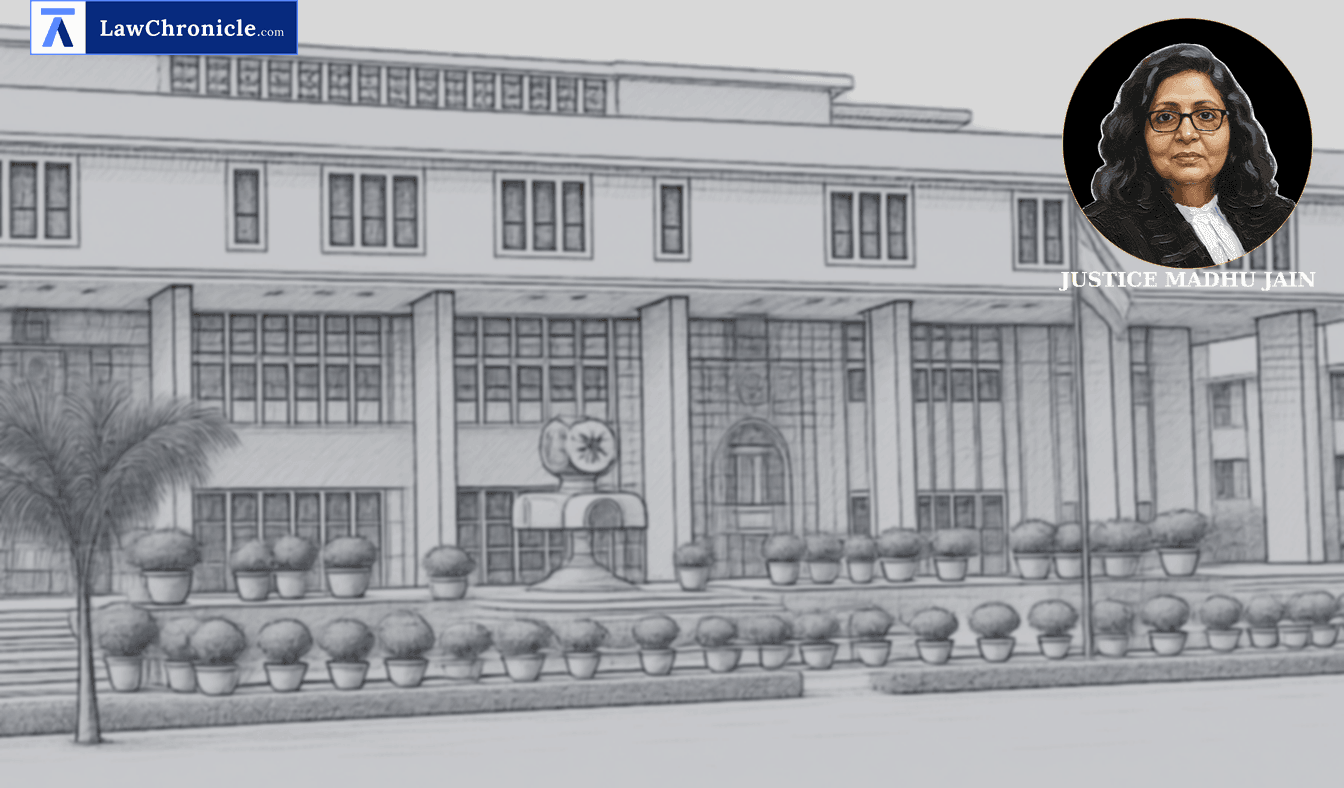
The Delhi High Court has significantly narrowed the application of 'attempt to commit culpable homicide' by ruling that the mere use of a weapon like a brick does not automatically satisfy the rigorous threshold of intention or knowledge required for a conviction. This judgment reinforces that without clear evidence of premeditation or repeated blows, spontaneous street brawls resulting in simple injuries cannot be elevated to the status of life-threatening criminal attempts.
A Single Judge bench of Justice Madhu Jain heard the criminal appeal filed under Section 415 of the Bharatiya Nagarik Suraksha Sanhita, 2023. The appellant challenged his conviction and sentencing for multiple offences, including assault on police officers and attempt to commit culpable homicide, arising from a 2010 incident involving a raid on illicit liquor.
Key Takeaways
Culpable Homicide Threshold
The court clarified that for a conviction under Section 308, the prosecution must prove a specific state of mind (intention or knowledge) that would have led to culpable homicide had death occurred.
Spontaneous vs Premeditated Acts
In sudden quarrels lacking prior enmity, the nature of the injury (simple vs grievous) becomes a critical factor in determining whether the accused intended to cause death.
Sanctity of Section 195 Procedure
The judgment confirms that a written complaint by a competent authority, such as an Assistant Commissioner of Police, satisfies the procedural requirements for prosecuting obstructions to public servants.
Court's Rationale on Intent and Section 308
The Court carefully examined the evidence concerning the assault on police personnel with bricks. While acknowledging the potential danger of such an act, the bench held that the prosecution failed to prove the requisite mens rea for an attempt to commit culpable homicide. The Court, in its reasoning, observed: "The applicability of Section 308 IPC depends not merely upon the weapon used or the part of the body targeted, but upon proof that the act was committed with the intention or knowledge that, if death had ensued, the appellant would have been guilty of culpable homicide not amounting to murder... In the present case, the incident arose suddenly... no prior enmity or premeditation is shown... the depositions do not specify repeated blows with the bricks or disclose other circumstances sufficiently demonstrating the requisite intention or knowledge."
Regarding the conviction under Section 186 of the Indian Penal Code, 1860, the Court rejected the appellant's procedural objection, noting the existence of a valid written complaint. The Court has the following directions:
"The appeal is partly allowed. The conviction of the appellant for the offences punishable under Sections 186, 332, 333 and 353 read with Section 34 IPC is upheld. The conviction under Section 308 IPC is set aside. Consequently, the order on sentence dated 14.07.2025 is set aside to the extent of the sentence imposed for the offence punishable under Section 308 IPC... The remaining sentences imposed by the learned Trial Court are maintained."
Ratio
To sustain a conviction under Section 308 of the Indian Penal Code, 1860, it is mandatory to prove the existence of an intention or knowledge that the act, if successful, would result in culpable homicide not amounting to murder; such intent cannot be inferred solely from the use of a weapon or the target area of the body in a sudden, unpremeditated quarrel where only simple injuries are caused.
Background
The case dates back to December 2010, when police officials on patrol received information about illicit liquor sales at a house in Rohini. When they attempted to apprehend a customer, a group including the appellant assaulted the officers. The prosecution alleged that the appellant and his associates used a baseball bat and bricks to inflict injuries, leading to a trial where the appellant was convicted for multiple offences. The appellant argued that there were material contradictions in the medical reports (MLCs) and that the police had fabricated the case after being beaten by the public for misbehaving with a civilian. Relying on precedents like Daulat Ram v. State of Punjab ( "AIR 1962 SC 1206": 1962 CaseBase(SC) 491) and C. Muniappan v. State of Tamil Nadu, the appellant challenged the procedural validity of the Indian Penal Code, 1860 charges and the lack of independent witnesses. The High Court ultimately found the testimony of the injured officers reliable for the assault charges but insufficient for the charge of attempting culpable homicide.
Case Details:
Case No.: CRL.A. 1262/2025 & CRL.M.(BAIL) 1879/2025
Case Title: MR. RANA PRATAP v. STATE NCT OF DELHI
Appearances:
For the Petitioner(s): Ms. Kamlesh Kumar, Ms. Tripta, Advs.
For the Respondent(s): Mr. Raghuvinder Verma, APP for the State; SI Rajesh Kumar, PS Vijay Vihar.
Source: 2026 CaseBase(DEL) 7516
Similar Articles
 Breaking News


