


Repeated Blows to Vital Parts Establish Knowledge for Culpable Homicide: Kerala HC
 Copy Link
 Share
 Save
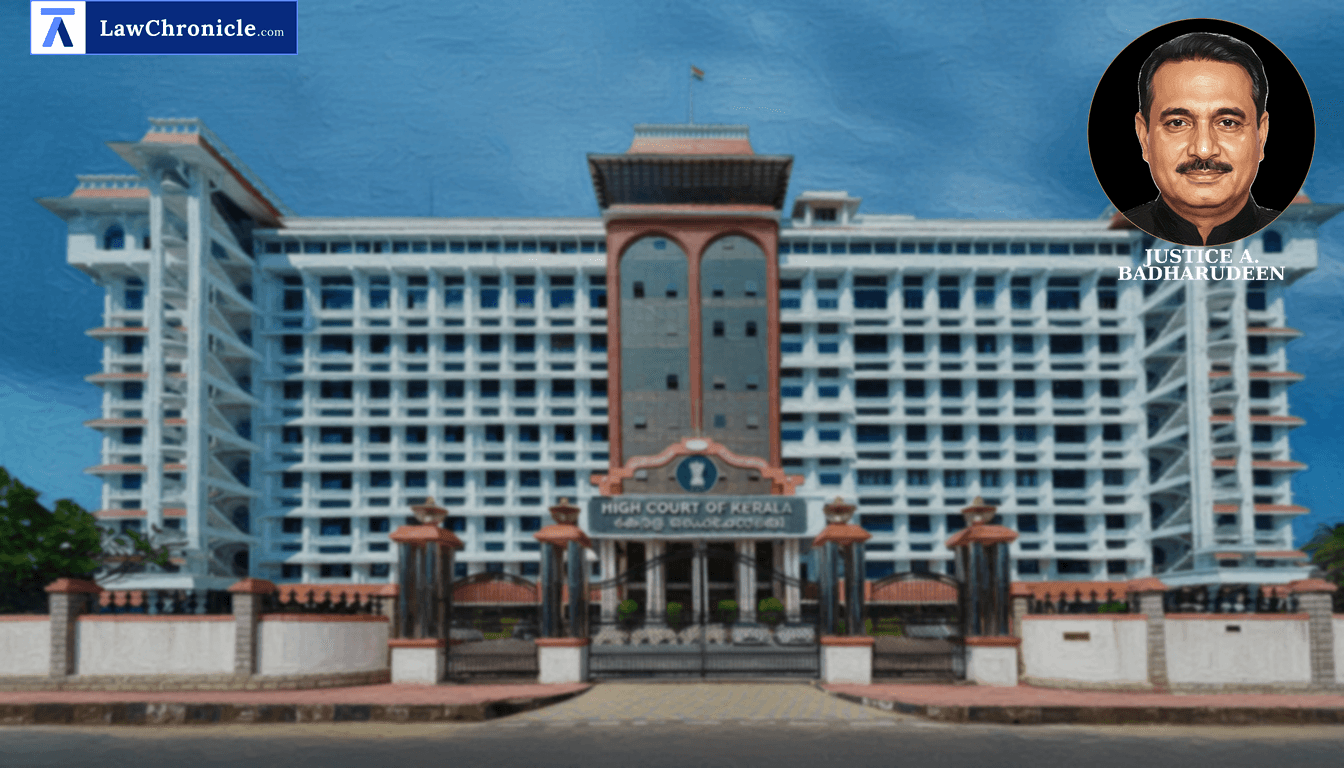
The High Court of Kerala has reinforced the legal threshold for attempted culpable homicide, ruling that repeated strikes to a victim's head with a wooden stick sufficiently establish the 'knowledge' required for conviction, regardless of whether the resulting injuries are classified as simple. This decision clarifies that the nature of the weapon and the target area of the body are decisive factors in determining criminal intent under the Indian Penal Code.
In a verdict delivered by Justice A. Badharudeen, the Court dismissed an appeal challenging a Sessions Court conviction, emphasizing that the mere non-recovery of a weapon does not invalidate a prosecution case supported by credible eye-witness and medical testimony.
Key Takeaways
Intent Over Injury
Assessing the nature of the injury alone is not decisive for determining intention or knowledge; the act of targeting vital organs like the head repeatedly is sufficient for Indian Penal Code charges.
Weapon Recovery Not Mandatory
Failure by the police to seize the weapon of offense does not weaken the prosecution's case if the medical evidence corroborates that the injuries could be caused by such an instrument.
Credibility of Injured Witnesses
Minor inconsistencies in how a victim describes evading or restraining a blow do not qualify as material contradictions capable of shaking the overall credibility of an injured witness.
Legal Rationale on Knowledge and Intention
The Court scrutinized whether the actions of the accused met the ingredients of Section 308 of the Indian Penal Code. The appellant argued that the injury was simple and the weapon was not recovered, seeking a reduction of the offense to Section 324. However, the Court rejected this, noting that the accused beat a lady on the back of her head thrice.
The Court, in its reasoning, observed: "beating a lady on her vital part repeatedly for three times by a wooden stick would take in the required knowledge of the accused that such blow on the head, the vital part of the body, by using a wooden stick, would result in her death."
Regarding the lack of physical evidence of the weapon, the Court held: "the mere non-recovery of the weapon used in the commission of the offence, by itself, is insufficient to eschew the entire prosecution case, ignoring the candid evidence given by the injured person whose testimony is substantiated by the evidence... and corroborated by the medical evidence and the injury sustained by her."
Court Directions
The Court issued the following directions:
"In the result, this appeal fails and is dismissed by confirming the conviction and sentence imposed by the Sessions Court. Consequently, the order suspending sentence and granting bail to the accused/appellant stands cancelled and his bail bond also stands cancelled. The accused/appellant is directed to surrender before the Sessions Court to undergo the sentence, forthwith, failing which, the Sessions Court is directed to execute the sentence, without fail."
Ratio
To sustain a conviction under Section 308 of the Indian Penal Code, the nature of the injury is not the sole decisive factor. The requisite 'knowledge' that an act is likely to cause death can be inferred from the use of a dangerous instrument, the repetition of the assault, and the targeting of vital parts of the human body. Furthermore, the absence of a recovered weapon does not justify acquittal where the testimony of an injured witness is consistent and corroborated by medical findings.
Background
The dispute originated on August 2, 2005, when the accused allegedly assaulted his neighbour (PW2) following a dispute regarding a rented shop. The prosecution stated that when PW2 arrived at the accused's courtyard to question an earlier assault on her son, the accused struck her on the head three times with a wooden stick.
The Additional District & Sessions Court (Adhoc)-I, Kollam, had convicted the accused under Section 324 and Section 308 of the Indian Penal Code, sentencing him to two years of simple imprisonment. The appellant challenged this before the High Court, citing contradictions in the victim's testimony and the lack of a seized weapon. The High Court, after re-appreciating the evidence of the doctor and eyewitnesses, found the prosecution's case robust and maintained the trial court's sentence.
Case Details:
Case No.: CRL.A NO. 451 OF 2011
Neutral Citation: 2026:KER:81146
Case Title: MOHANAN v. STATE OF KERALA
Appearances:
For the Petitioner(s): SHRI. B. MOHANLAL, Advocate
For the Respondent(s): SRI. M.A SHIHAB, Public Prosecutor
Source: 2026 CaseBase(KER) 33081
Similar Articles
 Breaking News


