


Prosecutrix Testimony Rejected for Kidnapping cannot be Accepted for Rape: Supreme Court
 Copy Link
 Share
 Save
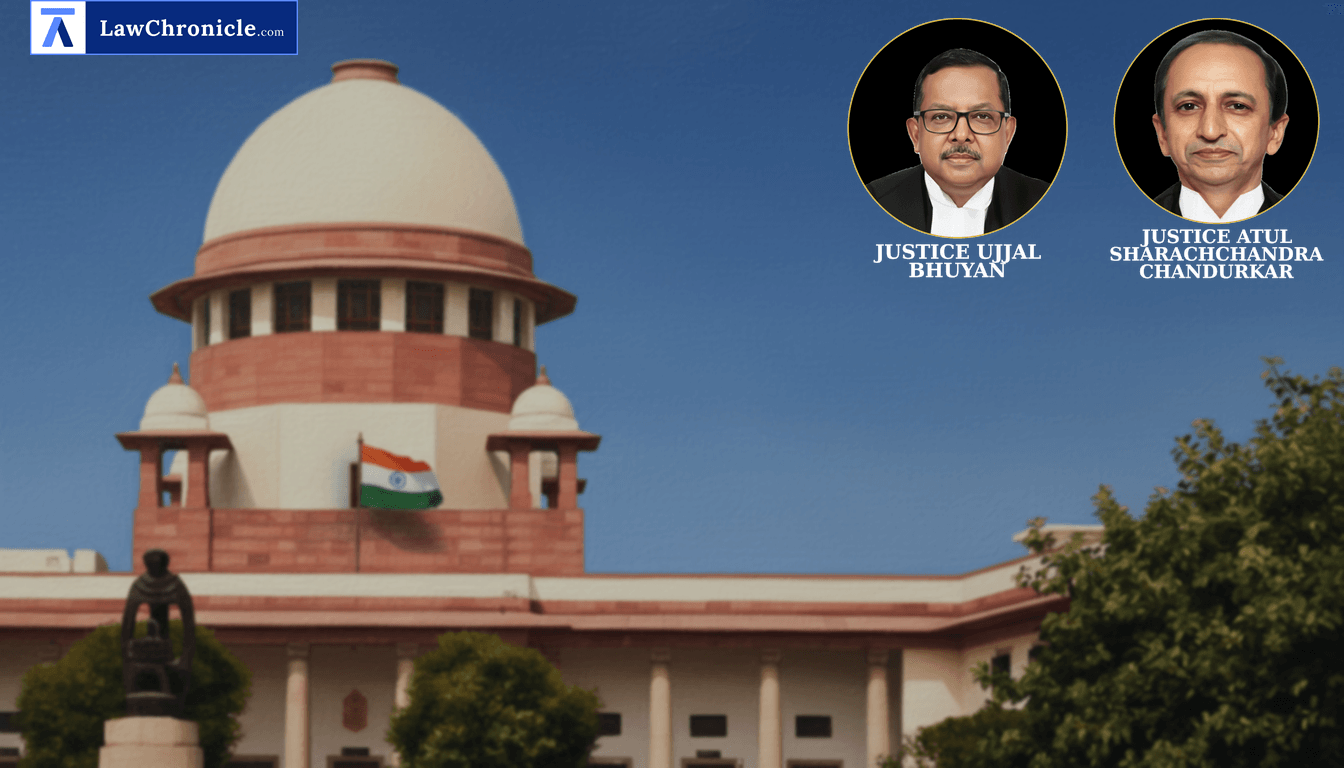
The Supreme Court restricted splitting of evidence by the Trial Court, rejecting same prosecutrix testimony for one charge and accepting it for another to convict the appellant.
A Division Bench comprising Justice Ujjal Bhuyan and Justice Atul S. Chandurkar set aside the conviction of an accused sentenced to 10 years of rigorous imprisonment, holding that trial courts cannot selectively reject a prosecutrix's testimony to acquit on kidnapping charges while simultaneously relying on the exact same compromised testimony to convict for rape.
Key Takeaways
No Selective Acceptance of Testimony: A prosecutrix's testimony cannot be split to acquit on one charge and convict on another when both are intrinsically linked.
Moral Conduct vs Legal Proof: Accused's alleged unethical or immoral conduct cannot serve as a foundation for criminal conviction without clinching evidence.
Contextual Evaluation of Consent: Allegations of non-consent must align logically with the surrounding factual timeline and conduct during the alleged incident.
Court's Rationale on Evidence and Moral Judgments
The Apex Court critically evaluated the trial court's reasoning, which acknowledged that the prosecutrix voluntarily accompanied the accused over multiple days across different towns without raising any alarm, yet concluded she was raped based on a speculative value judgment.
The Supreme Court discussed the importance of evidence in its entirety that "When the learned Sessions Judge had disbelieved the prosecution version insofar the charge under Section 366 IPC is concerned, the very same prosecution version could not have been accepted to convict the accused-appellant under Section 376 IPC. While the conduct of the appellant may be immoral and unethical, that by itself would not justify a conviction under Section 376 IPC without any clinching evidence. Such a charge must be proved on the basis of hard evidence and not on the basis of the surmises and conjectures based on the value judgment of the presiding judge. Immorality of an act sans credible evidence cannot justify a conviction."
The Bench further highlighted that while a conviction for rape can rest on the sole testimony of a prosecutrix, such evidence must be of unimpeachable character and inspire the absolute confidence of the court.
Ratio
A criminal conviction under Section 376 of the Indian Penal Code, 1861 cannot be sustained on surmises, conjectures, or judicial moral assessments where the testimony of the prosecutrix suffers from material contradictions and lack of credibility; evidence disbelieved to acquit an accused of kidnapping under Section 366 of the Indian Penal Code, 1861 cannot simultaneously form the sole basis to convict the accused for rape arising out of the same transaction.
Background
The prosecution alleged that in June 2009, the appellant accosted the prosecutrix in Ludhiana and took her away in a car to LIG Flats, keeping her there for two days before moving her to Malerkotla on a scooter. It was alleged that he subjected her to non-consensual sexual intercourse before being intercepted by police and the prosecutrix's father on 25.06.2009. An FIR was subsequently registered under Sections 363, 366A, and 376 of the Indian Penal Code, 1861.
During trial, the Sessions Judge, Ludhiana found that the prosecutrix was a major aged between 17 and 19 years based on an ossification test, and observed that she had willingly accompanied the appellant through crowded, brightly lit streets and public transport without raising any alarm. Consequently, the trial court acquitted the appellant under Section 366 of the Indian Penal Code, 1861. However, the trial court convicted the appellant under Section 376 of the Indian Penal Code, 1861 and sentenced him to 10 years of rigorous imprisonment, drawing a presumption under Section 114A of the Evidence Act, 1872. The High Court of Punjab and Haryana affirmed the conviction on 12.09.2013.
Assailing the decision before the Supreme Court, the appellant argued that the conviction was unsustainable on identical, disbelieved evidence and pointed out civil financial and tenancy disputes with the prosecutrix's family. Allowing the appeal, the Supreme Court set aside the judgments of both the High Court and the Sessions Court, clearing the appellant of all charges.
Case Details:
Case No.: Criminal Appeal No. 203 of 2015
Neutral Citation: 2026 INSC 1054
Case Title: Paramjit Singh Bedi v. State of Punjab
Source: 2026 CaseBase(SC) 8010
Similar Articles




 Breaking News


