


'Victim appears to be Consenting Party': Allahabad HC gives Benefit of Doubt in Rape Case
 Copy Link
 Share
 Save
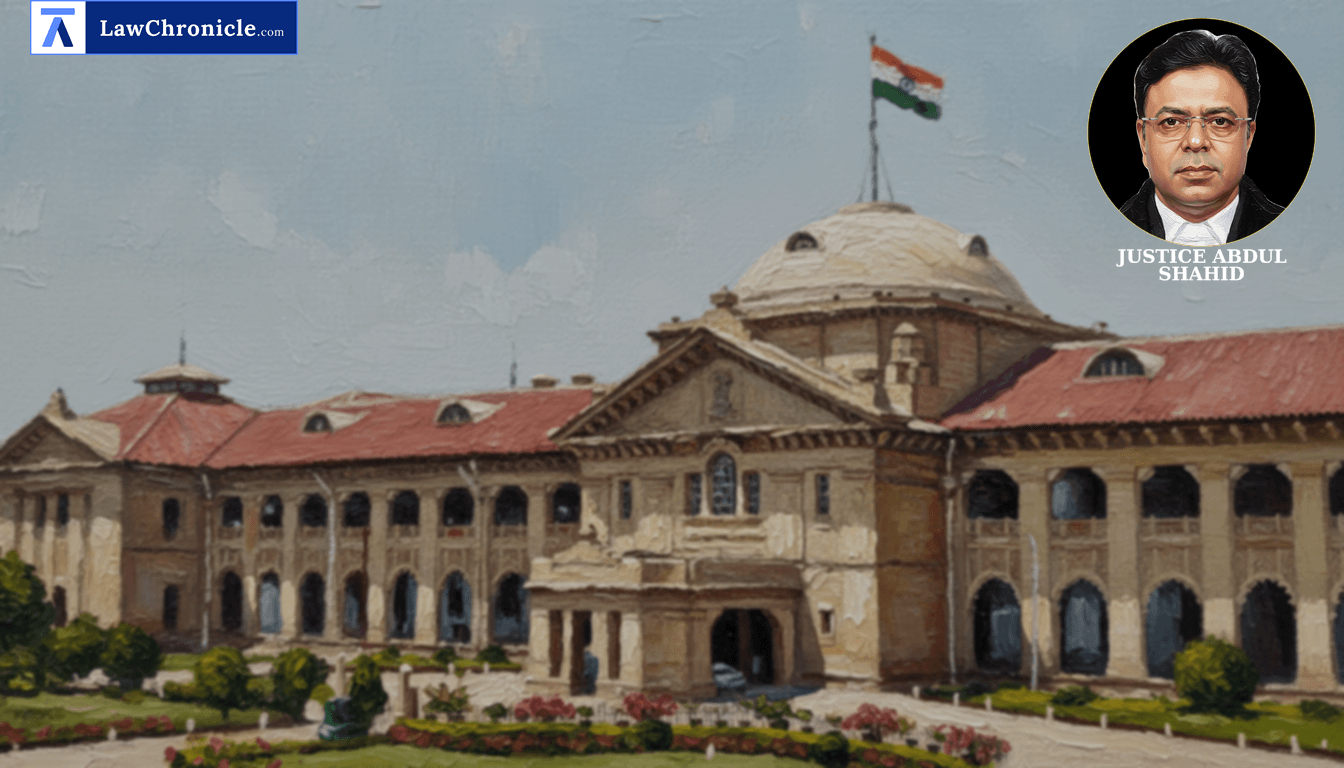
Allahabad High Court acquitted a man convicted of abduction and rape, ruling that the victim’s failure to raise alarm during an eight-day period and contradictory medical evidence created a fatal 'benefit of doubt.'
Justice Abdul Shahid delivered this judgment while hearing a criminal appeal challenging a 1986 conviction. The Allahabad High Court scrutinized the evidence presented by the prosecution regarding the abduction and sexual assault of a young girl, focusing specifically on the veracity of the victim's testimony and the determination of her age.
Key Takeaways
Conduct as an Indicator of Consent
The Allahabad High Court emphasized that a victim's failure to raise an alarm at public places or seek help from third parties over an extended period can be a significant factor in determining the possibility of consent.
Radiological Age Margin Favors Accused
Reiterating settled law, the High Court held that when radiological evidence suggests a prosecutrix is near the age of 18, the inherent margin of error in such tests must be interpreted in favor of the accused.
Corroboration Essential for Conviction
The judgment highlights that glaring contradictions between the testimonies of the victim, the informant, and the medical experts can render the prosecution's case unreliable.
Inconsistencies in Victim's Conduct and Testimony
The Allahabad High Court noted that the victim's behavior was "absolutely unnatural" for someone allegedly abducted by force. Despite being taken through congested areas and residing in a house with other women and children for eight days, she made no attempt to cry for help. The Bench observed: "In between it, she did not raise any alarm or tried to make any complain with anybody, where she has found several persons present there... All these acts and conduct show that the victim is appeared to be consenting party."
Furthermore, the victim claimed to have suffered incised wounds and bleeding, yet the medical examiner, PW-4, found no such injuries. The Investigating Officer also testified that no blood-stained clothes were recovered or even shown to him, contradicting the victim's assertions.
Ratio
In criminal trials involving allegations of rape and abduction, if the radiological evidence leaves room for doubt regarding the minority of the prosecutrix, and the prosecutrix's conduct, such as moving freely in public without protest, suggests the possibility of being a consenting party, the benefit of doubt must naturally be extended to the accused.
Background
The prosecution alleged that in November 1985, the appellant abducted the victim from her home by falsely claiming her mother had met with an accident. It was alleged that he took her to Sambhal, kept her for eight days, and committed rape. The Trial Court, relying on the testimony of the victim and her father, convicted the appellant under Section 366 and Section 376 of the Indian Penal Code.
However, during the appeal, the High Court identified massive contradictions. The father claimed he searched for the victim at the accused's house on the fourth day and found nothing, while the victim claimed she was there for eight days. Relying on the precedent in Rajak Mohammad Vs. State of Himachal Pradesh ( "2018 (9) SCC 248": 2018 CaseBase(SC) 238), the Allahabad High Court found that the radiological report, which estimated the age at 17 years, combined with the lack of physical resistance or outcry, mandated an acquittal. The Court concluded that the prosecution failed to prove the victim was a minor or that the act was committed against her will.
Case Details:
Case No.: CRIMINAL APPEAL No. - 195 of 1987
Case Title: Shamsher @ Shamsheer Vs. State of U.P.
Appearances:
For the Petitioner(s): Anurag Sharma, Krishna Dutt Tiwari, R.P. Tripathi, Advocates
For the Respondent(s): A.G.A.
Source: 2026 CaseBase(ALL) 892
Similar Articles

 Breaking News


