


Public Bodies Cannot Exploit Judicial Adjournments To Alter Status Quo: Calcutta HC
 Copy Link
 Share
 Save
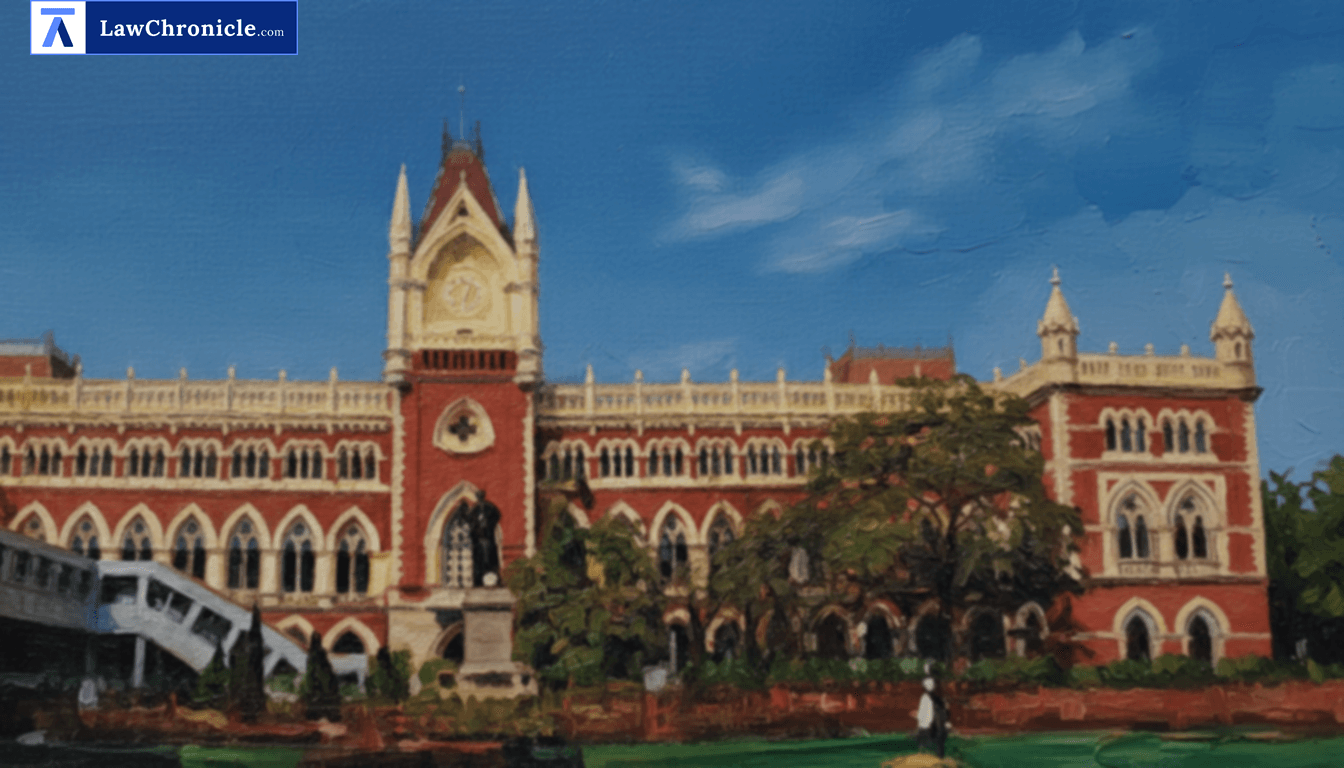
The Calcutta High Court has delivered a stern warning to public authorities against the misuse of statutory powers, ruling that a party to litigation cannot be allowed to reap the benefits of a wrongful act committed during the pendency of a judicial appeal. In a significant intervention, the Court held that the calculated act of taking possession of a property just one day before a scheduled hearing by exploiting a temporary lapse in an interim order caused by the Presiding Officer's leave is an illegal maneuver that necessitates immediate restoration of status quo ante.
Justice Hiranmay Bhattacharyya, sitting in the Civil Revisional Jurisdiction, presided over the challenge brought by the Syama Prasad Mookerjee Port. The Court scrutinized the conduct of the Port trust in executing an eviction order while the Appellate Court was actively seized of the matter, emphasizing that judicial processes cannot be subverted through tactical timing.
Key Takeaways
Curbing Executive Overreach
Public bodies are prohibited from acting in bad faith or using statutory powers for improper motives, especially during active litigation.
Restoration of Status Quo Ante
Courts possess the inherent power to issue mandatory injunctions at an interlocutory stage to undo illegal acts and restore possession wrongfully taken.
Judicial Adjournments Are Not Loopholes
Litigants cannot treat the unavailability of a Presiding Officer or the technical expiration of a stay order as an invitation to alter the nature of the suit property.
Premium on Wrongful Acts Denied
Legal principles ensure that a 'wrongdoer' does not receive a premium for illegal actions, maintaining the integrity of the appellate process.
Judicial Scrutiny of Tactical Dispossession
The Court observed that while the Port claimed no stay was operating on the date of dispossession, the sequence of events suggested a deliberate attempt to bypass the judicial process. The Bench noted that the hearing had been adjourned solely because the Presiding Officer was on leave, and the Port's 'unexplained sense of urgency' to take possession just twenty-four hours before the next hearing date was legally untenable.
The Court, in its reasoning, observed: "A party to a litigation should not feel encouraged to take advantage of the adjournment of the hearing of the appeal on the ground of unavailability of the Presiding Officer on the date when the status quo order was in subsistence... SMPK by its wrongful act altered the status quo that was prevailing as on 15.12.2025... and the wrong doer should not be allowed a premium for such wrongful act in order to reap the benefit of such act during the pendency of the appeal."
Addressing the necessity of mandatory injunctions in such scenarios, the Court relied on the principle that judicial power must be exercised to compel the undoing of illegal acts. Referring to Dorab Cawasji Warden v. Coomi Sorab Warden ( "(1990) 2 SCC 117": 1990 CaseBase(SC) 224), the Court noted that mandatory injunctions are granted to restore that which was wrongfully taken. Furthermore, the Bench echoed the sentiment in Indian Cable Company Limited vs. Smt. Sumitra Chakraborty, stating that courts should not hesitate to restore status quo ante at an interlocutory stage if it was altered by a wrongful act.
The Court has following directions:
"the Estate Officer was directed to remove the padlock forthwith and await the final adjudication of the appeal."
Ratio
If the status quo of a property is altered or possession is taken by a wrongful act during the pendency of an appeal, particularly by taking advantage of the absence of a Presiding Officer, the Court is duty-bound to exercise its powers to restore the status quo ante via mandatory injunction, ensuring that no litigant reaps a premium from their wrongful conduct.
Background
The dispute originated from an eviction proceeding initiated by the Board of Trustees for the Port of Syama Prasad Mookerjee Port (SMPK) under the Public Premises (Eviction of Unauthorised Occupants) Act, 1971. The opposite party, M/s. Vijai Shree Private Limited, had challenged an order of the Estate Officer before the Additional District Judge, Howrah. While an initial stay was granted and subsequently protected by a status quo order from the High Court under Constitution of India, the stay technically expired in June 2026 due to the Appellate Court being vacant or the judge being on leave.
On June 16, 2026, one day before the appeal was set for hearing, the Port authorities took possession and padlocked the premises. The opposite party moved an application for removal of the padlock, which the Appellate Court allowed. SMPK challenged this restoration of possession before the High Court, citing Arjun Singh vs. Punit Ahluwalia and Ors. ( "(2008) 8 SCC 348": 2008 CaseBase(SC) 1172) and Kishor Kumar Khaitan and another vs. Praveen Kumar Singh ( "(2006) 3 SCC 312": 2006 CaseBase(SC) 484) to argue that mandatory injunctions require a higher threshold and that possession was not taken in violation of any 'active' order.
However, Justice Bhattacharyya dismissed the Port's petition, clarifying that Express Newspaper Private Limited and ors. vs. Union of India and ors. ( "(1986) 1 SCC 133": 1985 CaseBase(SC) 115) prevents public bodies from acting in bad faith. The Court affirmed the Appellate Court's direction to remove the padlock, maintaining that the integrity of the judicial proceedings must be preserved over the executive's tactical execution.
Case Details:
Case No.: C.O. 2189 of 2026
Neutral Citation: 2026:CHC-AS:1684
Case Title: Board of Trustees for the Port of Syama Prasad Mookerjee Port Vs. M/s. Vijai Shree Private Limited
Appearances:
For the Petitioner(s): Mr. Subhankar Nag, Mr. Abhishek Banerjee, Advocates
For the Respondent(s): Mr. Biswaroop Bhattacharya, Mr. Debangshu Dinda, Mr. Arnab Kumar Ghosh, Mr. P. Manot, Mr. Niraj Tiwari, Advocates
Source: 2026 CaseBase(CAL) 2923
Similar Articles


 Breaking News


