


Breach of Undertaking to Court Is Misconduct, Mandatory Restoration Valid: Calcutta HC
 Copy Link
 Share
 Save
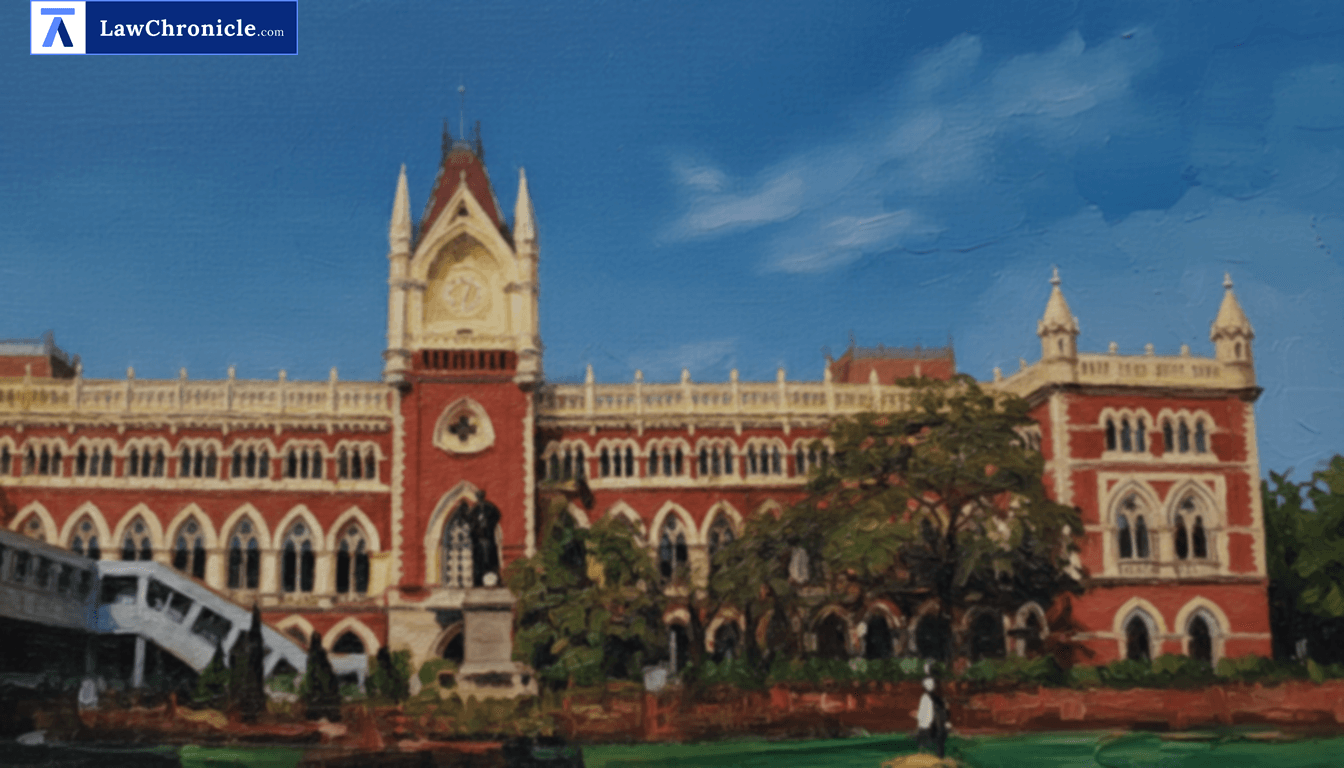
Taking a stern view against statutory authorities violating solemn assurances made in judicial proceedings, the High Court has affirmed that dispossessing a party in breach of an undertaking given to a court constitutes misconduct and an abuse of process that must be rectified by restoring status quo ante. The ruling emphasizes that courts possess inherent powers to undo wrongs committed in defiance of judicial undertakings, effectively preventing litigants from taking the law into their own hands.
In a revisional application filed under Constitution of India, 1950, a single-judge bench of Justice Hiranmay Bhattacharyya was called upon to examine whether an authority can take possession of a suit property on the pretext that no formal stay order was granted, despite having undertaken before the appellate court not to proceed with execution.
Key Takeaways
- Undertakings Are Binding Assurances: A party or its counsel giving a clear impression to the court that execution will not be pursued is strictly bound by that representation.
- Breach Constitutes Actionable Misconduct: Dispossessing a party in violation of a court undertaking amounts to misconduct and an abuse of judicial process.
- Inherent Power to Undo Wrongs: Courts possess inherent jurisdiction under Section 151 of the Code of Civil Procedure, 1908 to order mandatory restoration of possession to rectify illegal dispossession.
- Contextual Interpretation of Legal Expressions: Phrases like "at this stage" in judicial orders must be construed contextually to mean the entire duration of the appeal proceedings when given to avoid stay orders.
The Court affirmed the appellate court's order directing the port authority to restore possession to the private respondent. The Court observed:
The Court, in its reasoning, observed: "In the case on hand, on the faith of the undertaking
given by SPMPK that the execution will not be proceeded with the Appellate Court did not pass an order of stay. Breach of such undertaking would amount to a misconduct and in such situation it is the duty of the Court to undo the wrong by restoring the status quo ante."
Highlighting the legal precedent on the duty of courts to reverse actions done in breach of judicial orders or undertakings, the High Court relied on Sujit Pal vs. Prabir Kumar Sun ( "AIR 1986 Cal 220": 1985 CaseBase(CAL) 120) and Century Flour Mills Ltd. v. S. Suppiah to emphasize that technicalities cannot prevent courts from doing justice. It further noted that as settled in Delhi Development Authority vs. Skipper Construction Company Private Limited ( "(1996) 4 SCC 622": 1996 CaseBase(SC) 407), mandatory directions for restoration of possession are necessary to prevent abuse of the process of law.
Addressing the binding nature of counsel representations, the Court referred to Balwantbhai Somabhai Bhandari vs. Hiralal Somabhai and noted that breach of an undertaking on the faith of which a court sanctions a particular course of action is serious misconduct. The Court also rejected the petitioner's argument regarding admissions made in ignorance of legal rights by distinguishing Shri Krishnan v. Kurukshetra University, while observing that reliance on Dr. Luis Proto Barbosa vs. Union of India and others ( "1992 Supp (2) SCC 644": 1991 CaseBase(SC) 478) and Calcutta Corporation Teachers’ Association and another vs. Calcutta Municipal Corporation and ors. regarding temporal phrases must be evaluated in context.
Ratio
An undertaking given by a party or its advocate before a court in pending proceedings upon which the court refrains from passing a formal order of stay is fully binding. Any breach of such an undertaking by forcibly dispossessing a party during the pendency of the appeal constitutes misconduct and an abuse of the process of law, entitling the aggrieved party to an order of mandatory restoration of possession under Section 151 of the Code of Civil Procedure, 1908 to restore status quo ante.
Background
An eviction order under Section 5 of the Public Premises (Eviction Of Unauthorised Occupants) Act, 1971 was passed by the Estate Officer of Syama Prasad Mookerjee Port, Kolkata (SPMPK) against M/s. Hada Brothers Private Limited on January 30, 2025. Challenging the eviction order, the respondent filed a Miscellaneous Appeal under Section 9 of the Public Premises (Eviction Of Unauthorised Occupants) Act, 1971 before the District Judge, Howrah.
During the appeal proceedings on May 13, 2025, the learned advocate for SPMPK gave an undertaking before the appellate court that execution would not be proceeded with "at this stage" and requested an early hearing. Relying on this solemn undertaking, the appellate court did not grant a formal order of stay. However, on July 1, 2026, SPMPK took forcible possession of the suit property by breaking locks and sealing the godown.
The respondent subsequently filed an application under Section 151 of the Code of Civil Procedure, 1908 seeking restoration of possession. The Additional District Judge, 4th Court, Howrah, allowed the application and directed SPMPK to restore possession. SPMPK challenged this order before the High Court under Constitution of India, 1950, contending that the appeal was time-barred, no formal stay existed, and the undertaking was limited in duration.
Dismissing the revision petition, the High Court held that the phrase "at this stage" meant during the pendency of the appeal and that SPMPK's action was illegal and de hors the due process of law.
Case Details:
Case No.: CO 2552 of 2026
Neutral Citation: 2026:CHC-AS:1347
Case Title: Syama Prasad Mookerjee Port, Kolkata vs. M/s. Hada Brothers Private Limited
Appearances:
For the Petitioner(s): Mr. Kishore Datta, Sr. Advocate, Mr. Subhankar Nag, Mr. Snehashis Sen, Mr. Abhishek Banerjee, Advocates
For the Respondent(s): Mr. Aniruddha Chatterjee, Sr. Advocate, Mr. Vikas Baisya, Mr. Ayush Bhatia, Mr. Rohan Bhatia, Mr. Parikshit Lakhotia, Advocates
Source: 2026 CaseBase(CAL) 2298
Similar Articles


 Breaking News


