


Rajasthan High Court Upholds Life Imprisonment for Seven in Murder Case
 Copy Link
 Share
 Save
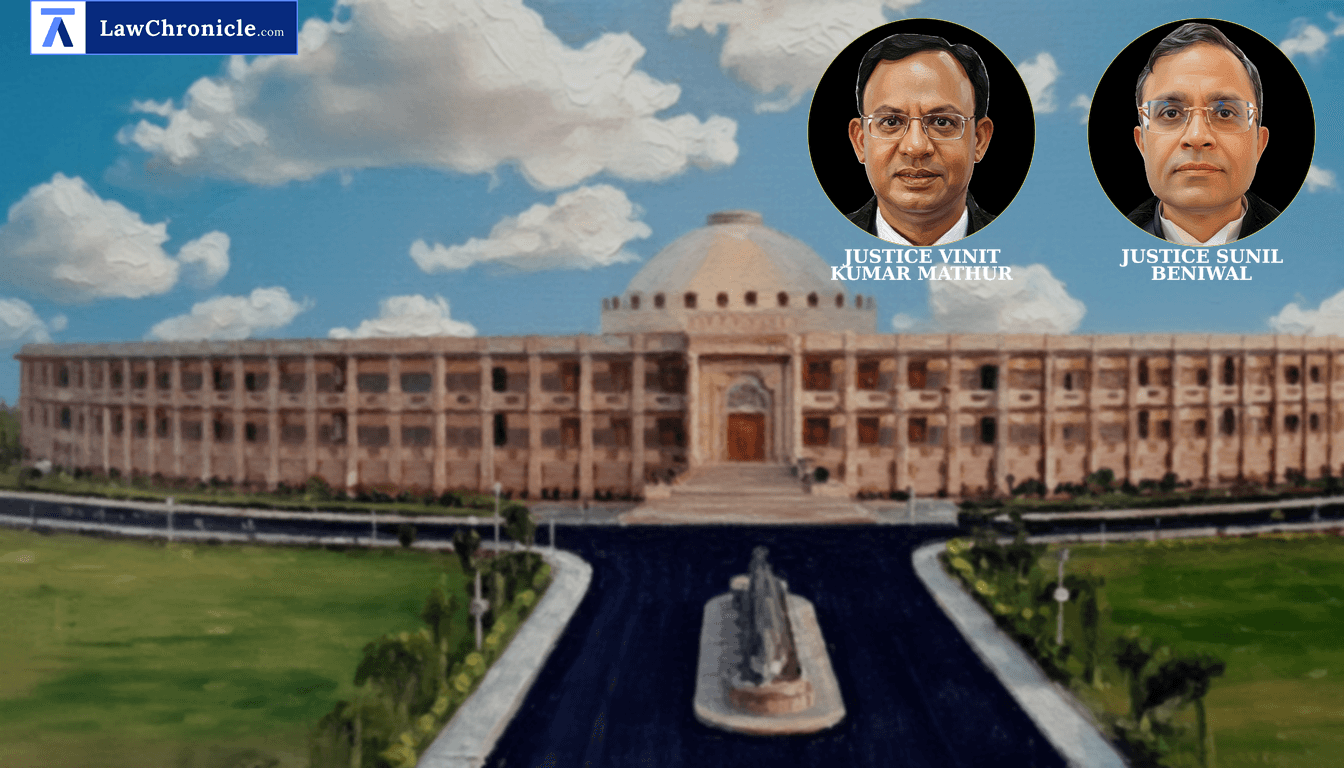
The Rajasthan High Court affirmed the conviction of seven individuals for the murder of a village resident, emphasizing that investigative lapses cannot outweigh credible ocular evidence. The Bench of Justice Vinit Kumar Mathur and Justice Sunil Beniwal dismissed the appeal and directed the immediate custody of the appellants, whose sentences had remained suspended since 2004.
Establishing Common Object in Unlawful Assembly
The High Court carefully examined the nature of the assault and the weapons used, concluding that the appellants acted with a clear common object under Section 149 of the Indian Penal Code. The Court observed that the brutal nature of the injuries, particularly blunt-force trauma to the chest that punctured the lungs, confirmed the intent to cause death. The Court, in its reasoning, observed: "The nature of injuries, the part of the body targeted, the force employed and the concerted manner of assault unmistakably establish the existence of common object attracting the provisions of Section 149 IPC. Thus, the learned trial court has rightly held all the accused persons liable for the offence punishable under Section 302 read with Section 149 IPC."
Credibility of Injured and Eye-Witnesses
A central point of the defense was the omission of two appellants' names in certain police statements recorded under Section 161 of the Code of Criminal Procedure. However, the Court rejected this argument, noting that the earliest report (Parcha-Bayan) specifically named all seven assailants. The bench highlighted that the testimony of an injured witness, like the complainant, carries significant weight as their presence at the crime scene is indisputable. The Court further noted: "It is well settled that lapses or irregularities committed by the investigating agency cannot, by themselves, enure to the benefit of the accused when the ocular evidence adduced before the Court is otherwise cogent, trustworthy and inspires confidence."
Rejection of Right to Private Defence
The appellants argued they were exercising their right of private defence during a sudden fight. The High Court found no evidence to support this, observing that none of the accused sustained any injuries, nor were the victims found with weapons. The assault was deemed a deliberate act rather than a spontaneous reaction. The Court has following directions:
"Consequently, the present criminal appeal fails and is hereby dismissed. The judgment of conviction and order of sentence dated 04.12.2002 passed by the learned trial court against the accused-appellants, is hereby affirmed and upheld. This Court vide orders dated 4.2.2004, 19.06.2003 and 28.4.2004 suspended the sentence of accused-appellants and therefore, they are on bail and since the judgment passed by the learned trial court convicting and sentencing them has been affirmed, therefore, all the accused-appellants are directed to be taken into custody. The record of the trial court be sent back forthwith along with a copy of this judgment for information and necessary compliance."
Background:
The case originated from a dispute over a passage through agricultural land in Village Dhandhra. On October 2, 1999, the deceased, Mukhram, was assaulted at a mechanic shop by the appellants armed with Gandasis (axes), sickles, and lathis. When the complainant, Rajaram, attempted to intervene, he was also brutally assaulted. Mukhram succumbed to lung injuries shortly after. The trial court in 2002 convicted the appellants for murder and related offenses under the Indian Penal Code. The High Court, upon re-appreciating the medical evidence from the post-mortem report and forensic data, found the trial court's judgment to be legally sound and free from perversity.
Case Details:
Case No.: D.B. Criminal Appeal No. 1041/2002
NeutralCitation: [2026:RJ-JD:22790-DB]
Case Title: Lakshman Ram & Ors. v. The State of Rajasthan
Appearances:
For the Petitioner(s): Dr. RDSS Kharlia, Mr. Govind Singh
For the Respondent(s): Mr. Rajesh Bhati, PP
Source: 2026 CaseBase(RAJ) 16
Similar Articles


 Breaking News


