


Reciprocal Cruelty Ground for Divorce When Marriage Irretrievably Breaks Down: Patna HC
 Copy Link
 Share
 Save
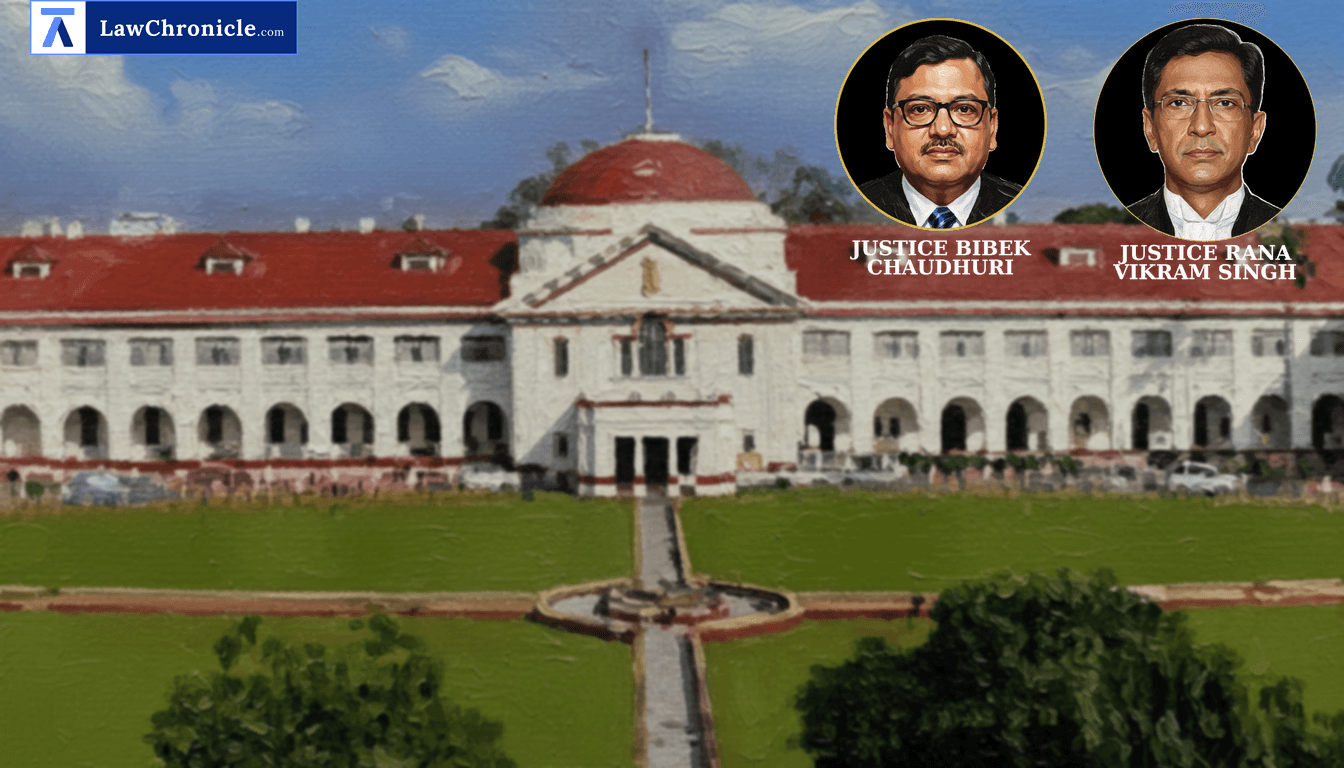
Severing a decade-long matrimonial tie marked by prolonged separation and mutual lack of trust, the Patna High Court has ruled that where parties lack any intention to adjust or reside together, their conduct constitutes 'reciprocal cruelty' justifying a decree of divorce. The Court emphasized that while 'irretrievable breakdown' is not a statutory ground for High Courts, the absence of mutual trust and affection transforms the relationship into a failed marriage that warrants judicial intervention under existing cruelty provisions.
A Division Bench comprising Justice Bibek Chaudhuri and Justice Rana Vikram Singh presided over the appeal, which challenged a Family Court's decision to dissolve a marriage on grounds of cruelty and desertion. The Bench observed that the parties had been living separately for a significant period with no possibility of reconciliation, prompting a reassessment of the legal grounds for their separation.
Key Takeaways
Reciprocal Cruelty as a Ground
When both parties admit a marriage is failed and refuse to live together, it can be judicially interpreted as reciprocal cruelty under Section 13(1)(i-a) of the Hindu Marriage Act, 1955.
Alimony Calculation Standard
Courts may adopt the one-third income rule for determining permanent alimony to ensure a spouse is not left destitute, following the asset-liability assessment framework.
Limits of Appellate Jurisdiction
While High Courts cannot grant divorce solely on 'irretrievable breakdown' (a power reserved for the Supreme Court), they can sever ties if the conduct of the parties fits the definition of statutory cruelty.
Judicial Rationale on Failed Marriages
During the proceedings, the Court noted the frank submissions from both sides regarding the terminal state of their relationship. The Court, in its reasoning, observed: "...the marriage between the parties is a failed marriage and there is nothing remaining in the mental setup of both the parties to be united again as wife and husband... where there is absolutely no adjustment between the parties and they do not want to sit, to stay as wife and husband, the act of the parties can be considered as reciprocal cruelty by both the parties."
The Court relied on the precedent set in Sri Sanjib Tarafdar Vs. Smt. Mausumi Tarafdar to support the severance of the marital tie under Section 13(1)(i-a) of the Hindu Marriage Act, 1955. Furthermore, regarding the financial settlement, the Bench applied the principles laid down in Rajnesh Vs. Neha ( "(2021) 2 SCC 324": 2020 CaseBase(SC) 717) to calculate the appropriate alimony amount.
Directions on Permanent Alimony
The Court has following directions: "We fix the amount of permanent alimony @ Rs. 36,25,200/- (Rupees Thirty Six Lakhs Twenty Five Thousand and Two Hundred) to be paid by the respondent-husband to the appellant-wife. The respondent-husband is, accordingly, directed to deposit the said amount in two equal installments within a period of three months from the date of passing of this order in the saving account of the appellant-wife... The first installment of Rs. 18,12,600/- shall be paid within one month... and the second installment of remaining Rs. 18,12,600/- shall be paid within three months... If the respondent-husband fails to pay... there shall be recovery of interest @ 12% per annum over the outstanding dues."
Ratio
Where a marriage has irretrievably broken down and both parties exhibit a complete lack of mutual trust, love, and intention to resume conjugal life, such conduct qualifies as reciprocal cruelty. In such circumstances, the marital tie can be legally severed under Section 13(1)(i-a) of the Hindu Marriage Act, 1955, even if 'irretrievable breakdown' is not an independent statutory ground available to the High Court. Furthermore, permanent alimony must be adjusted based on the wife's needs and the husband's earning capacity, typically following a one-third income ratio to prevent destitution.
Background
The marriage, solemnized in January 2013, soured shortly after the birth of a child in 2014. The husband alleged that the wife refused to adjust to the matrimonial home and deserted him without cause, whereas the wife claimed she was subjected to harassment and demands for Rs. 20 Lakhs. The wife had also initiated criminal proceedings and maintenance claims under Section 125 of the Code of Criminal Procedure, 1973.
The Family Court originally granted the husband a divorce on 29.11.2022, finding the wife's conduct including applying for a job as 'unmarried' and her limited stay at the matrimonial home amounted to cruelty. The High Court, while acknowledging the husband had since remarried and had another child, focused on the irreparable nature of the original bond to allow the appeal with the modified direction for a lump-sum alimony payment.
Case Details:
Case No.: Miscellaneous Appeal No.113 of 2023
Case Title: Neha Govind Rao @ Neha Singh Vs. Shivendra Pratap Rao
Appearances:
For the Petitioner(s): Mr. Patanjali Rishi, Advocate; Ms. Prerna Rishi, Advocate
For the Respondent(s): Mr. Ashok Kumar Singh, Advocate; Ms. Sweta Singh, Adv.
Source: 2026 CaseBase(PAT) 3308
Similar Articles

 Breaking News


