


Reserved‑category Candidate Who Availed Relaxation in Prelims Cannot Claim Unreserved Cadre Vacancy, Supreme Court Holds
 Copy Link
 Share
 Save
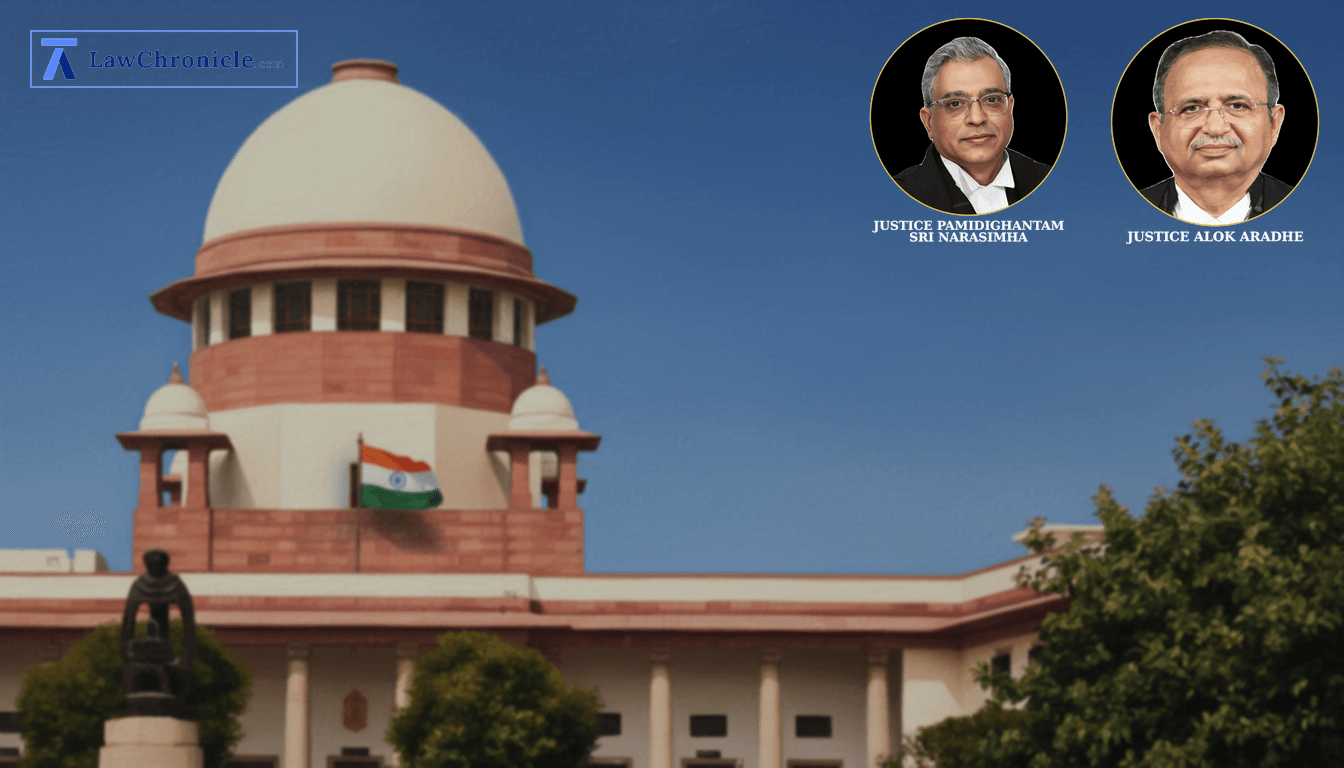
A bench of Justices J.K. Maheshwari and Vijay Bishnoi heard appeals challenging a Karnataka High Court order that had affirmed the Central Administrative Tribunal’s direction to allot a General Insider Karnataka cadre vacancy to a Scheduled Caste candidate who had availed relaxed qualifying marks in the Preliminary stage of the Indian Forest Service (IFS) examination. The appeals arose from notification dated 13.03.2015 by the Ministry of Environment, Forests and Climate Change and concerned cadre allocation under the Exam Rules, 2013 and the Cadre Allocation Policy.
The Supreme Court allowed the appeals and held that a reserved‑category candidate who availed any relaxation in eligibility or selection criteria at "any stage of the examination" could not be treated as selected on "General Standard" for the purpose of allocation against unreserved vacancies. The Court observed that the Preliminary Examination formed an integral first tier of the IFS selection process and that the proviso to Rule 14(ii) of the Exam Rules, 2013 precluded adjustment of candidates who had availed relaxation at any stage against unreserved vacancies. The Court, in its reasoning, observed: “In the facts of the present case, the General category cut‑off for the Preliminary Examination was fixed at 267. Respondent No. 1 secured 247.18 marks. Had the Respondent No. 1 been put against the general standard, his candidature would have been terminated at the first stage i.e., the Preliminary Examination. His candidature succeeded in the first stage of the examination because of the relaxed standards allowed in the Preliminary Examination for SC candidates i.e. 233 marks. After availing the benefit of this relaxation for admission to the Main Examination, Respondent No. 1 cannot subsequently claim to have been selected on "General Standard" merely due to his performance in the subsequent stages. Therefore, if a candidate who has resorted a relaxation at any stage of examination, would not fall within the purview of the proviso to Rule 14(ii) of the Exam Rules, 2013 and in that situation, for the purpose of the applicable Policy for cadre allocation, he would not fall within the list of candidates selected on ‘General Standard’ claiming General Insider vacancy of home state cadre as insider candidate.” The Court upheld the impugned government notification allocating the Karnataka General Insider vacancy to the general‑category candidate.
Background
The dispute originated from the IFS Examination, 2013 conducted under Notification No. 17011/01/2013‑IFS‑II (Exam Rules, 2013). The selection involved two tiers: a Preliminary (screening) Examination and the Main Examination with Interview. Respondent No. 1, an SC candidate, scored 247.18 in the Preliminary (below the General cut‑off of 267 but above the SC relaxed cut‑off of 233) and therefore qualified for the Main Examination by availing the relaxation. Respondent No. 3, a General category candidate, scored 270.68 in the Preliminary. After the Main and Interview, Respondent No. 1 ranked 19 and Respondent No. 3 ranked 37 in the final merit list. During cadre allocation there were two vacancies in Karnataka: one General Insider and one OBC Outsider. The Ministry allocated the General Insider vacancy to Respondent No. 3 and allotted Tamil Nadu to Respondent No. 1.
Respondent No. 1 challenged the allocation before the CAT (Bangalore), which held that a meritorious SC candidate could not be denied an unreserved vacancy solely for having availed relaxation in Prelims; the CAT directed allocation of the General Insider vacancy to Respondent No. 1. The High Court dismissed writs filed by the Union of India and the General candidate and affirmed the Tribunal. The Union and the displaced General candidate appealed.
The Supreme Court analysed Rules 1, 13, 14 and 17 of the Exam Rules, 2013 alongside Paragraph 9 of the Cadre Allocation Policy (2008, amended 2011). The Court noted that Rule 1 made the Preliminary Examination an essential first tier for admission to the Main Examination; Rule 13 authorised UPSC discretion to apply "relaxed standards" in Preliminary and Main to summon reserved category candidates; Rule 14 provided that candidates obtaining marks in the Main and Interview would be arranged in merit and that a "general qualifying standard" would be fixed for recommending candidates against unreserved vacancies, while the proviso to Rule 14(ii) clarified that candidates recommended without resorting to "any relaxations/concessions in the eligibility or selection criteria, at any stage of the examination, shall not be adjusted against the vacancies reserved" for SC/ST/OBC. The Court relied on precedents including Deepa E.V., Gaurav Pradhan, Niravkumar Makwana and Sajib Roy to hold that taking a concession at any stage precluded migration to unreserved posts unless the recruitment rules expressly permitted it. The Court set aside the Tribunal and High Court orders, upheld the Ministry's notification allocating Karnataka to the general candidate, dismissed the petitions of Respondent No. 1, and disposed of pending applications with no order as to costs.
Case Details: Case No.: 2026 INSC 15 (Arising out of SLP (C) No. 4743 of 2020; connected SLP (C) No. 4067 of 2022) Case Title: Union of India v. G. Kiran & Ors.; Antony S. Mariyappa v. G. Kiran & Ors. (connected) Appearances: For the Petitioner(s): K.M. Nataraj, Additional Solicitor General of India (for Union of India); Vardhman Kaushik, counsel (for UPSC) For the Respondent(s): Jayanth Muth Raj, Senior Counsel (for G. Kiran / Respondent No.1); Nikhil Goel, Senior Counsel (for Antony S. Mariyappa / Respondent No.3)
New Delhi; January 6, 2026.
Similar Articles
 Breaking News


