


Reserved-category candidates who outscore general cut-off must be treated as open candidates for shortlisting, Supreme Court upholds Rajasthan HC order
 Copy Link
 Share
 Save
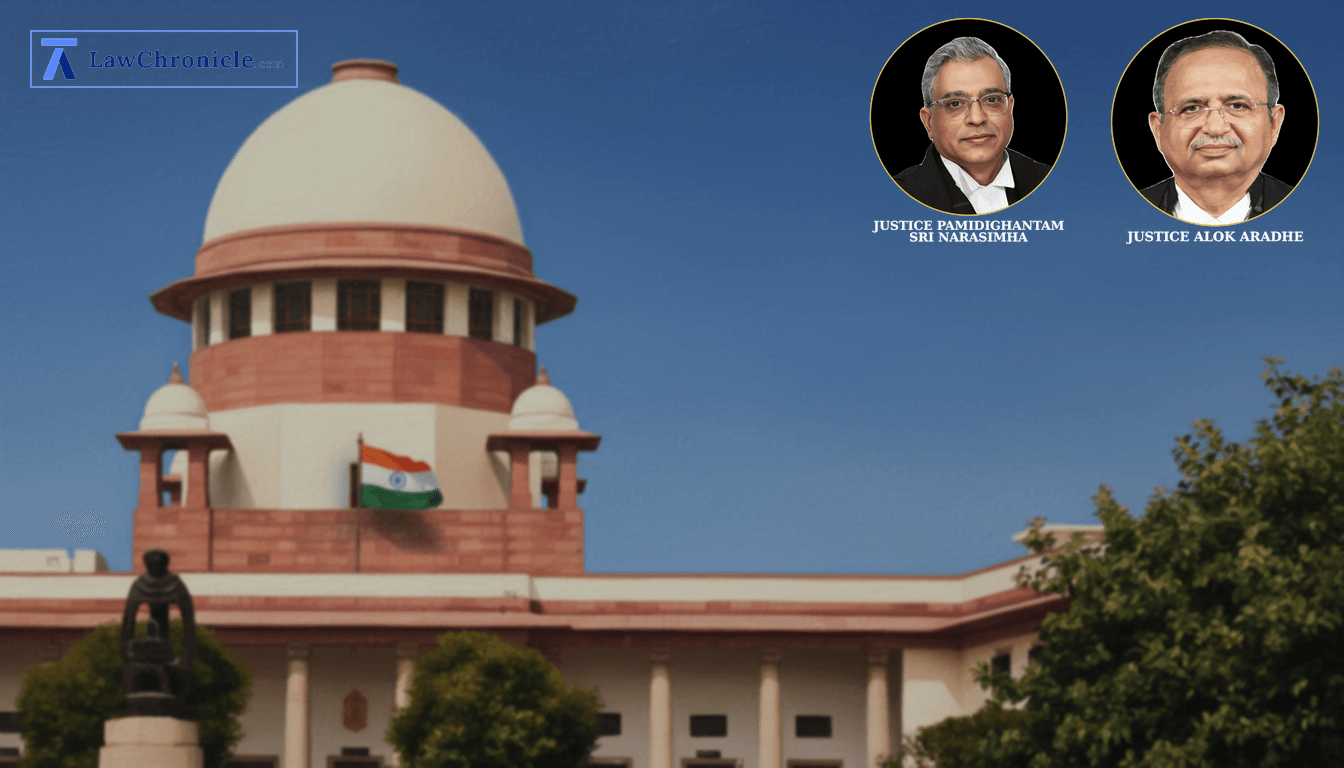
A Bench of Justices Dipankar Datta and Augustine George Masih heard appeals by the Rajasthan High Court administration and its Registrar challenging a Division Bench judgment of the Rajasthan High Court, Jaipur, which directed reworking of shortlists for recruitment to Junior Judicial Assistant/Clerk Grade‑II. The central question concerned whether reserved‑category candidates who secured marks above the general/open cut‑off in the written test must be included in the general/open shortlist for the subsequent typewriting test, or whether the rule of “migration” applied only at final selection.
The Supreme Court affirmed the High Court order and upheld the principle that vacancies notified as “open” must be filled on merit irrespective of a candidate’s reserved status. The Court rejected the contention that allowing such candidates to appear in the next stage would result in an impermissible “double benefit” and held that estoppel did not bar the petitions because the exclusion of meritorious reserved candidates was a concealed illegality. The Court, in its reasoning, observed: “We hold that the word ‘open’ connotes nothing but ‘open’, meaning thereby that vacant posts which are sought to be filled by earmarking it as ‘open’ do not fall in any category. ... For all intents and purposes, the vacancies on posts which are notified/advertised as open or unreserved or general, as the terms suggest, are not reserved for any caste/tribe/class/gender and are, thus, open to all notwithstanding that a cross‑section of society can also compete for appointment on vacant posts which are ‘reserved’.” The Court also endorsed the proposition from Saurav Yadav that “the open category is not a ‘quota’, but rather available to all…,” underscoring that merit alone governed inclusion in the open list.
Background The dispute arose from recruitment conducted under the Rajasthan High Court Staff Service Rules, 2002, which prescribed a written test (300 marks) and a computer‑based typewriting test (100 marks) for 2,756 vacancies notified on 5 August 2022. The advertisement fixed qualifying marks and provided that only candidates securing the prescribed minimum in the written test, to the extent of five times the number of vacancies category‑wise, would be eligible for the typewriting test; final merit was to be on aggregate marks. After the written test (held in March 2023), the High Court prepared category‑wise shortlists and published cut‑off marks. Several reserved‑category candidates obtained marks higher than the general cut‑off but lower than the cut‑offs fixed for their own reserved categories and were therefore excluded from the general shortlist.
Rajat Yadav and others filed writ petitions seeking quashing of the result and directions that reserved candidates who exceeded the general cut‑off be included in the general list for the typewriting test. The Division Bench allowed the writs, holding that exclusion of a reserved candidate who secured higher marks than the general cut‑off would violate Articles 14 and 16 and that the open category must be filled strictly on merit, including reserved candidates who did not avail any special benefit. The Division Bench distinguished precedents such as Chattar Singh (which concerned a preliminary stage whose marks were not carried forward) and relied on Indra Sawhney, R.K. Sabharwal, Saurav Yadav and other decisions to direct reworking of lists: the open list was to be prepared first (including meritorious reserved candidates), followed by reserved lists excluding those already accommodated; candidates previously barred from the typewriting test were to be given opportunity to appear or to have aggregates recomputed; and appointments were to follow accordingly subject to preserving employees-in-position where feasible.
The Supreme Court dismissed the appeals, rejected the appellants’ arguments on “double benefit” and estoppel, and upheld the High Court’s directions. The Court extended time for compliance by two months and ordered that parties bear their own costs, while observing that the High Court should endeavour, as far as possible, not to dislodge employees already in position.
Case Details: Case No.: 2025 INSC 1503 Case Title: Rajasthan High Court & Anr. v. Rajat Yadav & Ors. Appearances: For the Petitioner(s): Mr. Gupta, Senior Counsel For the Respondent(s): Dr. Chauhan, Senior Counsel
Similar Articles
 Breaking News


