


Restitution of Conjugal Rights cannot be Compelled in Face of Cruelty and Dowry Demands: Jharkhand HC
 Copy Link
 Share
 Save

The Jharkhand High Court has quashed a decree for restitution of conjugal rights, ruling that a spouse cannot be judicially compelled to resume cohabitation when forced out by mental torture and unlawful dowry demands. The Court emphasized that such a matrimonial remedy is not feasible where cohabitation would compromise a party's dignity and self-respect, especially when the spouse seeking restitution has subsequent conduct suggesting a lack of bona fide intent.
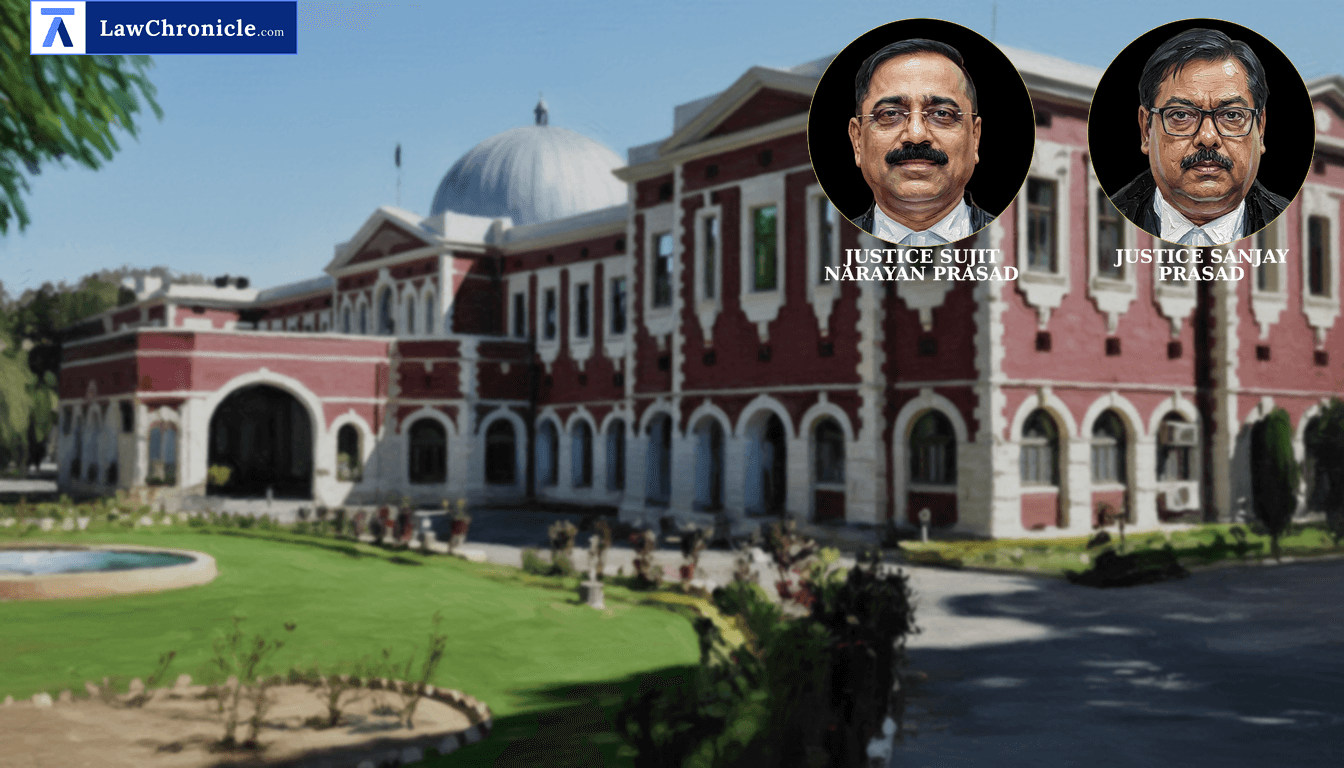
A division bench comprising Justice Sujit Narayan Prasad and Justice Pradeep Kumar Srivastava heard the appeal filed by a wife challenging a Family Court's order that directed her to join her husband. The High Court analyzed the scope of Section 32 of the Divorce Act, 1869 and Section 19(1) of the Family Courts Act, 1984, ultimately finding the lower court's judgment to be perverse for ignoring credible evidence of cruelty.
Key Takeaways
Cruelty as a Reasonable Excuse for Withdrawal
Findings of mental torture and dowry demands constitute a 'reasonable excuse' under matrimonial law to live separately, barring the other spouse from seeking restitution.
Holistic Evidence Appraisal Required
Trial courts must evaluate oral testimonies of matrimonial cruelty as a whole rather than in isolation, and the absence of documentary proof for dowry items does not invalidate credible oral evidence.
Bona Fide Intent for Restitution
Restitution of conjugal rights is an equitable remedy that requires a genuine desire to resume married life; subsequent conduct, such as solemnizing a second marriage, serves as evidence of lack of bona fides.
Dignity Over Cohabitation
Courts cannot compel a spouse to live in an environment where they are subjected to unbearable treatment, prioritizing individual dignity and self-respect over the preservation of the marriage tie.
Evaluation of Marital Obligations and Judicial Discretion
The High Court observed that the primary duty of a Family Judge is to ascertain whether a spouse can live with the partner peacefully and with dignity. The Court noted that even if conduct falls short of a specific matrimonial offense, if it is 'harsh and unbearable,' it justifies living apart. The bench highlighted that the respondent-husband allegedly solemnized a second marriage during the pendency of the proceedings, which further weakened the case for restitution.
The Court has following directions:
"The upshot of the whole discussion, therefore, is that this appeal succeeds and the impugned judgment dated 14.09.2022 and the decree signed on 21.09.2022 passed in Original Suit No.546 of 2019 by the learned Principal Judge, Family Court, Bokaro are, hereby, quashed and set aside."
The Court, in its reasoning, observed: "If one of the spouses utters that she or he cannot live together due to the reason as stated by the spouse in his/her evidence, the Court cannot compel such party to live together compromising with the dignity and subjected to mental torture."
Ratio
A decree for restitution of conjugal rights under Section 32 of the Indian Divorce Act, 1869 cannot be granted if the withdrawal from society is justified by 'reasonable excuse,' which includes mental torture, physical cruelty, and unlawful dowry demands. The remedy of restitution is intended to promote cohabitation in amity and cannot be used as a shield against criminal prosecution or enforced where cohabitation would violate a spouse's right to live with dignity.
Background
The parties were married on December 28, 2018, under Christian rites. The appellant-wife alleged that within days of the marriage, she was subjected to torture for a dowry of Rs. 10 lakhs. She claimed she was abandoned at her parental home while five months pregnant. Conversely, the husband alleged she left without cause and filed for restitution of conjugal rights just before the birth of their child. The wife subsequently filed a criminal case under Section 498A of the Indian Penal Code, 1860.
The Family Court had allowed the husband's petition, citing a lack of documentary evidence for dowry demands. However, the High Court, relying on Jagdish Singh v. Madhuri Devi ( "(2008) 10 SCC 497": 2008 CaseBase(SC) 339) and Damodar Lal v. Sohan Devi ( "(2016) 14 SCC 197": 2016 CaseBase(SC) 845), held that the first appellate court has the power to reappreciate facts. It further applied the principle from Arulvelu and Anr. vs. State [Represented by the Public Prosecutor] and Anr. regarding 'perversity' in judicial findings and A. Jayachandra v. Aneel Kaur ( "(2005) 2 SCC 22": 2004 CaseBase(SC) 802) regarding the 'preponderance of probability' in civil matters. Given the husband's alleged second marriage and the history of discord, the Court set aside the restitution decree.
Case Details:
Case No.: First Appeal No. 133 of 2022
Neutral Citation: 2026:JHHC:28669-DB
Case Title: Stuti Sarah vs. Johnson Kachhap
Appearances:
For the Petitioner(s): Mr. Mukesh Kumar, Advocate
For the Respondent(s): Ms. Sarweshwari Kumari, Advocate
Source: 2026 CaseBase(JHKD) 3163
Similar Articles


 Breaking News


