


Supreme Court Restores Wife’s Maintenance Despite Decree for Restitution of Conjugal Rights
 Copy Link
 Share
 Save
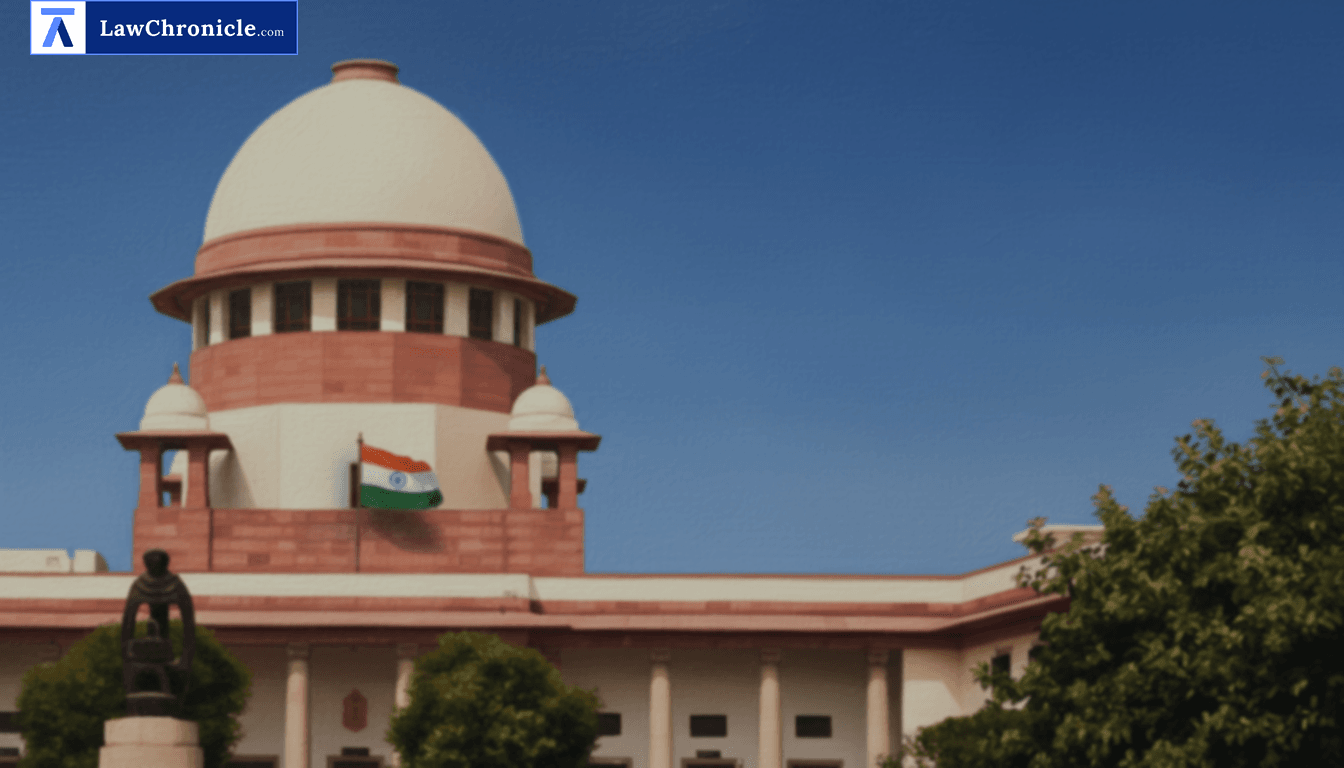
A Bench of Chief Justice Sanjiv Khanna and Justice Sanjay Kumar heard the appeal by Rina Kumari (also called Rina Devi/Reena) against the Jharkhand High Court’s decision which had held that a decree for restitution of conjugal rights, not complied with by the wife, disentitled her to maintenance under Section 125(4) Cr.P.C. The appeal arose from conflicting orders: a Family Court had granted maintenance to the wife, the High Court had set that aside relying on Section 125(4), and the matter reached this Court by special leave.
The Court allowed the appeal, set aside the High Court judgment dated 04.08.2023 and restored the Family Court’s maintenance order. The Supreme Court held that “the mere passing of a decree for restitution of conjugal rights at the husband’s behest and non-compliance therewith by the wife would not, by itself, be sufficient to attract the disqualification under Section 125(4) Cr.P.C.” The Court, in its reasoning, observed: “Thus, the preponderance of judicial thought weighs in favour of upholding the wife’s right to maintenance under Section 125 Cr.P.C. and the mere passing of a decree for restitution of conjugal rights at the husband’s behest and non-compliance therewith by the wife would not, by itself, be sufficient to attract the disqualification under Section 125(4) Cr.P.C. It would depend on the facts of the individual case and it would have to be decided, on the strength of the material and evidence available, whether the wife still had valid and sufficient reason to refuse to live with her husband, despite such a decree. There can be no hard and fast rule in this regard and it must invariably depend on the facts of the particular case. In any event, a decree for restitution of conjugal rights secured by a husband coupled with non-compliance therewith by the wife would not be determinative straightaway either of her right to maintenance or the applicability of the disqualification under Section 125(4) Cr.P.C.” The Court directed respondent Dinesh to pay maintenance of ₹10,000 per month to Reena from 03.08.2019 and ordered arrears to be paid in three instalments with specified deadlines; parties were to bear their own costs.
Background The parties married on 01.05.2014 and separated in August 2015, after which Reena lived at her parental home. The husband instituted Original Suit No. 495 of 2018 under Section 9 HMA for restitution of conjugal rights and obtained a decree on 23.04.2022. Reena had alleged cruelty, dowry demand of ₹5 lakh, extramarital relations and a miscarriage on 28.01.2015 which the husband did not attend; she said he had persuaded her to go to her parental home and thereafter did not make genuine efforts to bring her back. After the decree she did not return to the matrimonial home.
While the restitution suit was pending, Reena lodged a complaint under Section 498A IPC and later filed Original Maintenance Case No. 454 of 2019 under Section 125 Cr.P.C. The Family Court, Dhanbad, allowed maintenance on 15.02.2022, finding Dinesh had sufficient means (net salary shown as ₹43,211) and had neglected to maintain his wife; maintenance was fixed at ₹10,000 per month from the date of application. Dinesh challenged the maintenance order in Criminal Revision No. 440 of 2022 before the Jharkhand High Court which allowed the revision, on the view that Reena had withdrawn from her husband’s society without reasonable excuse and had not complied with the restitution decree; the High Court relied on the exception in Section 125(4) Cr.P.C., which provides that a wife shall not be entitled to maintenance “if, without any sufficient reason, she refuses to live with her husband.”
The Supreme Court examined the statutory scheme, earlier precedents and the evidence on record. It reviewed authorities emphasising that Section 125 Cr.P.C. is a measure of social justice and that the statutory disqualification in Section 125(4) must be applied factually; the Court rejected the proposition that a civil decree for restitution would automatically be conclusive in maintenance proceedings. The Court found that material including Reena’s uncontroverted testimony, documentary proof of abortion, admissions by Dinesh and evidence of ill-treatment (lack of toilet access, denial of proper cooking facilities) collectively furnished “sufficient reason” for her not to return. The Supreme Court therefore held that the High Court erred in treating the restitution decree as determinative and restored the Family Court’s maintenance order with a payment schedule: monthly payments by the 10th of each calendar month and arrears in three equal instalments due by 30.04.2025, 31.08.2025 and 31.12.2025.
Case Details: Case No.: Criminal Appeal No. ………….. of 2025 (@ Special Leave Petition (Crl.) No. 5896 of 2024) Case Title: Rina Kumari @ Rina Devi @ Reena v. Dinesh Kumar Mahto @ Dinesh Kumar Mahato & another Appearances: For the Petitioner(s): [Not indicated in judgment] For the Respondent(s): [Not indicated in judgment]
Similar Articles
 Breaking News


