


Madhya Pradesh HC: Revenue Courts Lack Jurisdiction Over Complex Title Disputes
 Copy Link
 Share
 Save
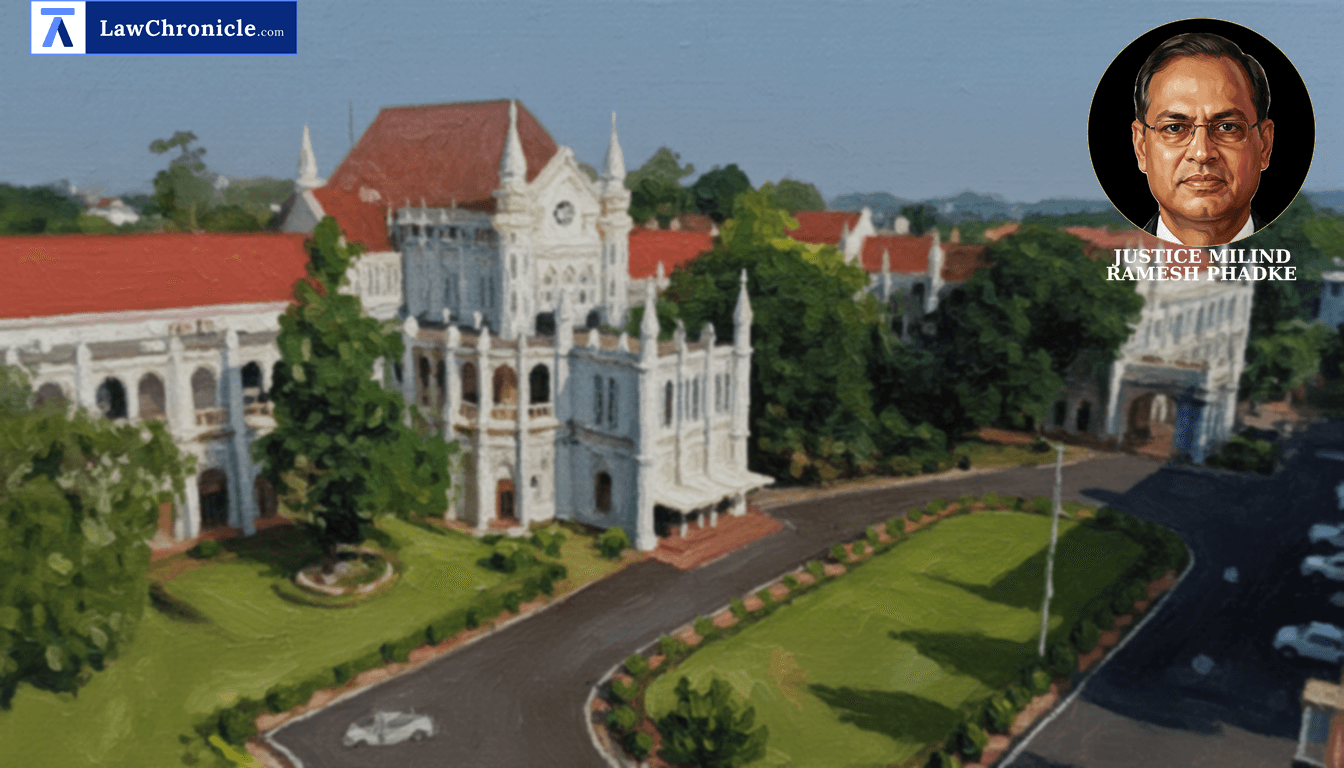
Revenue authorities cannot usurp the power of civil courts to adjudicate bona fide disputes over property ownership and long-standing residential structures under the guise of summary possession proceedings. The Gwalior Bench of the Madhya Pradesh High Court has ruled that Madhya Pradesh Land Revenue Code, 1959 is strictly a summary remedy for restoring possession to recorded owners and cannot be extended to resolve complicated questions of title or validity of ancient sale deeds.
A Single Judge Bench of Hon'ble Shri Justice Milind Ramesh Phadke heard the challenge against orders passed by the Tehsildar, the Additional Commissioner, and the Board of Revenue. The court examined whether a dispute involving a 1965 registered sale deed and contested municipal records could be settled by revenue officials or required a formal civil trial.
Summary Jurisdiction vs. Proprietary Rights
The Court emphasized that the jurisdiction conferred upon Revenue Courts is limited and cannot be invoked when a party asserts an independent title supported by registered conveyances. It noted that the petitioners had occupied a residential house since 1965, challenging the respondents' claim that the land was agricultural.
In its reasoning, the Court observed: "Section 250 of the Code is a summary remedy intended to restore possession to a recorded Bhumiswami where unauthorized occupation is established. The jurisdiction conferred upon the Revenue Court under the said provision is limited. The Revenue Court is neither competent to adjudicate complicated questions relating to title nor to determine rival proprietary claims where serious disputes regarding ownership arise. Whenever the very foundation of the claimant's title is disputed and the opposite party assertted an independent title supported by registered conveyances and long possession, the controversy travels beyond the limited scope of Section 250 and necessarily falls within the exclusive domain of the Civil Court."
The Impact of Conflicting Revenue Entries
The Court found that historical Khasra entries from 1965 to 1973 recorded the land in the name of the Municipality, while subsequent 'Record of Rights' entries reflected the respondents' names without any clear mutation order. Such inconsistencies, the Court held, create a serious doubt that only a Civil Court can resolve after full oral and documentary evidence. The Court also criticized the reliance on an ex-parte demarcation report, noting that boundaries and municipal records are often superior identifiers of property than survey numbers alone, citing the principle in Subhaga and Others v. Shobha and Others ( "(2006) 5 SCC 466": 2006 CaseBase(SC) 1071).
Stale Claims and Limitation
The High Court rejected the notion that a fresh demarcation could revive a time-barred cause of action. Since the respondents alleged encroachment as far back as 1986 and had knowledge of it by 1992, the 2001 application was deemed hit by the two-year limitation period prescribed under Madhya Pradesh Land Revenue Code, 1959.
The Court has the following directions:
"Consequently, the writ petition succeeds and is hereby allowed. The order dated 23.11.2002 passed by the Tehsildar, Shivpuri in Case No.13/2000-2001/A-70, the order dated 10.12.2003 passed by the Additional Commissioner, Gwalior Division, Gwalior in Appeal No.413/2002-2003 and the order dated 25.04.2005 passed by the Board of Revenue, Madhya Pradesh in Revision No.2009-III/03 are hereby quashed. The order dated 04.02.2003 passed by the Sub-Divisional Officer (Revenue), Shivpuri is restored. It is clarified that this Court has not expressed any opinion on the merits of the rival claims of title. The parties shall be at liberty to seek declaration of their respective rights and all consequential reliefs before the competent Civil Court, which shall decide the matter independently on its own merits and in accordance with law."
Key Takeaways:
Civil Courts Hold Exclusive Title Jurisdiction
Revenue Courts are barred from deciding ownership where a bona fide dispute exists based on registered deeds.
Repeated Demarcation Does Not Extend Limitation
A new measurement cannot revive a cause of action that was previously known and barred by the two-year statutory limit.
Evidence Standards in Possession Cases
Unauthenticated photocopies and ex-parte demarcation reports lacking field books cannot justify the "drastic relief" of dispossession.
Identification Beyond Survey Numbers
Property identity is established by boundaries and municipal records, and the absence of a survey number in a sale deed does not invalidate it.
Ratio Decidendi:
The summary jurisdiction of a Revenue Court under Section 250 of the Madhya Pradesh Land Revenue Code is confined to cases where title is admitted or undisputed; it does not empower the court to adjudicate complicated proprietary rights or the validity of ancient revenue entries, which must be relegated to a Civil Court.
Background:
The dispute concerned Survey No. 215 in Village Jhingra. The respondents claimed the petitioners encroached on 93.324 sq. meters of their Bhumiswami land, initiating proceedings in 2001 after a 14.01.2001 demarcation. The petitioners contended they bought the house via a 1965 sale deed and that the land originally belonged to the Municipal Council. While the Tehsildar ordered restoration of possession, the SDO reversed it, stating it was a civil title dispute. However, the Additional Commissioner and Board of Revenue reinstated the Tehsildar's order, leading to this writ petition. The High Court quashed those orders, affirming the SDO’s view that such complex ownership conflicts are outside the summary purview of revenue officers.
Case Details:
Case No.: WRIT PETITION No. 2401 of 2005
NeutralCitation: 2026:MPHC-GWL:19599
Case Title: GOVIND PRASAD AND ORS. Versus ANIL KUMAR (DELETED) SMT. NEELAM SINGHAL AND OTHERS
Appearances:
For the Petitioner(s): Shri P. C. Chandil - Advocate
For the Respondent(s): Shri Anand Raghuwanshi- Advocate
Source: 2026 CaseBase(MP) 97
Similar Articles
 Breaking News


