


Revenue Mutation Cannot Override Completed Land Acquisition: Orissa HC
 Copy Link
 Share
 Save
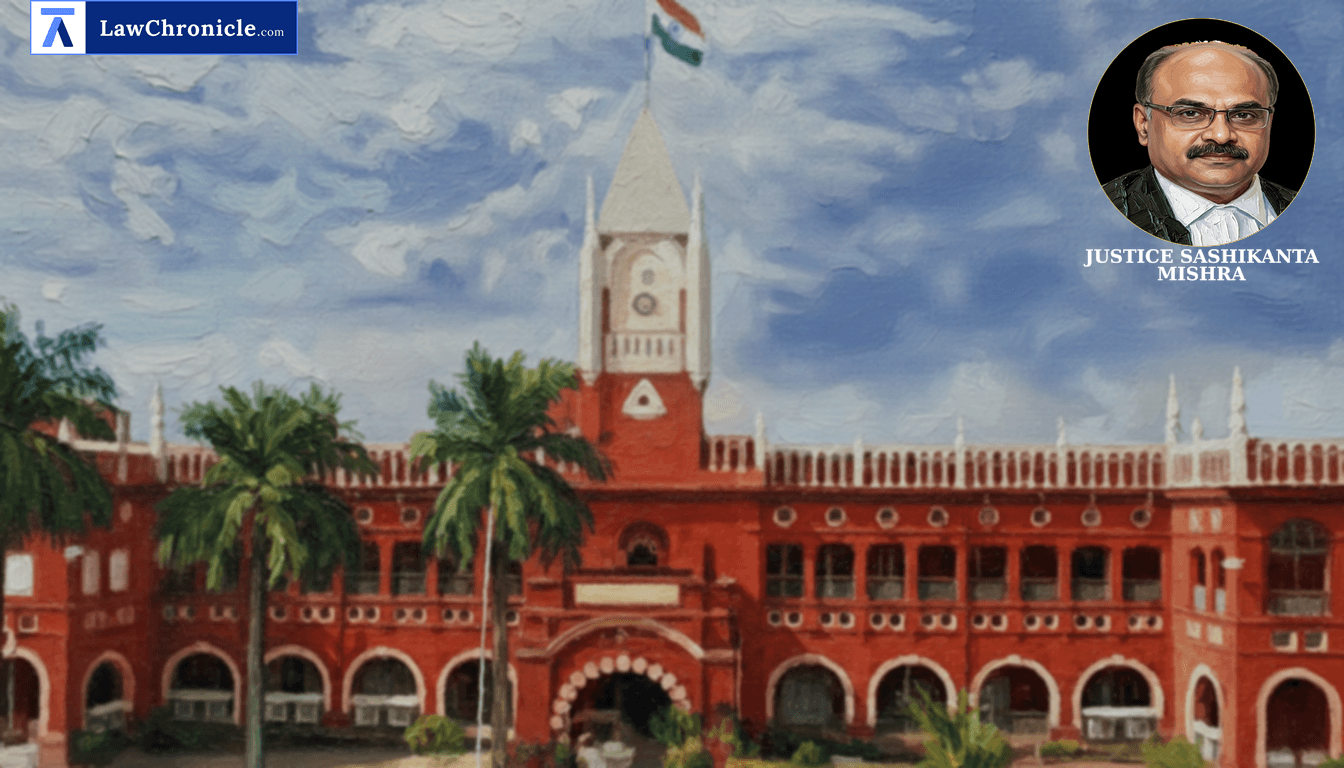
In a stern rebuke to litigants suppressing crucial acquisition details, the High Court held that subsequent mutation entries or acceptance of revenue rent cannot revive land title divested through completed acquisition proceedings.
A single-judge bench of Justice Sashikanta Mishra was hearing a writ petition under Article 226 of Constitution of India and Article 227 of Constitution of India challenging the deletion of a land entry from the petitioners' Record of Rights (ROR) and their consequential eviction.
Key Takeaways
Acquisition Prevails Over Revenue Records: Mutation entries and tax receipts do not create title and cannot undo completed land acquisition proceedings.
Suppression Disentitles Equitable Relief: Litigants hiding past statutory acquisition proceedings cannot claim relief under constitutional writ jurisdiction.
Consequence Assailed Without Cause Is Unmaintainable: Challenging revenue record corrections without assailing the underlying land acquisition notification is legally impermissible.
Court Observations and Directions
The Court observed that mutation or correction of revenue records is essentially fiscal in nature and does not create or extinguish title. The correction of the ROR was merely consequential to the earlier completed land acquisition proceeding.
The Court, in its reasoning, observed: "The principle that a person who does not come
to the court with clean hands is not entitled to be heard on the merits of his grievance and, in any case, such person is not entitled to any relief is applicable not only to the petitions filed under Articles 32, 226 and 136 of the Constitution but also to the cases instituted in others courts and judicial forums. The object underlying the principle is that every court is not only entitled but is duty bound to protect itself from unscrupulous litigants who do not have any respect for truth and who try to pollute the stream of justice by resorting to falsehood or by making misstatement or by suppressing facts which have a bearing on adjudication of the issue(s) arising in the case."
Ratio
A revenue record entry or subsequent mutation cannot override or invalidate a completed statutory land acquisition. A litigant who suppresses the fact of a completed land acquisition proceeding is disentitled from seeking equitable relief under writ jurisdiction.
Background
The petitioners claimed ownership over Ac.0.25 decimals of land purchased via a registered sale deed in 2005 and mutated in 2021. They alleged that the Tahasildar arbitrarily deleted their names from the ROR and transferred the land to IDCO for NALCO's project without prior notice or hearing.
Conversely, the State and NALCO submitted that the land was acquired under the Land Acquisition Act, 1894 via notifications issued in 2006 and 2007. Since the petitioners refused compensation, the amount was deposited before the Civil Court under Section 31(2) of the Land Acquisition Act, 1894 in 2012, and physical possession was handed over to NALCO in 2019.
A factual report submitted by the Collector, Angul confirmed that the acquisition proceedings were completed, but the petitioners suppressed these material facts in their writ petition. Relying on Ramjas Foundation v. Union of India ( "(2010) 14 SCC 38": 2010 CaseBase(SC) 1428), the Court reiterated that bad-faith litigation involving suppression of material facts disentitles the parties to any relief and dismissed the writ petition.
Case Details:
Case No.: W.P.(C) No.12172 of 2025
Neutral Citation: [ODHC010292482025]
Case Title: Mihir Kumar Biswal & Another v. Commissioner-Cum-Secretary Revenue & Disaster Management, Odisha, Bhubaneswar and Others
Appearances:
For the Petitioner(s): Mr. T. Barik, Advocate
For the Respondent(s): Mr. S.N. Patnaik, Addl. Government Advocate, Mr. B. K. Sharma, Sr. Advocate, Mr. G. Mukherji, Sr. Advocate, M/s. B.R. Behera, B. Singh, S.S. Panda, A. Acharya & A.S. Mishra, Advocates
Source: 2026 CaseBase(ORI) 73
Similar Articles




 Breaking News


