


Revenue's Bid To Block Interest On Delayed Tax Refunds Fails Before Calcutta High Court
 Copy Link
 Share
 Save
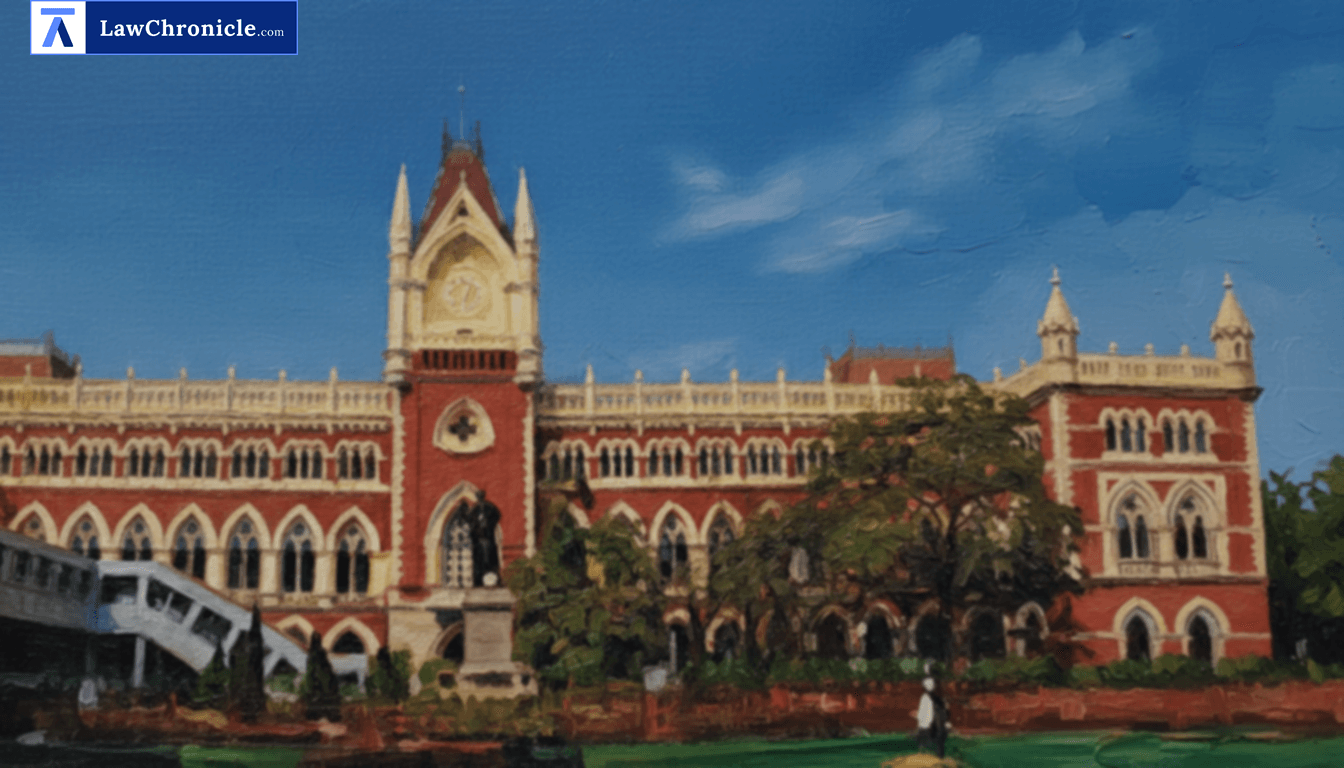
The Calcutta High Court has reinforced the sanctity of taxpayer rights by ruling that the State's obligation to pay interest on delayed refunds is absolute and commences three months from the original application date, regardless of subsequent administrative delays or appellate cycles. In a decisive rejection of the revenue department's challenge, the Court held that taxes paid under a mistake of law lose the character of a duty, rendering statutory interest caps inapplicable and entitling the assessee to higher compensatory rates.
A Division Bench comprising Justice Rajarshi Bharadwaj and Justice Uday Kumar heard the appeal filed by the Commissioner of CGST and CX Kolkata South Commissionerate. The revenue challenged an interim order passed by the Customs, Excise and Service Tax Appellate Tribunal (CESTAT) which had directed the payment of 9% interest on a principal refund amount exceeding Rs. 2.20 Crores due to a registered service provider.
Key Takeaways
Automatic Interest Liability
The liability of the State to pay interest under Section 11BB of the Central Excise Act, 1944 is triggered automatically upon the expiry of three months from the original refund application, not from the date of an appellate order.
Mistake of Law Doctrine
Amounts deposited under a mistake of law do not constitute 'duty' under Article 265 of the Constitution of India, 1950, thereby exempting such refunds from the restrictive procedural and limitation boundaries of Section 11B.
Inapplicability of Interest Caps
Statutory notifications capping interest rates at 6% do not apply to refunds arising from payments made under a mistake of law, where courts may grant higher compensatory interest.
Tribunal's Inherent Powers
The CESTAT is fully empowered under Rule 41 of the Customs, Excise and Service Tax Appellate Tribunal (Procedure) Rules, 1982 to issue implementation directions to ensure its final orders are not rendered ineffective by administrative inaction.
Revenue's Jurisdictional Challenge Dismissed
The Court first addressed the maintainability of the appeal filed under Section 35G of the Central Excise Act, 1944. The revenue had argued that the Tribunal exceeded its jurisdiction by awarding interest through a miscellaneous application rather than a fresh appeal. However, the Court, relying on precedents from the Bombay and Karnataka High Courts, noted that orders passed under Rule 41 of the Customs, Excise and Service Tax Appellate Tribunal (Procedure) Rules, 1982 are procedural implementation directions and not orders "in appeal" amenable to High Court appellate jurisdiction.
The Court observed: "An appeal under Section 35G is maintainable only against an order passed "in appeal" by the Tribunal under Section 35C (arising from appeals under Section 35B). Conversely, Rule 41 empowers the Tribunal to issue procedural and implementation directions necessary to give effect to its final orders or secure the ends of justice."
Clarification on Interest Computation and Rates
The revenue contended that since the refund was sanctioned within three months of the respondent submitting completed administrative documents in 2024, no interest was due. The Court rejected this, clarifying that the clock starts from the initial filing in 2012.
The Court, in its reasoning, observed: "The Supreme Court in Ranbaxy Laboratories v. Union of India ( "2011 (273) E.L.T.3 (SC)": 2010 CaseBase(DEL) 2058) settled that the State's liability to pay interest under Section 11BB commences automatically upon the expiry of three months from the date of receipt of the original refund application under Section 11B(1) and not from the date of any appellate order. The respondent's original claims were filed on January 5, 2012, and March 20, 2012. The subsequent communication dated September 12, 2024, was merely a follow-up representation for implementation and cannot be deemed a fresh application."
Regarding the rate of interest, the Court held that the 9% rate awarded by the Tribunal was justified as the project laying water pipelines for a state agency was a sovereign welfare initiative not subject to service tax. Since the tax was paid under a mistake of law, the statutory 6% cap was inapplicable.
Court Directions
The Court has following directions:
"i. Substantial Question (1) is answered in the affirmative, i.e., against the revenue and in favor of the assessee, holding that interest is indeed payable under Section 11BB in the facts and circumstances of this case because the three-month period must be reckoned from the original 2012 applications and not from the subsequent submission of requested administrative documents.
ii. Substantial Question (2) is answered in the affirmative, i.e., against the revenue and in favor of the assessee, holding that the Learned Tribunal was fully correct and justified in awarding interest at the rate of 9% per annum in favor of the respondent.
iii. Substantial Question (3) is answered in the negative, i.e., against the revenue and in favor of the assessee, holding that the Tribunal's direction to pay interest at 9% is compensatory for a refund arising from a mistake of law and is not contrary to Notification No. 24/2014-C.E.(NT).
iv. Substantial Question (4) is answered in the negative, i.e., against the revenue and in favor of the assessee, holding that the Learned Tribunal did not exceed its jurisdiction or act contrary to Section 35B or the CESTAT Rules by invoking its inherent powers under Rule 41 to ensure the implementation of its final order.
v. Substantial Question (5) is answered in the affirmative, i.e., against the revenue and in favor of the assessee, holding that the Tribunal's order is correct and there was no suppression of facts by the respondent.
vi. Substantial Question (6) is answered in the negative, i.e., against the revenue and in favor of the assessee, holding that an appeal under Section 35G of the Central Excise Act, 1944 is not maintainable against a procedural direction passed by the Tribunal under Rule 41."
Ratio
The liability of the revenue to pay interest on delayed refunds under Section 11BB of the Central Excise Act, 1944, arises automatically after three months from the date of the original refund application. Furthermore, amounts paid under a mistake of law do not bear the character of 'duty', and consequently, the procedural limitations of Section 11B and statutory interest rate caps under Section 11BB do not strictly apply, permitting courts to grant compensatory interest.
Background
The dispute began when Electrosteel Casting Limited paid service tax on a water supply project for the Kerala Water Authority, believing it to be a taxable 'commercial construction service'. Upon learning such projects were exempt, the company filed refund claims in 2012. The revenue department rejected these claims on grounds of limitation and merit. After a decade of litigation, the CESTAT ruled in favor of the company in 2024. When the department sanctioned the principal refund but refused to pay interest, the company moved a miscellaneous application under Rule 41. The Tribunal directed 9% interest from 2012, which the revenue challenged in the present appeal. The High Court ultimately dismissed the revenue's appeal, affirming the Tribunal's order.
Case Details:
Case No.: CEXA 26 of 2025
Neutral Citation: 2026:CHC-OS:373-DB
Case Title: Commissioner of CGST and CX Kolkata South Commissionerate -Vs- M/s. Electrosteel Casting Limited
Appearances:
For the Petitioner(s): Mr. Vipul Kundalia, Sr. Adv.; Mr. Tapan Bhanja, Adv.; Mr. Anindya Kanan, Adv.
For the Respondent(s): Mr. Rahul Dhanuka, Adv.; Mr. Niraj Baheti, Adv.
Source: 2026 CaseBase(CAL) 2550
Similar Articles
 Breaking News


