


Review Jurisdiction Is Not Appeal In Disguise: Kerala HC
 Copy Link
 Share
 Save
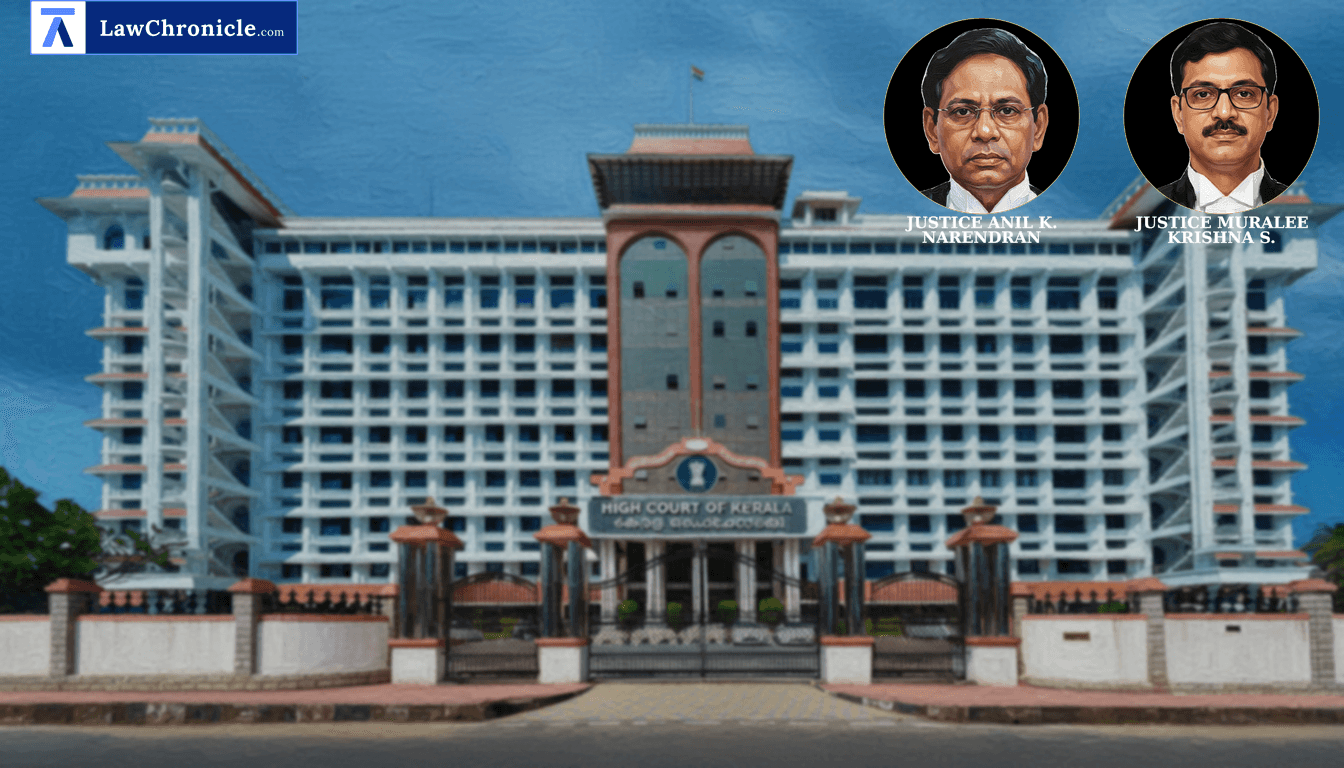
The Kerala High Court reaffirmed the stringent limits of review jurisdiction, emphasizing that litigants cannot seek a rehearing of a case on its merits under the guise of correcting an error apparent on the face of the record.
A division bench comprising Justice Anil K. Narendran and Justice Muralee Krishna S. delivered the ruling while dismissing a review petition filed by the Union of India against a judgment that had granted disability pension benefits to a retired Colonel. The Court clarified that unless a mistake is self-evident and requires no deep search, it does not qualify as an 'error apparent' justifying the exercise of power under Section 114 and Order XLVII Rule 1 of the Code of Civil Procedure, 1908.
Strict Limits of Review Jurisdiction
While examining the scope of its power, the Court noted that a review petition has a limited purpose and must not be used as a tool to reagitate questions already addressed and decided. The bench relied on several precedents to underscore that an erroneous decision must be challenged through an appeal, not a review.
The Court, in its reasoning, observed: "It is trite that review power under Section 114 read with Order XLVII of the CPC is available to be exercised only on setting up any one of the following grounds by the petitioner; (i) discovery of a new and important matter or evidence, or (ii) mistake or error apparent on the face of the record, or (iii) any other sufficient reason... Under the guise of review, a litigant cannot be permitted to reagitate and reargue the questions, which have already been addressed and decided."
Court's Rationale on Disability Pension and Rounding Off
The petitioners had argued that the respondent was not entitled to the disability element of pension as his illness (Type II Diabetes Mellitus) was not found attributable to military service by the Release Medical Board. They further contended that the 50% rounding-off benefit was incorrectly applied. However, the Court found that these aspects had been thoroughly considered in the original judgment by relying on Dharamvir Singh v. Union of India ( "(2013) 7 SCC 316": 2013 CaseBase(SC) 992) and Sukhvinder Singh v. Union of India ( "(2014) 14 SCC 364": 2014 CaseBase(SC) 553).
Referring to Parsion Devi v. Sumitri Devi ( "(1997) 8 SCC 715": 1997 CaseBase(SC) 421), the Court reiterated: "An error which is not self-evident and has to be detected by a process of reasoning, can hardly be said to be an error apparent on the face of the record justifying the court to exercise its power of review under Order 47 Rule 1 CPC. In exercise of the jurisdiction under Order 47 Rule 1 CPC it is not permissible for an erroneous decision to be 'reheard and corrected'."
Background:
The dispute originated from a writ petition filed by the Union of India challenging a Tribunal order that granted disability pension to a retired Colonel who was discharged in 2000. The Colonel had been diagnosed with Type II Diabetes Mellitus with a 20% disability. The High Court had earlier dismissed the Union's writ petition, concurring with the Tribunal's finding that the disability was attributable to service and eligible for rounding off to 50% as per established legal principles in Dharamvir Singh v. Union of India ( "(2013) 7 SCC 316": 2013 CaseBase(SC) 992) and Sukhvinder Singh v. Union of India ( "(2014) 14 SCC 364": 2014 CaseBase(SC) 553).
The Union of India sought a review of this dismissal after a delay of 252 days, which the Court condoned before hearing the matter on merits. The petitioners argued that the burden of proof lay on the respondent and that the rounding-off policy cited (Annexure A2) was prospective. The Court, however, maintained that these were substantive arguments belonging to an appeal and did not constitute a 'patent error' on the record.
Case Details:
Case No.: RP NO. 148 OF 2026
NeutralCitation: 2026:KER:34052
Case Title: UNION OF INDIA vs. COL A K DIWAKAR (RETD)
Appearances:
For the Petitioner(s): SHRI. T.C. KRISHNA, SENIOR PANEL COUNSEL
For the Respondent(s): SHRI. GYOTHISH CHANDRAN, SRI. RATHEESH. B
Source: 2026 CaseBase(KER) 262
Similar Articles
 Breaking News


