


Rigid Rejection of Substitute Nominees For Land-Losers Violates Administrative Fairness: Patna High Court
 Copy Link
 Share
 Save
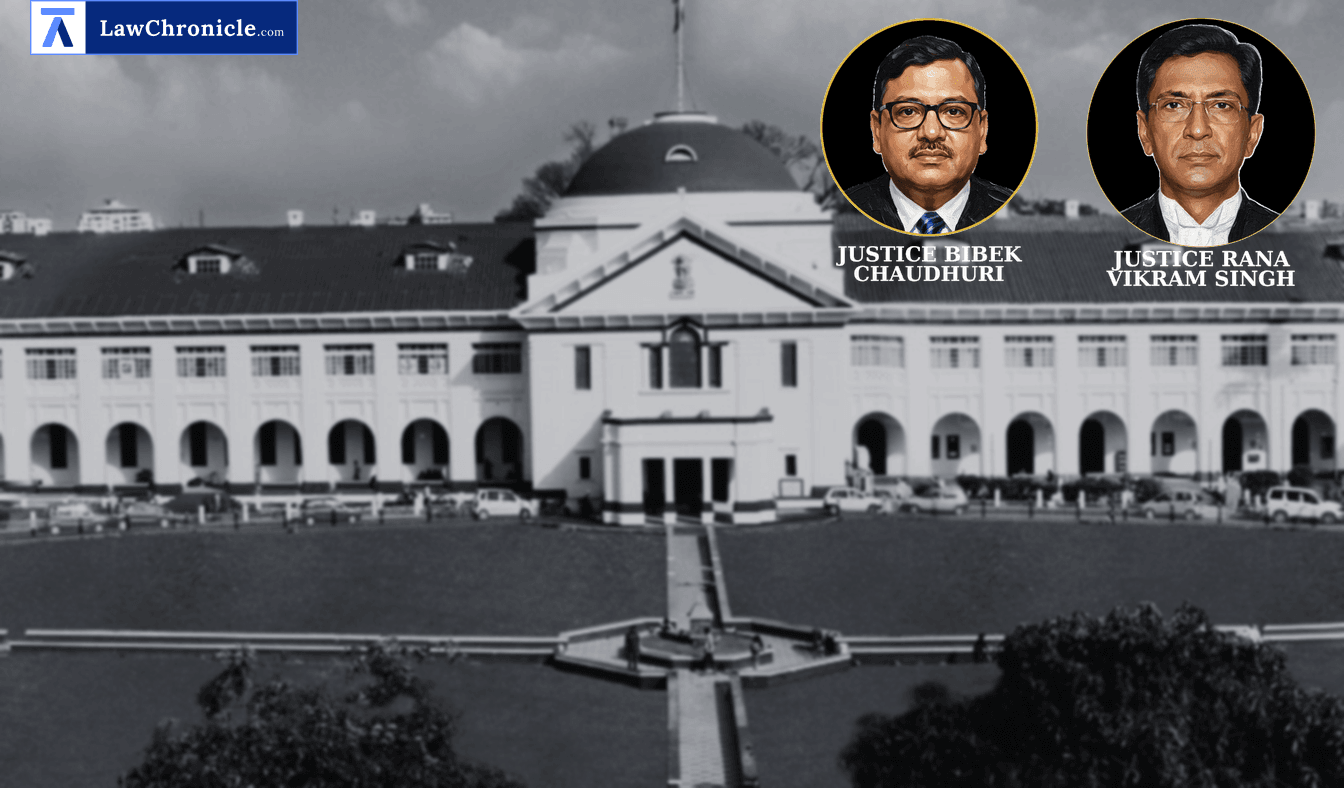
Administrative delays in processing land-loser employment claims cannot be used as a shield by the State to reject substitute nominees when the original claimant becomes age-barred. The Patna High Court has clarified that while preferential appointment is not a vested right, authorities must exercise discretion reasonably rather than relying on technical silences in policy circulars to defeat welfare objectives.
A Division Bench comprising Justice Bibek Chaudhuri and Justice Rana Vikram Singh adjudicated an intra-court appeal filed by the Union of India against a Single Judge's order. The case centered on a decades-old land acquisition for the East Central Railway, where the claimant sought to substitute her son's name for her husband's after the latter became ineligible due to age during the pendency of the application.
Key Takeaways
Curbing Administrative Arbitrariness
Authorities cannot reject a substitute nominee from the same family solely due to the absence of an enabling provision if the delay in processing was attributable to the State.
Conditional Nature of Benefits
Land-loser preferential appointments are not absolute rights but are subject to eligibility criteria like age, medical fitness, and educational qualifications as per the governing policy.
Persistence of Judicial Directions
Directions issued in earlier rounds of litigation remain binding on authorities even after the conclusion of contempt proceedings.
Verification of Parity
The State is obligated to ensure that similarly situated land-losers are treated uniformly under Constitution of India, 1950 to avoid hostile discrimination.
Court Observations and Directions
The Court observed that preferential treatment for land-losers is intended to mitigate immediate hardship and is not a perpetual source of recruitment. However, it noted that in the present case, the Railway authorities took significant time to process the claim even after judicial intervention. The Court held that a rigid refusal to consider a substitute nominee, when the delay was administrative, partakes the character of arbitrariness.
The Court, in its reasoning, observed: "Preferential appointment under a land-loser scheme is ordinarily limited to one member of the affected family. The scheme does not create a family roster that can be activated at will by successive nominations over an indefinite period. At the same time, when the original nominee becomes ineligible by efflux of time during the pendency of consideration, and when that efflux of time is substantially attributable to the administrative process, a rigid refusal to consider an otherwise eligible substitute nominee from the same family may, in appropriate cases, partake the character of arbitrariness."
The Court has the following directions:
"1. The judgment and order dated 20.04.2024 passed by the learned Single Judge in C.W.J.C. No. 16222 of 2017 is set aside to the extent it places reliance on the decision in Sumitra Devi v. Union of India and issues a bare direction for consideration of the candidature of the writ petitioner’s son without laying down the parameters of such consideration.
2. The order dated 08.08.2017 passed by the General Manager (Personnel), East Central Railway, is quashed only to the extent it declines the request for change of nomination and closes the claim without examining the eligibility of the son and the other relevant aspects discussed in this judgment. The finding that the original nominee (husband) was age-barred is left undisturbed.
3. The matter is remitted to the competent authority of the East Central Railway for fresh consideration of the claim for appointment of the writ petitioner’s son, Chandan Kumar, strictly in accordance with the governing policy framework, the principles laid down by the Hon’ble Supreme Court and by the Division Bench of this Court in L.P.A. No. 465 of 2022, and the observations made in this judgment.
4. In such fresh consideration, the competent authority shall specifically examine and record findings on the following aspects:
(a) whether the son fulfils the prescribed eligibility criteria relating to age (including any applicable relaxation), educational qualifications, medical fitness and suitability;
(b) whether the family continues to satisfy the basic conditions of the scheme, including the nature and extent of hardship caused by the acquisition;
(c) the effect of the long lapse of time from the date of acquisition and whether the object of the preferential appointment scheme still survives in the facts of the case;
(d) the plea of parity/hostile discrimination with reference to the authentic records of the other families included in the list of 44 persons, particularly the case of Manju Devi; and
(e) any other condition prescribed by the applicable Railway Board circulars and policy guidelines.
5. The writ petitioner shall be given a reasonable opportunity to place all relevant documents and submissions before the competent authority. The authority shall pass a speaking order within a period of four months from the date of receipt of a copy of this judgment."
Ratio
Preferential appointment on the ground of land acquisition is a benefit conferred by policy and not a statutory right under land acquisition laws. While not a vested or heritable right, such claims must be administered fairly; where the original nominee becomes age-barred due to administrative delays, the authority must consider a substitute nominee from the same family on merits rather than rejecting it on technical grounds. The principles of Umesh Kumar Nagpal v. State of Haryana ( "(1994) 4 SCC 138": 1994 CaseBase(SC) 1050) apply to land-acquisition related appointments, requiring the benefit to be balanced against the object of mitigating immediate financial crisis.
Background
The dispute arose from the acquisition of 0.40 acres of land belonging to Kiran Devi in 1989-90 for the East Central Railway. Although her family was identified as eligible for the land-loser employment scheme in 1993, the claim remained pending for years. Initially, the petitioner nominated her husband, but due to protracted litigation and administrative delays including a first round of writ proceedings in 2009 the husband crossed the age limit. The Railways subsequently rejected her request to nominate her son in 2017, leading to a fresh writ petition.
The Railways argued that the Land Acquisition Act, 1894 only provides for compensation and not employment, citing Sanjeev Kumar v. State of Haryana ( "2025 LiveLaw (SC) 1079": 2025 CaseBase(PNH) 1602). They further contended that the right to appointment is not heritable and must follow Union of India v. Shankar Prasad Deep and State of West Bengal v. Debabrata Tiwari. Conversely, the petitioner alleged hostile discrimination, claiming 33 out of 44 families on the same list received appointments. While the Single Judge had directed the Railways to consider the son's candidature based on Sumitra Devi v. Union of India, the Division Bench found that Sumitra Devi v. Union of India had been set aside. However, the Bench maintained that the refusal to substitute the nominee was overly rigid and remitted the matter for fresh evaluation.
Case Details:
Case No.: Letters Patent Appeal No.975 of 2024
Neutral Citation: BRHC010976832024
Case Title: The Union of India & Ors. v. Kiran Devi
Appearances:
For the Petitioner(s): Mr.Anand Kumar Ojha, Advocate
For the Respondent(s): Mr.Kumar Kaushik, Advocate; Mr.Piyush Hari Ojha, Advocate; Mrs.Namrata Dubey, Advocate
Source: 2026 CaseBase(PAT) 3958
Similar Articles




 Breaking News


