


SC Bench Affirms Conviction; Dying Declaration Credible in Wife-Being-Set-Afire Case
 Copy Link
 Share
 Save
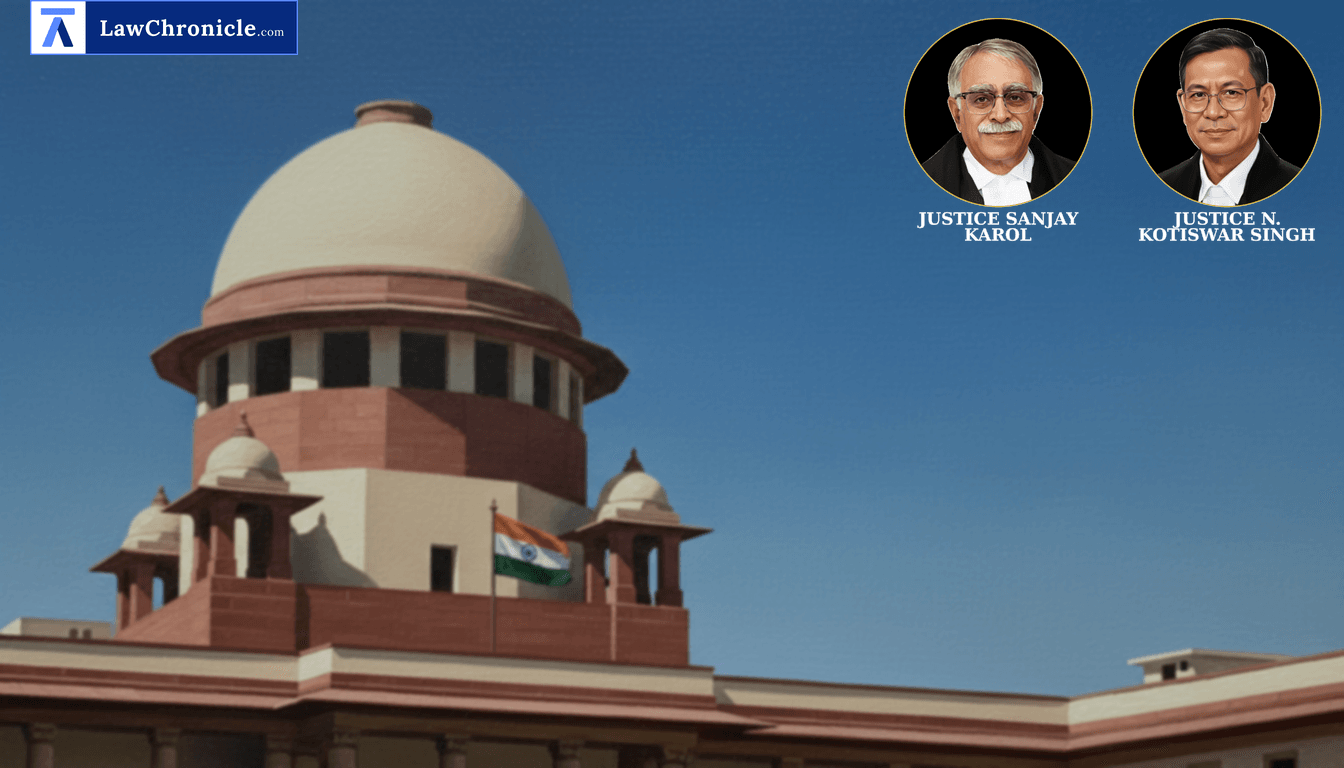
A bench of Justices Sanjay Karol and Nongmeikapam Kotiswar Singh heard the appeal by Shankar challenging his conviction for the murder of his wife and the confirmation of sentence by the Rajasthan High Court. The appeal assailed inter alia the recording and reliability of the deceased’s dying declaration and alleged defects in the magistrate’s certification and the medico-legal process.
The Court dismissed the appeal and upheld the concurrent findings of the trial court and the High Court, confirming the conviction under Section 302 IPC and sentence of life imprisonment (with an additional one year’s rigorous imprisonment under Section 342 IPC and fines). The Court found the dying declaration and medical evidence to be consistent, and it rejected contentions of unsoundness of mind, defective certification, and tutoring.
The Court, in its reasoning, observed: "Section 32 of the Indian Evidence Act, 1872 and Section 26 of its successor, Bharatiya Sakshya Adhiniyam, 2023, deal with dying declarations. Generally speaking, these declarations enjoy a special position given the timing and the nature thereof. This position rests on a philosophical understanding that when a person is about to meet his maker or in other words, the oncoming of death and its finality is imminent, considerations which may force a person to speak other than the truth pale into insignificance, and what does fall from them would, therefore, be only the truth. They are exceptions to the rule of hearsay and, if a Court finds them consistent, believable, and free of tutoring, it can convict the person named therein." The Court further noted that, "Taking a cumulative view of the above discussion, the appeal must fail, and is accordingly dismissed."
Background
The deceased, Sugna Bai, had married the appellant around a month before the incident. The prosecution alleged that on 15 October 2012, after repeated assaults and while the appellant was intoxicated, he poured kerosene on her in a rented room, set her on fire with a matchstick and fled; neighbours and relatives extinguished the flames and she was admitted to hospital where she died on 19 October 2012. Her form statement (dying declaration Exhibit P.20) recorded by the magistrate, contained, among other answers, "My husband poured kerosene on me and set me on fire."
The Trial Court convicted Shankar in Sessions Case No. 249/2012 (judgment dated 10.12.2014) and sentenced him to life imprisonment under Section 302 IPC, and one year RI under Section 342 IPC, with fines. The Rajasthan High Court dismissed Criminal Appeal No. 65 of 2015 on 20.08.2019, confirming the conviction. The appellant approached this Court by Special Leave Petition (Crl.) No.13899 of 2025.
On appeal before the Supreme Court, the appellant contended that the magistrate reported the victim's mental condition as poor and had certified her competency on a blank paper; he further alleged tutoring by the deceased’s parents. The Court recorded its surprise that the dying declaration was not appended to the record before it and reproduced the Trial Court’s description. After hearing testimony of the magistrate and the duty doctor, the Court found that the magistrate had certified the statement and the duty doctor had examined and certified the victim’s condition; the absence of the original in the file did not vitiate the declaration. The Court observed that two eyewitnesses had "turned hostile and supported the prosecution case," but held that even where some witnesses deviated, the cumulative consistency of medical evidence, the dying declaration, and other witness testimony sustained the conviction. The Court rejected the submission that the testimony of a medical jurist (PW-10) was inadmissible, noting his qualification and consistency with other medical evidence that the cause of death was septicaemia due to burns.
The Court affirmed the convictions and sentences and dismissed the appeal. In a postscript, the judgment reflected on the persistence of violence against women despite legislative and policy measures, underscoring the continuing societal challenge to realize constitutional guarantees.
Case Details:
Case No.: Special Leave Petition (Crl.) No.13899 of 2025
NeutralCitation: 2026 INSC 315
Case Title: Shankar v. State of Rajasthan
Appearances:
For the Petitioner(s): Ms. Kaveeta Wadia, Senior Counsel
For the Respondent(s): Mr. Divynk Panwar, Counsel
Source: 2026 CaseBase(SC) 278
Similar Articles
 Breaking News


