Supreme Court Clarifies OBC Creamy Layer Order: Pre-2026 Allocations Not Unsettled
 Copy Link
 Share
 Save
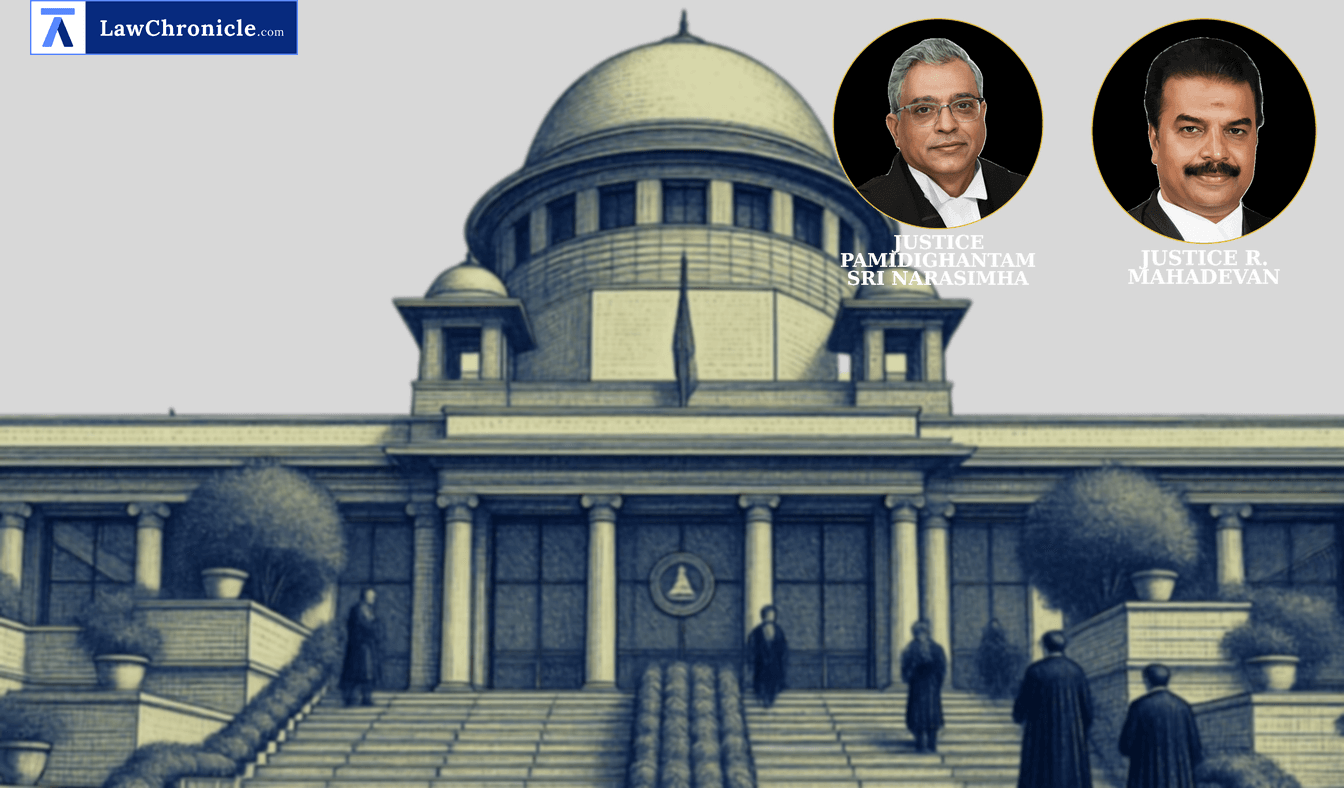
Refusing to allow retrospective reopening of concluded recruitment processes across government departments, the Supreme Court has clarified that its landmark ruling on the determination of the OBC creamy layer will not disturb settled seniority or completed appointments. However, the Apex Court firmly held that the allocation of services for the Civil Services Examination 2025 must strictly comply with its updated interpretation of the non-creamy layer criteria.
A bench comprising Justice Pamidighantam Sri Narasimha and Justice R. Mahadevan disposed of miscellaneous applications filed by the Union of India seeking clarifications and a two-year extension to establish the equivalence of posts. The bench highlighted that while the legal principles laid down in its judgment act as a binding precedent under Article 141 of the Constitution of India, they do not automatically trigger a general revision of past selection processes for non-parties.
Key Takeaways
No Retrospective Unsettling: Concluded appointments, seniority ranks, and cadre allocations made prior to March 11, 2026, remain protected from automatic reopening.
Applicability to CSE-2025: Since service allocations for CSE-2025 were pending, they must strictly follow the updated creamy layer interpretation.
Supernumerary Posts Reserved for Litigants: Creation of supernumerary posts is strictly confined to the successful respondent candidates and intervenors before the Court.
Executive Domain Intact: The Court declined to set a timeline for determining post-equivalence, leaving policy formulation to executive discretion.
Court's Rationale and Directions
The Supreme Court underscored the vital distinction between the binding legal principle enunciated by the Court and the specific inter-partes operative relief granted to litigants. Addressing the scope of the original judgment, the Court observed that "The present Miscellaneous Applications appear to proceed on the erroneous assumption that the benefit of the judgment operates retrospectively, with effect from the dates of selection and appointment of the respondent candidates, and that the Union Government is required to undertake a corresponding exercise within six months. Such an interpretation is not borne out by the judgment. This Court did not direct the retrospective revision or reconsideration of selections, appointments, seniority or service allocations already concluded."
The Court has following directions:
"(i) The judgment dated 11.03.2026 determines the rights of the parties before this Court. It holds that the respondent candidates fall within the non-creamy layer of the OBC category and are entitled to the benefit of reservation together with consequential placement and allotment of posts in the selection processes in which they participated.
(ii) The grant of such benefit shall not, by itself, operate to the detriment of the seniority of any other person or entail the reopening of selections or appointments already concluded. In this regard, it is relevant to note that by its letter dated 20.12.2016, the DoPT had clarified that the selections pursuant to the Civil Services Examination, 2016 were subject to the outcome of the appeals pending before this Court.
(iii) Paragraphs 42 and 43 of the judgment concern the intervenors, while Paragraph 44 sets out the operative directions disposing of the Civil Appeals. These directions are to be construed only in the context of the parties and applications dealt with in the judgment.
(iv) In Paragraph 43, this Court had taken note of the assurance given by the DoPT regarding the creation of supernumerary posts, which is also recorded in the 21st Report of the Parliamentary Committee on the Welfare of Other Backward Classes. The Government may, accordingly, accommodate the parties before this Court who otherwise fulfil the requisite eligibility conditions.
(v) The ratio laid down in the judgment shall not, by itself, furnish a ground for reopening selections or appointments already concluded prior to the judgment dated 11.03.2026. The claims of persons asserting that they are similarly placed, whose cases are pending before any Court, Tribunal or other competent forum or authority, may be considered on their own merits by the concerned adjudicating body or authority. This Court expresses no opinion on the merits of such claims, save to reiterate that the interpretation of the 1993 OM and the 2004 Letter laid down in the judgment may be taken into consideration while adjudicating such claims in accordance with law.
(vi) All selections, appointments and allotments against roster points made subsequent to the judgment dated 11.03.2026, insofar as they concern the implementation of reservation and the exclusion of the creamy layer, shall be governed by the 1993 OM, as interpreted by this Court in the said judgment.
(vii) The Government remains at liberty to formulate its policy concerning reservation and the creamy layer criteria, in accordance with the Constitution and the principles laid down by this Court.
(viii) This Court is not inclined to prescribe any timeline for establishing equivalence between posts or consulting stakeholders in the formulation of the creamy layer policy, as these matters fall within the domain of the executive and the legislature.
(ix) With respect to M.A. Diary No.51879 of 2026, although the result of the Civil Services Examination, 2025 was declared on 06.03.2026, the allocation of services has not yet been finalised. Since the process of allocation remains pending and there is no convincing or reasonable justification for deferring the implementation of the judgment dated 11.03.2026, the creamy layer principle, as interpreted in the said judgment, shall govern the allocation of services to OBC candidates selected through the Civil Services Examination, 2025."
Ratio
While a declaration of law by the Supreme Court under Article 141 of the Constitution of India operates as a binding precedent for pending and future adjudications, it does not automatically invalidate or reopen concluded administrative selections and service allocations of non-parties, unless explicitly directed. Relief granted inter-partes, including directions for supernumerary posts, remains limited to the parties before the court to prevent administrative disruption and protect settled rights.
Background
The dispute stemmed from the Department of Personnel and Training (DoPT) evaluating the parents' salary income of candidates employed in Public Sector Undertakings (PSUs) to exclude them under the OBC Creamy Layer category due to a lack of formal post-equivalence determination. Affected candidates successfully challenged this before the Central Administrative Tribunal and various High Courts. On March 11, 2026, the Supreme Court dismissed the Union's appeals, affirming that mechanical salary-based exclusion was impermissible.
The Union Government filed the present applications relying on the doctrine of prospective overruling, previously discussed in Indra Sawhney v. Union of India ( "1992 Supp (3) SCC 217": 1992 CaseBase(SC) 156), and invoked powers under Article 141, Article 32, and Article 142 of the Constitution of India. The Union argued that retrospective application would disrupt over 6.69 lakh reserved appointments made over the past decade. Counsel for respondents cited rulings in Jaipur Vidyut Nitran Nigam Ltd v. Adani Power Rajasthan Ltd. ( "2024 SCC OnLine SC 313": 2024 CaseBase(SC) 480) and Ajay Kumar Jain v. State of UP to question the maintainability of miscellaneous applications seeking to alter final orders. Accepting the need to protect completed administrative arrangements, the Supreme Court granted a two-month extension for compliance while ensuring CSE-2025 allocations adhere to the updated legal framework.
Case Details:
Case No.: Miscellaneous Application No(s). 3313 – 3315 of 2026 in C.A. Nos. 2827 – 2829 of 2018
Neutral Citation: 2026 INSC 1201
Case Title: Union of India & Others v. Rohith Nathan and Another, Etc.
Source: 2026 CaseBase(SC) 9613
Similar Articles
 Breaking News