


SC: Consumers Not Liable to Pay for Services After Supply Ceases
 Copy Link
 Share
 Save
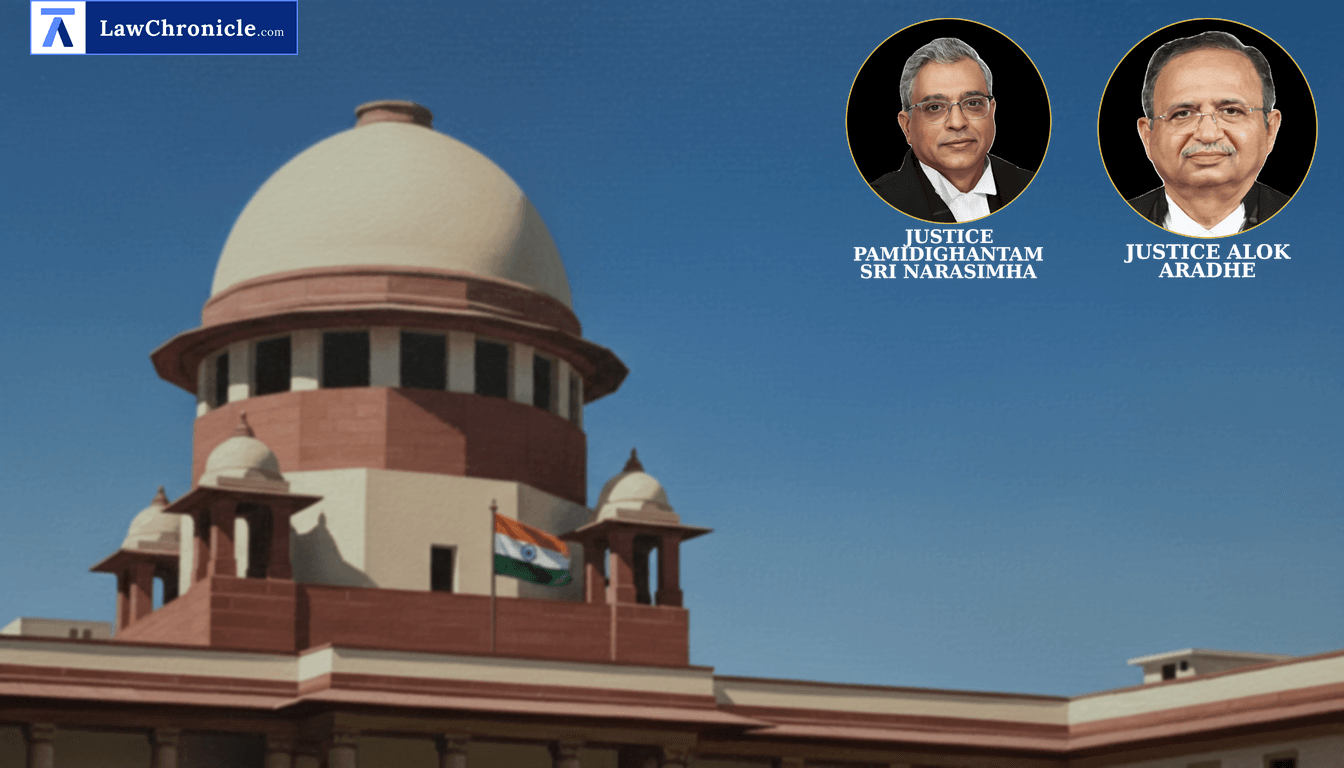
In a significant ruling for the energy sector, the Supreme Court has clarified that power distribution utilities cannot recover capital costs through depreciation from consumers for periods during which no electricity was actually supplied. A bench comprising Justice Pamidighantam Sri Narasimha and Justice Alok Aradhe set aside an order by the Appellate Tribunal for Electricity (APTEL), emphasizing that consumer interest remains a central guiding principle in tariff determination under the Electricity Act, 2003.
The dispute centered on whether Tata Power Delhi Distribution Limited (TPDDL) could continue to recover the remaining capital cost of its Rithala Combined Cycle Power Plant via depreciation over a 15-year technical life, despite the plant's operational approval being limited to a six-year period ending in March 2018.
Balancing Utility Recovery with Consumer Welfare
The Court held that tariff determination is a regulatory balancing exercise, requiring reasonable cost recovery for utilities while prioritising consumer protection. It observed that since the plant stopped supplying electricity to Delhi consumers after March 2018, imposing further liability on them would contravene Section 61(d) of the Electricity Act, 2003. Regulatory Framework Overrides Technical Life.
The Court, in its reasoning, observed: "The tariff determination is not merely a mathematical exercise but a regulatory balancing act. The object of enabling reasonable cost recovery for utilities must be weighed against and calibrated with the paramount obligation to safeguard consumer interest. In the instant case, admittedly, electricity has not been supplied to the consumers beyond March 2018. The consumers cannot be required to pay for a service that they no longer received."
The bench further clarified that Regulation 6.32 of the DERC (Terms and Conditions for Determination of Generation Tariff) Regulations, 2011, which discusses depreciation over the 'useful life' of an asset, cannot be read in isolation. It must be harmonized with the Power Purchase Agreement (PPA) and the specific regulatory approvals that limited the plant's recovery period to six years.
Court Directions
The Court issued the following directions:
"For the foregoing reasons, the substantial questions of law which arise for consideration in this appeal, are answered in favour of the Commission and against the TPDDL. The impugned judgment dated 10.02.2025 passed by the APTEL is set aside and the order dated 11.11.2019 passed by the Commission is restored. In the result, appeal is allowed. There shall be no order as to costs."
Background:
The Rithala Plant was originally conceived as a short-term measure to address the urgent power demand in Delhi during the 2010 Commonwealth Games. TPDDL had obtained land from the Delhi Development Authority on a temporary 5 to 6-year lease. While technical experts certified the plant's life at 15 years, the Delhi Electricity Regulatory Commission (DERC) restricted the operational and tariff recovery framework to six years, ending March 2018.
TPDDL did not challenge this 2017 restriction initially. However, in subsequent true-up proceedings, it sought to recover the balance capital cost (approx. ₹94.59 crores) beyond 2018. While the DERC refused this, APTEL had ruled in favor of TPDDL, leading to the present appeal. The Supreme Court eventually found that APTEL erred by disregarding the regulatory framework that had already attained finality. The Court also referred to Section 100 of the Code of Civil Procedure, 1908 regarding the grounds for appeal.
Case Details:
Case No.: Civil Appeal No. 6388 of 2025
NeutralCitation: 2026 INSC 461
Case Title: Delhi Electricity Regulatory Commission v. Tata Power Delhi Distribution Limited
Source: 2026 CaseBase(SC) 389
Similar Articles



 Breaking News


