SC (Number of Judges) Amendment and 5 Appointments: Scanning Speedy Justice
 Copy Link
 Share
Share Save
Save
When the Apex Court expanded from 34 to 38 judges in May 2026 vide Supreme Court (Number of Judges) Amendment, the move raised a question that went beyond arithmetic: Was the institutional process used to fill those seats equal to the constitutional weight of the office being appointed to?
The answer, for many in the legal community, is troubling.
An Ordinance in place of a Bill
On 16th May, 2026, the Central government promulgated an ordinance under Article 123 of the Constitution to raise the sanctioned strength of the Supreme Court from 34 to 38 judges, including the Chief Justice of India. The ordinance route is constitutionally available when Parliament is not in session and immediate action is necessary. But Parliament's next sitting was barely a month away.
An ordinance is intended for genuine legislative urgency, situations where delay would cause irreversible harm. Expanding the Apex Court's bench strength, pressing as a policy matter, does not fit that standard as per experts. A Bill introduced in the Budget Session or the Monsoon Session would have invited scrutiny, debate, and deliberate consideration of the rationale for expansion. The ordinance route bypassed all of that.
India's Supreme Court has grown considerably since its inception. Starting with 8 judges in 1950, the court has expanded its strength multiple times over seven decades, with each increase typically preceded by legislative action and public deliberation. The 2026 expansion of the Supreme Court, carried out through an executive ordinance, departed from that convention without any stated rationale for the urgency.
Five Judicial Appointments in Eleven Days
What followed the Supreme Court (Number of Judges) Amendment Ordinance was equally swift. On 27th May, the Supreme Court Collegium sent recommended for five new judges: High Court Chief Justices Sheel Nagu, Shree Chandrashekhar, Sanjeev Sachdeva, and Arun Palli, and Advocate V. Mohana from the Bar. The government cleared the names without delay, and on 2nd June, all five took their oath of office.
The five new judges were sworn in on 2nd June, 2026, filling the fresh vacancies created by the ordinance that raised the court's sanctioned strength to 38. The gap between increase in Supreme Court strength and appointment of 5 new judges was mere 11 days.
The speed is notable, not because appointments should drag, but because the Collegium's own processes are supposed to be deliberate. Recommendations are meant to emerge from consultations with Chief Justices of concerned High Courts, opinion of senior colleagues, and assessment of the full pool of eligible candidates. The eleven-day turnaround raises some doubts regarding the scope of deliberation as against a predetermined outcome.
Bar Appointments Under Article 124
Of the five judges appointed to the Supreme Court, the appointment drawing the most scrutiny is that of V. Mohana, the only woman on the list. She was elevated directly from the Bar to the Supreme Court under Article 124 of the Constitution.
Article 124 permits the appointment of distinguished advocates directly as judges of the Supreme Court, without the stepping stone of a High Court judgeship. This provision exists with the backdrop that outstanding legal minds do not always sit on courts; sometimes they argue before them. But the constitutional convention around direct Bar appointments is demanding: only advocates of exceptional and demonstrable distinction are considered.
The historical record reflects this. Since 1950, direct appointments from the Bar to the Supreme Court have been rare. Those elevated this way include jurists whose contributions to constitutional law and courtroom practice are a matter of documented public record.
The appointment of the only advocate among 5 names did not accompany any publicly available account of the basis on which she was selected over other candidates, including names from the Bar with extensive documented track records in constitutional and commercial practice. The absence of reasoning is not merely a procedural gap but goes to the credibility of the appointment.
Collegium during High Court Appointments
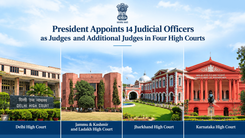
A separate but related concern arises from the Collegium's composition when it cleared six names for Karnataka High Court appointments on 2nd June. The Collegium at that time included Chief Justice Surya Kant, Justice Vikram Nath and Justice J.K. Maheshwari. Justice Maheshwari was due to retire on 28th June. Justice B.V. Nagarathna, who hails from Karnataka, was next in line to enter the Collegium after Justice Maheshwari's retirement. Karnataka appointments by the Collegium deferred a few weeks would have resulted in the opinion of a judge with direct and extensive knowledge of the Karnataka High Court's bar and bench. Instead, the approvals were pushed through before this change in composition, foreclosing the opportunity for that informed perspective to shape the recommendations.
Transparency a Structural Requirement
The Collegium system itself is a judicial creation, not a product of legislation. The Supreme Court, through three landmark judgments between 1981 and 1998 (1993 CaseBase(SC) 678, 1998 CaseBase(SC) 1033 and 2015 CaseBase(SC) 35 , interpreted Article 124 to vest primacy in appointing judges with the judiciary's seniormost members rather than the executive. This shift was justified on the ground that judicial independence requires insulation from political considerations in the selection of judges.
With that premise, the burden of demonstrating merit-based selection falls squarely on the Collegium. Opacity was tolerable when it was the price of independence from the executive. It should not be sanctioned when the process generates well-founded doubt about whether the selections were driven by merit.
The Collegium does not currently publish the criteria it applies, the comparative assessments it conducts, or the opinions of consultee judges, those Supreme Court judges who have served in the High Court to which an appointment is being made. As experts say, making these opinions public would not compromise judicial independence; it would reinforce it by demonstrating that the process works as claimed.
Need of the Hour
India's Supreme Court is an institution of extraordinary constitutional responsibility. Its judges interpret fundamental rights, settle inter-state disputes, and are the final word on the validity of executive and legislative action. The men and women who occupy those seats must not only be qualified, they must be seen to have been selected through a process that the bar, the public, and the legal academy can examine and assess.
The 2026 appointments to Constitutional Courts, preceded by an unexplained ordinance, completed within eleven days, do not meet that standard of visible integrity. The ordinance should have been a Bill. The appointments should have been accompanied by published reasoning. And the Collegium's composition, when deciding Karnataka appointments, should have waited the three weeks it would have taken to include a judge with the most direct knowledge of that court.
The public's trust in the court is built not just through its judgments, but through the integrity of the process that produces its judges. That trust must be continuously earned.
 Breaking News