


SC Restores NDPS Case quashed at Pre-Trial Stage; Explains Law on Co-Accused Confession
 Copy Link
 Share
 Save
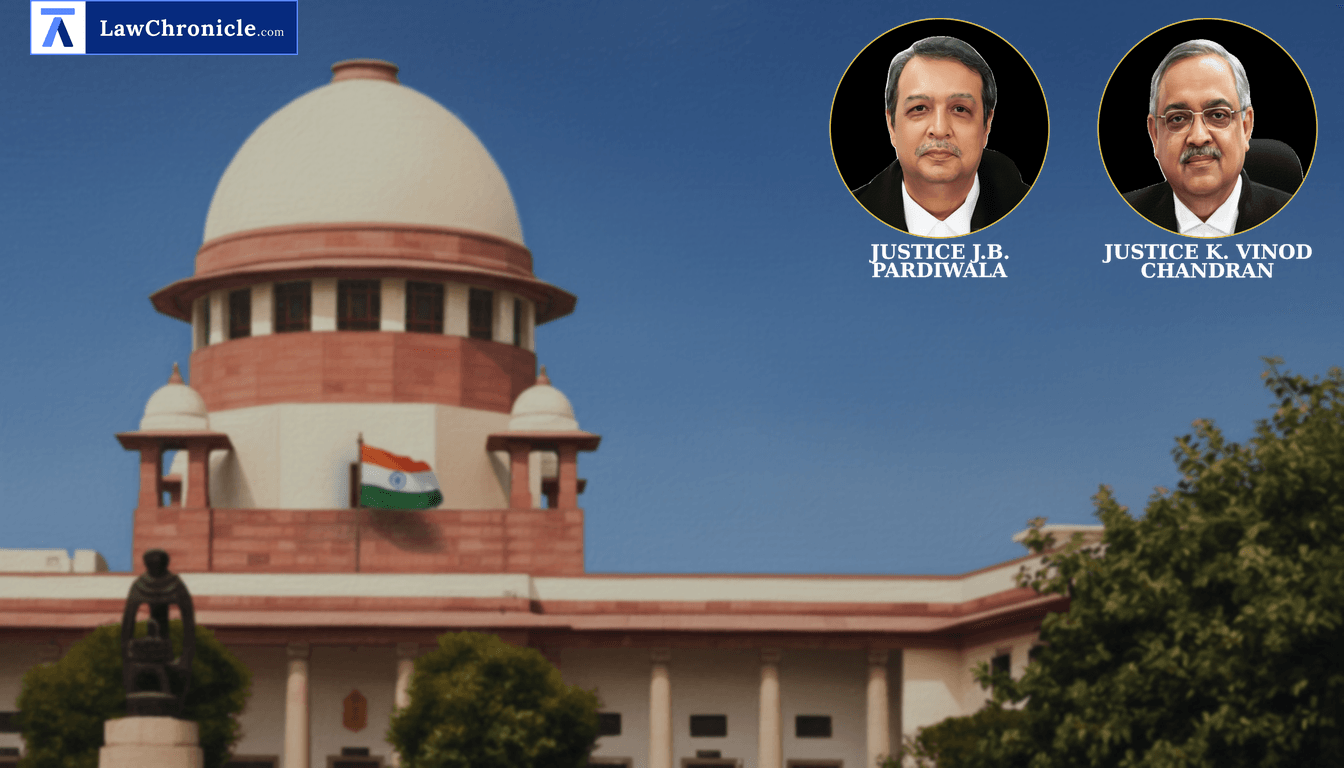
The Supreme Court has reminded that High Courts cannot invoke precedent barring reliance on co-accused confessions to prematurely quash NDPS prosecutions against fleeing suspects before trial evidence is examined. Clarifying the jurisdictional limits of inherent powers at the pre-trial stage, the Apex Court restored a NDPS case quashed for an accused who allegedly fled the scene of a commercial-quantity drug seizure.
A Bench of Justice J.B. Pardiwala and Justice K. Vinod Chandran set aside a Karnataka High Court order that had quashed proceedings against an absconding accused in an NDPS case. The High Court had terminated the prosecution solely because the accused was not caught on the spot and was arrayed based on co-accused statements, relying heavily on earlier precedents.
Key Takeaways
Premature Quashing Barred: High Courts cannot quash pending NDPS prosecutions by applying evidentiary bars on confessions at the pre-trial stage.
Investigative Utility of Co-Accused Input: Identity details provided by spot-apprehended co-accused serve as valid leads for investigating officers to collect independent trial evidence.
Discharge Remedy Preserved: Absconding or non-apprehended accused retain the right to seek discharge before the Special Court once cognizance is taken.
Law on Co-Accused Confession and NDPS Case Quashed
The Supreme Court observed that precedents restricting the evidentiary value of statements recorded under Section 67 of the Narcotic Drugs and Psychotropic Substances Act, 1985 arose either out of final convictions or bail cancellation applications where confessional statements were the sole material.
The Bench emphasized the critical legal distinction between raw investigative material and evidence evaluated at trial. The Supreme Court expounded that "We have no doubt that the confessional statement under Section 67 or a disclosure statement under Section 53A of the NDPS Act, can have no evidentiary value in a trial and it cannot lead to a conviction. Section 53A of the NDPS Act does not enable the disclosure of the co-accused to be placed before Court, especially when he is not examined as a witness or made an approver. The disclosure made by the co-accused who were apprehended at the spot, about the identity and the name of the one who fled, is only a material which the Investigating Officer could use to gather further evidence, which alone could be the basis of a chargesheet or a conviction, in a properly instituted trial."
Ratio
A disclosure statement of a co-accused or a statement under Section 67 of the Narcotic Drugs and Psychotropic Substances Act, 1985 identifying a person who fled from the spot of crime constitutes valid investigative material to gather further evidence, and proceedings against such an accused cannot be quashed at the pre-trial stage under inherent powers merely by invoking evidentiary bars applicable to trials.
Background
The dispute originated from an interception carried out by the police following information regarding the transportation of Ganja. At the spot, police found three persons near a car, one of whom fled while two were apprehended. A search of the vehicle yielded 32.615 kgs of Ganja hidden in the dashboard and trunk. The investigation led to a chargesheet wherein the respondent was shown as an absconder who fled the scene, leading to a split chargesheet.
The respondent later approached the High Court seeking to quash Special Case No. 24 of 2022 pending before the Principal District and Sessions Judge, Udupi. The High Court quashed the proceedings, relying on Tofan Singh v. State of Tamil Nadu ( "(2021) 4 SCC 1": 2020 CaseBase(SC) 1147), State (by NCB) Bengaluru v. Pallulabid Ahmad Arimutta and Another ( "(2022) 12 SCC 633": 2022 CaseBase(SC) 749), Balwinder Singh (Binda) v. Narcotics Control Bureau ( "(2024) 13 SCC 734": 2023 CaseBase(SC) 461), and Firdoskhan Khurshidkhan v. State of Gujarat and Another ( "2024 SCC OnLine SC 680": 2024 CaseBase(SC) 171), holding that he was neither apprehended on the spot nor found in possession of contraband, but was arrayed solely on co-accused confessional statements.
Reversing the Karnataka High Court's ruling, the Supreme Court distinguished Tofan Singh v. State of Tamil Nadu ( "(2021) 4 SCC 1": 2020 CaseBase(SC) 1147), Balwinder Singh (Binda) v. Narcotics Control Bureau ( "(2024) 13 SCC 734": 2023 CaseBase(SC) 461), and Firdoskhan Khurshidkhan v. State of Gujarat and Another ( "2024 SCC OnLine SC 680": 2024 CaseBase(SC) 171) as cases dealing with appeals against final convictions where uncorroborated confessional statements under Section 67 of the Narcotic Drugs and Psychotropic Substances Act, 1985 or Section 25 of the Evidence Act, 1872 were improperly relied upon to prove guilt. Similarly, State (by NCB) Bengaluru v. Pallulabid Ahmad Arimutta and Another ( "(2022) 12 SCC 633": 2022 CaseBase(SC) 749) pertained to bail cancellation where no substantial material existed to connect the accused. The Apex Court noted that applying these trial-stage evidentiary principles to quash a pending prosecution against an absconding accused was improper, while granting liberty to the respondent to seek discharge before the Special Court.
Case Details:
Case No.: Criminal Appeal No. 4720 of 2026 (Arising out of SLP (Crl.) No.6323 of 2026)
Neutral Citation: 2026 INSC 1083
Case Title: The State of Karnataka & Anr. v. Sadiq Pasha
Appearances:
For the Petitioner(s): Sri Aman Panwar, learned AAG
For the Respondent(s): None appeared
Source: 2026 CaseBase(SC) 8238
Similar Articles




 Breaking News


