


SC Upholds Neighbourhood Schools’ Duty to Admit Students Without Delay
 Copy Link
 Share
 Save
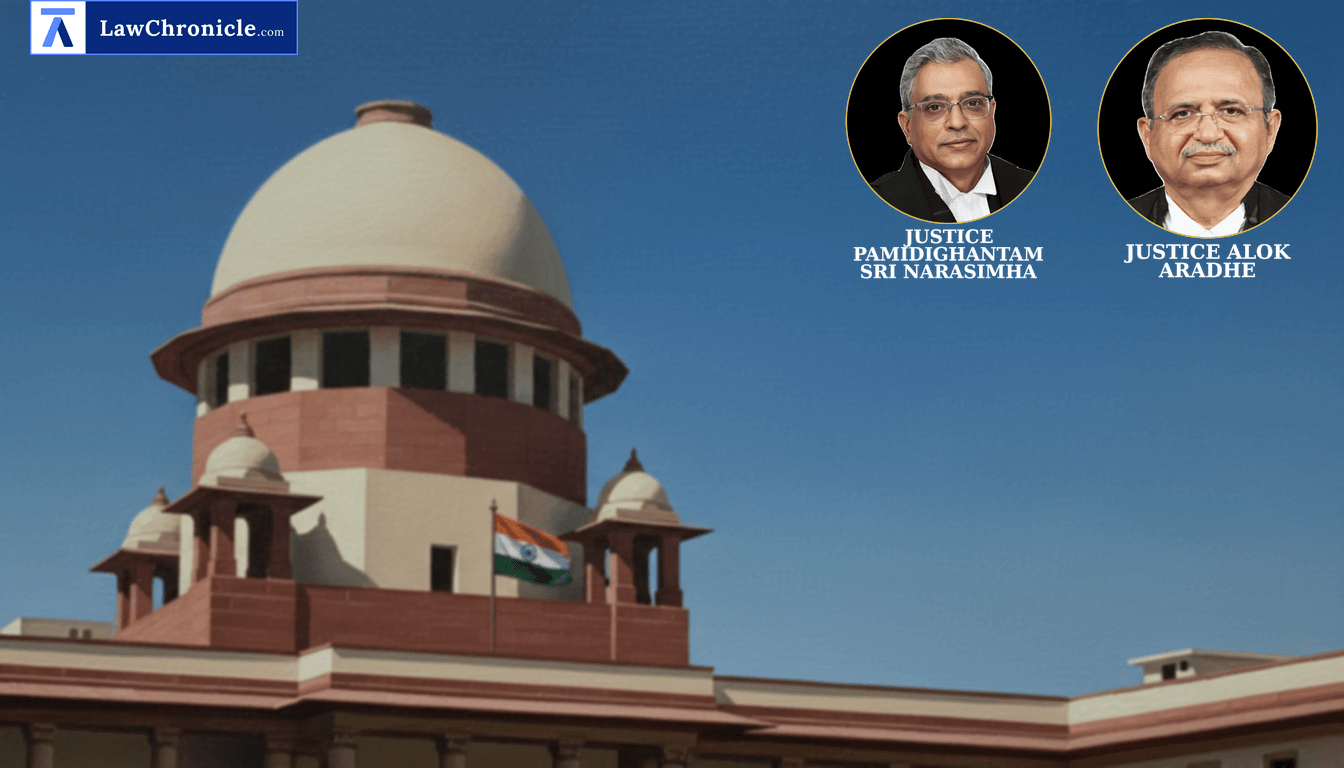
The Supreme Court of India reaffirmed that implementing the right to free and compulsory education through neighbourhood schools is not merely an administrative measure, but a deliberate constitutional strategy aimed at promoting equality of status, dignity, and social integration among children during their formative years. The Court further emphasised the mandatory nature of admissions under the Right to Education Act, holding that ensuring access to education for all children is a “national mission” that cannot be compromised.
A Bench of Justice Pamidighantam Sri Narasimha and Justice Alok Aradhe heard a Special Leave Petition filed by Lucknow Public School, Eldico and another challenging a High Court direction to admit a student allotted to the school by the State. The dispute turned on the scope of statutory duties of neighbourhood schools and the immediacy of relief to secure the right to elementary education.
The Court dismissed the petition and affirmed the High Court order, holding that neighbourhood schools were bound to admit children forwarded by the State without awaiting the outcome of any internal representation. The Court noted that the obligation was consistent with Article 21A of the Constitution of India, 1950, Section 12 of the Right Of Children To Free And Compulsory Education Act, 2009, and Rule 8 of the UP Right of Children to Free and Compulsory Education Rules, 2011, and it relied on prior exposition of duty bearers in Dinesh Biwaji Ashtikar v. State of Maharashtra & Ors. ( "2026 INSC 56": 2026 CaseBase(SC) 75) to elaborate institutional responsibilities.
The Court, in its reasoning, observed: "In the above light we find that for schools like the petitioner that may have some disagreement with the selection by the Government, can make representation to the concerned authority, but they ought not wait for the outcome of such a representation and are mandated to grant admission to the student whose name finds mention in list forwarded to the school in the interregnum. This immediacy is essential to actualise the promise of Article 21A of the Constitution of India, 1950."
Background
The controversy arose when a student applied to the Basic Education Department, State of Uttar Pradesh, for admission into a pre‑primary class in accordance with the process prescribed under the UP Right of Children to Free and Compulsory Education Rules, 2011 for the year 2024‑25 and was duly selected. The selection list containing the student's name was forwarded to the petitioner school, but the school refused admission on the ground of uncertainty about eligibility and did not permit the child to attend classes. The student filed a writ petition seeking direction to the State and other authorities to grant admission. The High Court allowed the writ petition primarily on the ground that schools could not sit in appeal over a decision taken by the State Government and observed that "the school has no option except to grant admission to the students." The Supreme Court agreed with the High Court's approach and emphasised the regulatory framework under Rule 8 of the UP Right of Children to Free and Compulsory Education Rules, 2011, observing that "The mandate of the above Rule is clear. Once the government assesses an application for admission under the Right Of Children To Free And Compulsory Education Act, 2009, the school shall proceed and be bound by other provisions as laid from time to time. The limited window for the school to reconsider the government’s decision is a conscious choice of the State to avoid delays in securing the children's right to education." The Court also explained that it had placed reliance on Dinesh Biwaji Ashtikar v. State of Maharashtra & Ors. ( "2026 INSC 56": 2026 CaseBase(SC) 75), which had identified five duty bearers including the appropriate government, the local authority and the neighbourhood school and which the Court used to underscore institutional obligations to ensure admission, attendance and completion of elementary education.
The Bench recorded that the constitutional and statutory obligation of a neighbourhood school to admit students forwarded by the State must be implemented promptly to make Article 21A effective in practice. The Court dismissed the Special Leave Petition and made no order as to costs, while underscoring that schools could make representations but were not to delay admission pending the outcome of such representations. The judgment thereby confirmed that the statutory scheme under Section 12 of the Right Of Children To Free And Compulsory Education Act, 2009 and the procedural safeguards in the UP Right of Children to Free and Compulsory Education Rules, 2011 were to be given immediate effect to secure substantive social integration and access to free elementary education.
Case Details:
Case No.: SPECIAL LEAVE PETITION (C) NO. @ DIARY NO. 60657 OF 2024
NeutralCitation: 2026 INSC 422
Case Title: LUCKNOW PUBLIC SCHOOL, ELDICO AND ANR. v. THE STATE OF UTTAR PRADESH & ORS.
Source: 2026 CaseBase(SC) 367
Similar Articles
 Breaking News


