


Supreme Court Directs Rule-Making to Enforce 25% RTE Inclusion in Neighbourhood Schools
 Copy Link
 Share
 Save
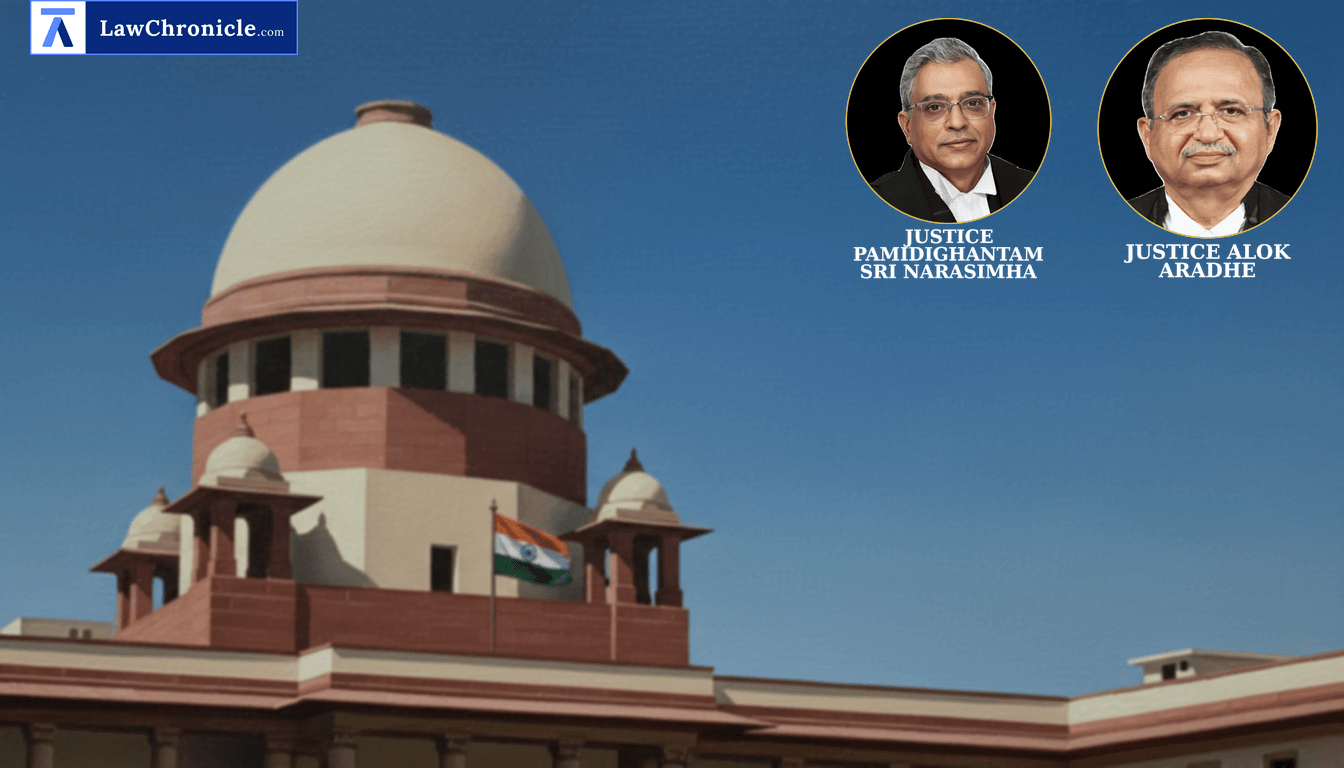
A bench of Justice Pamidighantam Sri Narasimha and Justice Atul S. Chandurkar heard a Special Leave Petition arising from a challenge to a High Court order that refused relief to a parent whose request for admission of his children under Section 12(1)(c) of the Right of Children to Free and Compulsory Education Act, 2009 (RTE Act) had been turned back on the ground that he had not followed the online application procedure. The Court examined systemic issues in implementation of the statutory 25% reservation for weaker and disadvantaged children in neighbourhood unaided schools and invited measures for enforceable compliance.
The Court summarised its principal holding by directing appropriate governments to frame rules under Section 38 of the RTE Act to implement Section 12(1)(c) and to ensure a transparent, accessible admission process. The Court observed that implementation of the 25% obligation was a national mission and emphasised judicial responsibility to secure effective remedies. The Court, in its reasoning, observed: “The above referred procedure, as indicated in the SOP issued by NCPCR, is only in the nature of guidelines. These guidelines do not partake the character of enforceable rules, violation of which would render the duty bearers answerable to the reviewing or controlling authority. Uncertainty about the obligation to comply with the requirements would also make judicial review complicated. We are of the opinion that it is necessary and compelling to formulate subordinate legislation by issuing necessary rules and regulations, prescribing the method and manner by which children of weaker and disadvantaged sections are to be admitted in neighbourhood schools. Without such enforceable rules and regulations, the object of Article 21A and the statutory policy under Section 12(1)(c) would be a dead letter.” The Court impleaded the National Commission for Protection of Child Rights (NCPCR) as a respondent, directed the Commission to collate and file information about rules issued by States/UTs by 31 March 2026, and listed the matter for further hearing on 6 April 2026.
Background The petition arose from an attempt in 2016 by Dinesh Biwaji Ashtikar to secure admission for his children under the 25% free-education quota in a neighbourhood unaided school in Gondia. The petitioner relied on RTI disclosures that seats were available but alleged non-cooperation from the school; a local primary education officer had written to admit the children though the online procedure had not been followed. The Bombay High Court declined relief on the basis that the petitioner had not completed the online application process. The Special Leave Petition remained pending for years; the Supreme Court took it up for precedent-making and appointed Shri Senthil Jagadeesan as amicus curiae.
The amicus and the Additional Solicitor General highlighted multiple barriers: digital illiteracy, language obstacles, lack of help-desks, poor dissemination of seat availability, opaque selection procedures, and inadequate grievance redressal. The Court examined the statutory scheme that anchored the right to education in Article 21A and Sections 3, 6, 9, 10 and 12 of the RTE Act, and noted policy materials including the Kothari Commission rationale and the NCPCR’s Standard Operating Procedure (SOP). The SOP and joint suggestions proposed preparatory steps, centralised portals with multilingual support, help-desks, windows for correction of defective applications, transparent selection criteria and timelines, dispute-settlement committees, speaking orders and timely reimbursement for schools. The Court found the SOP useful but non-binding and concluded that subordinate legislation was necessary to render the safeguards enforceable. The petition was not decided on the merits due to lapse of time, but the Court issued systemic directions and interim procedural mandates as recorded above.
Case Details: Case No.: 2026 INSC 56 (Special Leave Petition (C) No. 10105 of 2017) Case Title: Dinesh Biwaji Ashtikar v. State of Maharashtra & Ors. Appearances: For the Petitioner(s): Dinesh Biwaji Ashtikar (petitioner) [no counsel specified in reported judgment] For the Respondent(s): State of Maharashtra & Ors.; Additional Solicitor General (appearing for respondents) Amicus Curiae: Shri Senthil Jagadeesan, Senior Counsel
Similar Articles

 Breaking News


