


SC: Vehicle Registration Certificate Not Sole Criteria For Interim Custody
 Copy Link
 Share
 Save
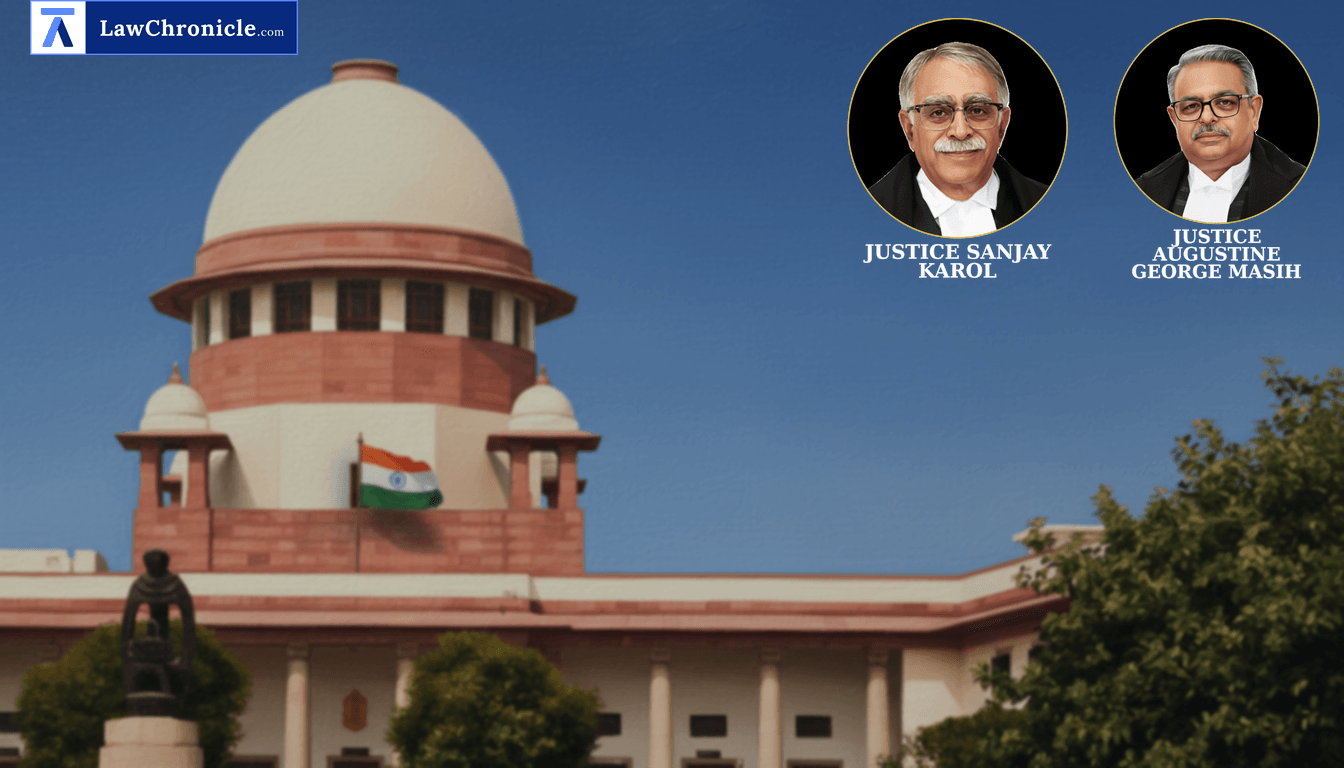
Prioritizing physical possession and commercial operational context over mere paper ownership, the Supreme Court ruled that motor vehicle registration certificates do not serve as an absolute, inflexible rule for granting interim custody under criminal law.
A Division Bench comprising Justice Sanjay Karol and Justice Augustine George Masih adjudicated on an appeal challenging an interim custody order of heavy machinery and commercial vehicles seized by the police amid inter-company fraud allegations.
Evaluating Interim Custody Principles Under Criminal Procedure
The Supreme Court affirmed that while determining interim custody under Section 451 and Section 457 of the CrPC, courts exercise judicial discretion rather than deciding absolute title ownership. The primary objective remains preventing waste, decay, or diminution in the value of the seized property.
The Court, in its reasoning, observed: "The thread of reasoning emerging from the above is that the limited object of these provisions is to ensure that property seized in the course of criminal proceedings does not suffer waste, misuse, or deterioration, and that it remains available for production before the Court as and when required. The exercise of this power requires the Court to make only a prima facie assessment of who is best entitled to possession, having regard to the nature of the property, the circumstances of seizure and the material placed before it. It does not comprise an adjudication of ownership, which falls generally within the exclusive domain of a competent civil forum."
Addressing the evidentiary reliance placed on motor vehicle registration documents, the Court explained that relying solely on registration certificates is misconceived when cumulative evidence shows actual operational control, financing, and undertakings by parties. It noted that the decision in Sunder Bhai Ambalal Desai Vs. State of Gujarat ( "2002 (10) SCC 283": 2002 CaseBase(SC) 113) does not lay down an inflexible rule that interim custody must invariably follow registration certificates.
Key Takeaways
Prima Facie Possession Over Paper Title: Interim vehicle custody under criminal law focuses on equitable possession to prevent asset degradation, rather than determining underlying legal title.
Financial Responsibility Matters: Discharging loan EMIs and maintaining physical custody weigh heavily in favour of commercial entities over nominal registered owners.
No Absolute Rule in Sunder Bhai Ambalal: The precedent in Sunder Bhai Ambalal Desai Vs. State of Gujarat ( "2002 (10) SCC 283": 2002 CaseBase(SC) 113) requires prompt and judicious exercise of power, not automatic handovers based strictly on registration certificates.
Ratio
Registration of a motor vehicle is an evidentiary factor, but not conclusive proof, for determining entitlement to interim custody under Sections 451 and 457 of the CrPC. Courts must holistically evaluate circumstances including actual physical possession, source of financing, undertakings, and commercial usage to decide interim possession.
Background:
The dispute arose between a director and his former company over the ownership and custody of five vehicles, including excavators and tippers. The director claimed that the vehicles were registered in the name of his entity and that his resignation and undertakings were forged during forced intimidation. Conversely, the company alleged that corporate funds were misappropriated to acquire the assets under the director's entity name, while the company paid loan instalments to financial institutions and maintained physical operational control.
Following counter FIRs filed under Section 406 of the IPC and subsequent police seizures, both parties sought interim custody. The High Court of Andhra Pradesh granted interim custody to the company. Dismissing the appeals, the Supreme Court upheld the High Court's view, highlighting that loan repayments made by the company and its continuous operational possession outweighed the registered ownership claims.
Case Details:
Case No.: Criminal Appeal Nos. OF 2026 (@ SLP(Criminal) Nos. 19205-06 of 2025)
NeutralCitation: 2026 INSC 748
Case Title: Krishnan Narayana v. State of Andhra Pradesh and Ors. ETC.
Source: 2026 CaseBase(SC) 691
Similar Articles



 Breaking News


