


Scheduled Tribe Women Entitled to Ancestral Property Inheritance: Gujarat High Court
 Copy Link
 Share
 Save
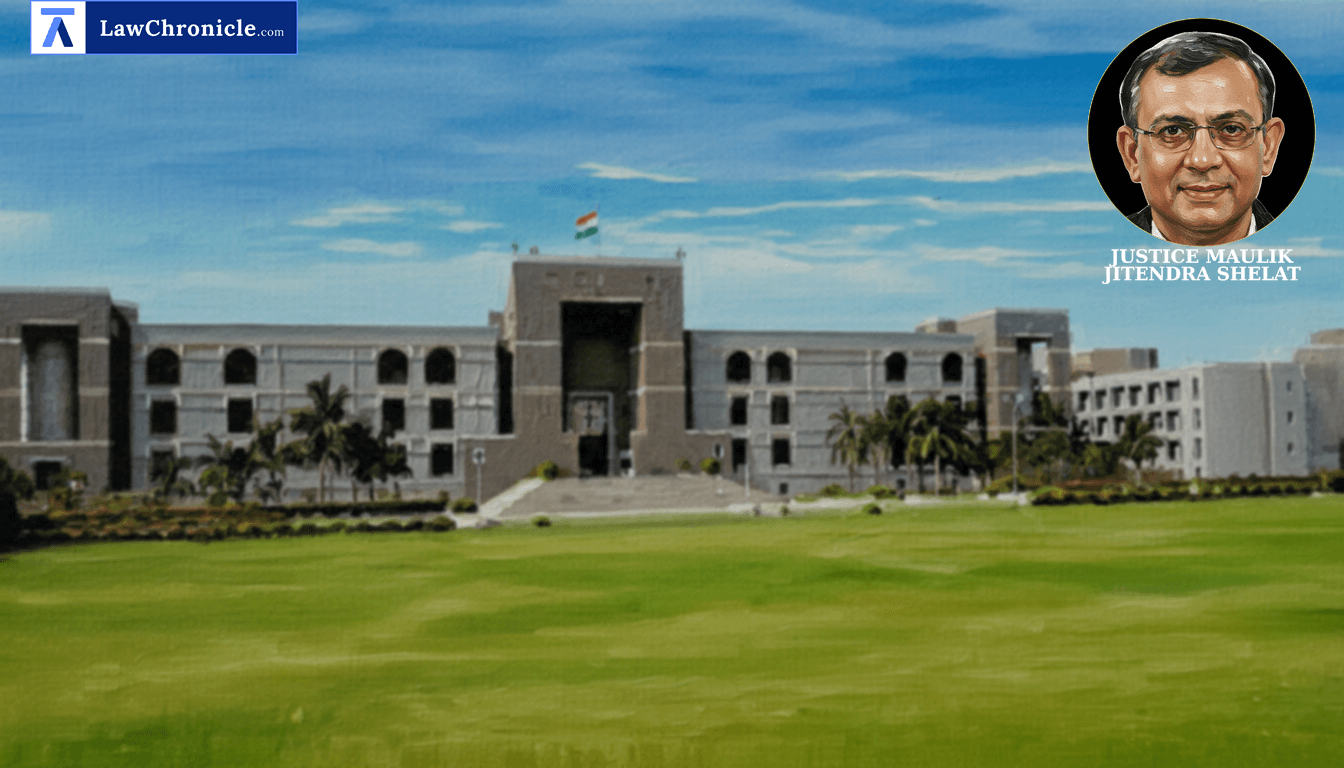
In a landmark decision reinforcing gender equality in tribal succession, the Gujarat High Court ruled that a Scheduled Tribe woman is entitled to inherit property from her husband and ancestors in the absence of prohibitory customs, upholding her right to execute a Will as an absolute owner.
Justice Maulik J. Shelat, while presiding over a Second Appeal challenging concurrent findings of lower courts, emphasized that where personal laws are silent and tribal customs are not established, courts must rely on the principles of justice, equity, and good conscience to prevent gender-based discrimination.
Key Takeaways
Gender Neutrality in Tribal Succession
Scheduled Tribe women have an inherent right to inherit ancestral and spousal property, ensuring they are not excluded solely due to biological differences in the absence of specific tribal customs.
Supremacy of Equity where Statutes Fail
When the Hindu Succession Act, 1956 is inapplicable under Section 2(2) and customs remain unproven, the judiciary must apply 'justice, equity, and good conscience' to fill the legal void.
Validity of Testamentary Disposition
Property inherited by a widow from her husband becomes her self-acquired property, granting her the legal capacity to execute a Will unless a contrary custom is strictly proven.
Judicial Push for Legislative Action
The Court urged the State Government to seek Central Government intervention to clarify tribal succession laws and protect property rights for tribal women.
Legal Framework and Non-Applicability of Personal Laws
The court addressed a complex dispute where the plaintiff, the brother of a deceased tribal woman named Chhaniben, claimed sole ownership of her property via the rule of survivorship. The defendants, however, claimed the property through a registered Will executed by the deceased. The court noted that while Section 2(2) of the Hindu Succession Act, 1956 excludes Scheduled Tribes from its ambit, this exclusion does not automatically strip tribal women of inheritance rights.
Referring to the precedent in Ram Charan and Ors. Vs. Sukhram and Ors. ( "AIR 2025 (Civil) SC 2363": 2025 CaseBase(SC) 386), the Court noted that denying female heirs a right in property only exacerbates gender division. The Court, in its reasoning, observed: "Justice, good conscience and equity plays a supplementary role in enabling courts to mould the relief to suit the circumstances that present themselves before courts with the principal purpose of ensuring a just outcome. Where the existing statutory framework is inadequate for courts to adjudicate upon the dispute before them, or no settled judicial doctrine or custom can be availed of, courts may legitimately take recourse to the principles of justice, equity and good conscience to effectively and fairly dispose of the case."
Court Directions
The Court has following directions:
"The Registry shall send a copy of this judgment to the Office of the Government Pleader, High Court of Gujarat, which, in turn, shall send it to the concerned Department of the State of Gujarat for onward action, as suggested supra, if they so desire."
Ratio
In the absence of a proven custom prohibiting a woman of a Scheduled Tribe from inheriting property, she is entitled to inherit property from her husband or ancestors. Such inherited property becomes her self-acquired property, which she is competent to bequeath through a Will. Furthermore, where statutory law like the Hindu Succession Act, 1956 is inapplicable, the principles of justice, equity, and good conscience under Article 14 of the Constitution must govern to ensure gender equality in succession.
Background
The dispute originated from Special Civil Suit No. 111 of 2011, where the plaintiff sought to declare his sister’s Will illegal. He argued that as a member of a Scheduled Tribe, the rule of survivorship made him the sole heir. However, the defendants produced a registered Will from 1991. The Trial Court found that Chhaniben’s husband’s brother was alive at the time of her death, and under old Hindu law tenets (applied as equity), the plaintiff had no superior claim.
The appellant also raised a plea regarding Section 73AA of the Gujarat Land Revenue Code, 1879, arguing the land was restricted and could not be willed. The High Court rejected this, citing Sir Chunilal V. Mehta And Sons Limited Versus Century Spinning And Manufacturing Company Limited ( "AIR 1962 SC 1314 : 1962 (0) AIJEL-SC 5258": 1949 CaseBase(RAJ) 19) and Jaichand (Dead) through Lrs and Others v. Sahnulal and Another ( "2024 SCC OnLine SC 3864": 2024 CaseBase(SC) 833) regarding the limitations of Second Appeals under Section 100 of the Code of Civil Procedure, 1908. The Court followed the principles laid down in Russi Fisheries (P) Ltd. v. Bhavna Seth and LH of Late Jashvantbhai Abhesingbhai Vasava & Ors. Vs. Jesingbhai Abhesingbhai Vasava & Ors., concluding that concurrent findings of fact should not be disturbed unless perverse. The Second Appeal was dismissed in limine.
Case Details:
Case No.: R/SECOND APPEAL NO. 500 of 2026
Neutral Citation: 2026:GUJHC:57326
Case Title: RANCHHODBHAI JESINGBHAI SINCE DEAD THROUGH HIS HEIRS AND LRS & ORS. Versus ANCHHIBHAI KAVJIBHAI CHAUDHARI SINCE DEAD THROUGH HIS HEIRS AND LRS & ORS.
Appearances:
For the Petitioner(s): MR NV GANDHI(1693), Advocate
Source: 2026 CaseBase(GUJ) 21513
Similar Articles



 Breaking News


