


Section 10 CPC Stay Only If Subsequent Decision Operates As Res Judicata: Calcutta HC
 Copy Link
 Share
 Save
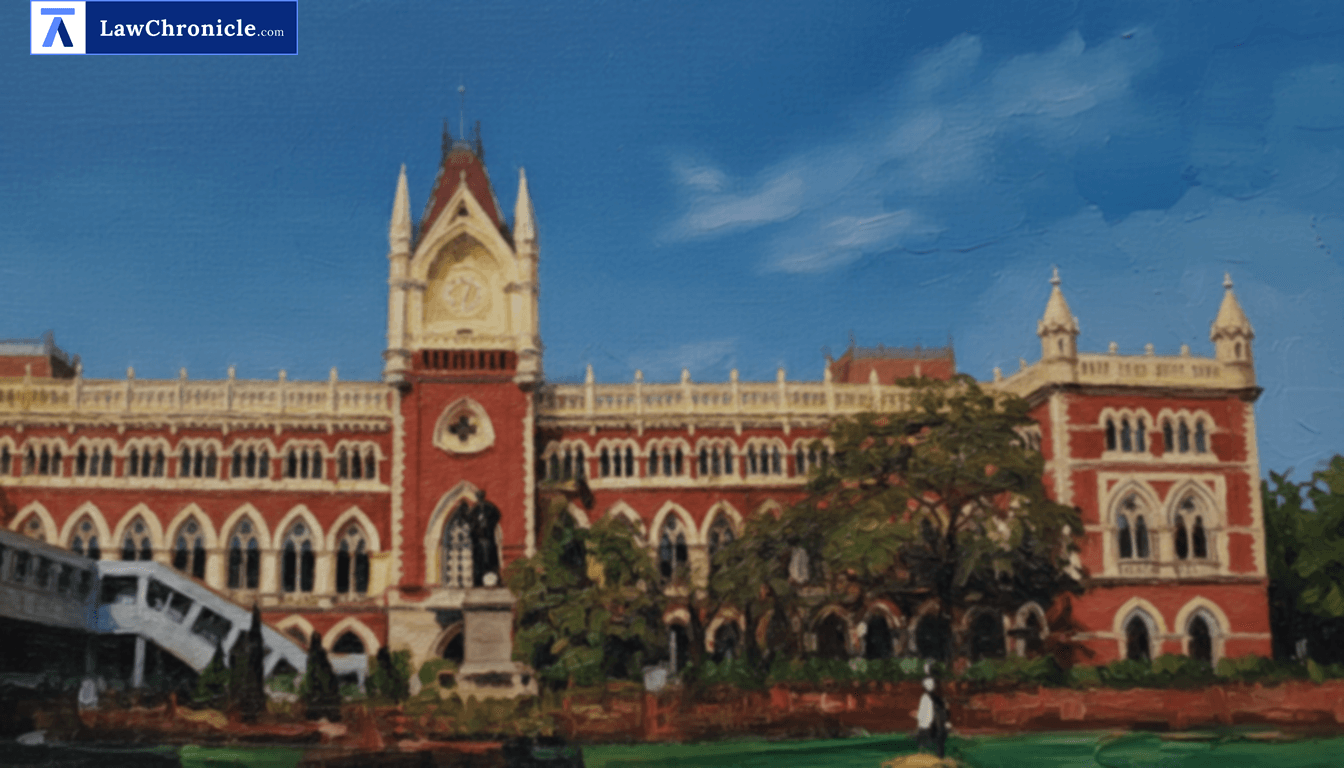
In a decisive clarification on the doctrine of stay of suits, the Calcutta High Court has ruled that subsequent purchasers not party to a prior litigation cannot stall proceedings unless the eventual judgment would operate as res judicata against them. The Court emphasized that mere identity of some issues is insufficient, mandating that for the rigors of Section 10 to apply, the entire subject matter in controversy must be identical across both litigations.
A Single Judge bench of Justice Aniruddha Roy heard the applications filed by subsequent purchasers seeking to stay a second suit concerning ownership and possession disputes over a prime property at Netaji Subhas Road. The Court dismissed the applications, noting that the applicants were neither parties to the previously instituted suit nor could they claim to be litigating under the same title while the original vendor was still contesting the same issues in the subsequent suit.
Key Takeaways
Res Judicata Test Primary
For a suit to be stayed under Section 10, the final decision in the previously instituted suit must necessarily operate as res judicata in the subsequent proceeding.
Identity of Matter Over Identity of Issues
The Court clarified that Section 10 is not attracted when only a few questions are common; the entire subject matter of both suits must be substantially and directly identical.
Locus of Non-Parties
Parties who were not impleaded in the first suit face a high threshold to prove they are 'litigating under the same title' to seek a stay of a second suit where they are impleaded.
Deterrence Against Vexatious Litigation
The imposition of costs on the applicants signals the Court's intolerance for applications filed without merit that serve only to delay the trial process.
Court Observations on Section 10 and Res Judicata
The Court analyzed the mandatory nature of Section 10 of the Code of Civil Procedure, 1908, observing that the provision aims to prevent parallel trials by Courts of concurrent jurisdiction. It noted that the key expression "matter in issue is directly and substantially in issue" must be interpreted strictly.
The Court, in its reasoning, observed: "The fundamental test to attract Section 10 is, whether on final decision being reached in the previous suit, such decision would operate as res-judicata in the subsequent suit. Section 10 applies only in cases where the whole of the subject-matter in both the suits is identical. The key words in Section 10 are 'the matter in issue is directly and substantially in issue' in the previous instituted suit. The words 'directly and substantially in issue' are used in contradistinction to the words 'incidentally or collaterally in issue'."
Interpretation of 'Same Title' and Section 55(4)(b)
The Court further delved into the requirements of Transfer Of Property Act, 1882, specifically Section 55(4)(b). It noted that since the plaintiff alleged the full consideration was not paid by the original purchaser, the passing of absolute title was in question. Consequently, subsequent purchasers could not claim a stay by asserting they litigated under the same title until the primary title dispute of their predecessor was adjudicated.
The Court has the following directions:
"Considering the nature of the suits, it is directed that both the previous and second suit henceforth shall be heard and considered in an analogous trial. Accordingly, both the applications being IA No. GA-COM/9/2025 and IA No. GA-COM/11/2026 stand dismissed with cost assessed at Rs.25,000/- each to be paid by the defendant nos.4 and 3 respectively in favour of Calcutta High Legal Services Committee through a banker's instrument within a period of six weeks from date."
Ratio
The stay of a suit under Section 10 of the Code of Civil Procedure, 1908 is mandatory only if the decision in the earlier suit would operate as res judicata in the later suit. The provision requires an identity of the entire subject matter in controversy rather than a mere overlap of incidental legal questions. A party seeking stay who was not impleaded in the first suit must demonstrate they are litigating under the same title, which cannot be established if the title of their predecessor is itself currently under adjudication and contested in the same suit.
Background
The dispute centered around a property at 19, Netaji Subhas Road, Kolkata. The plaintiff, Padmavati Tradelink Ltd., had purchased the property from Standard Chartered Bank and subsequently leased parts of it back to the bank. A portion of the third floor was later sold to Defendant No. 2. The plaintiff first filed a suit (Previous Suit) seeking a declaration of ownership over the terrace and roof, alleging these were not part of the conveyance to Defendant No. 2.
Subsequently, Defendant No. 2 purportedly transferred miniscule portions of the built-up area to Defendant Nos. 3 and 4. The plaintiff filed a second suit (CS-COM/297/2024) challenging these transfers and seeking cancellation of the original deeds due to non-payment of consideration. Defendant Nos. 3 and 4, who were not parties to the first suit, moved the Court under Section 10 of the Code of Civil Procedure, 1908 to stay the second suit. The Court relied on precedents like Aspi Jal and Another vs. Khushroo Rustom Dadyburjor ( "(2013) 4 SCC 333": 2013 CaseBase(SC) 260) and Bepin Behary Mozumdar and others vs. Jogendra Chandra Ghosh and Another to determine that the issues were not identical. The Court concluded that since Defendant No. 2 (the predecessor-in-title) was a party to both suits and had not sought a stay, the applications by the subsequent purchasers were frivolous and intended to delay the trial.
Case Details:
Case No.: IA No. GA-COM/9/2025 [Old No. CS/159/2021] In CS-COM/297/2024
Case Title: Padmavati Tradelink Ltd. Vs Standard Chartered Bank And Ors
Appearances:
For the Petitioner(s): Mr. Tilak Kumar Bose, Sr. Adv., Ms. Suchismita Ghosh, Adv., Mr. Pradip Kumar Sarawagi, Adv.
For the Respondent(s): Ms. Arti Bhattacharyya, Adv., Ms. Ajeyaa Choudhury, Adv., Mr. Anirban Ghosh, Adv., Mr. Rohit Banerjee, Adv., Mr. Altamash Alim, Adv., Mr. S.S. Bhutoria, Adv., Mr. S. Pal Choudhuri, Adv., Mr. Uttam Kumar Mandal, Adv.
Source: 2026 CaseBase(CAL) 2946
Similar Articles
 Breaking News


