


Section 17 of Senior Citizens Act Ultra Vires Advocates Act: Calcutta HC
 Copy Link
 Share
 Save
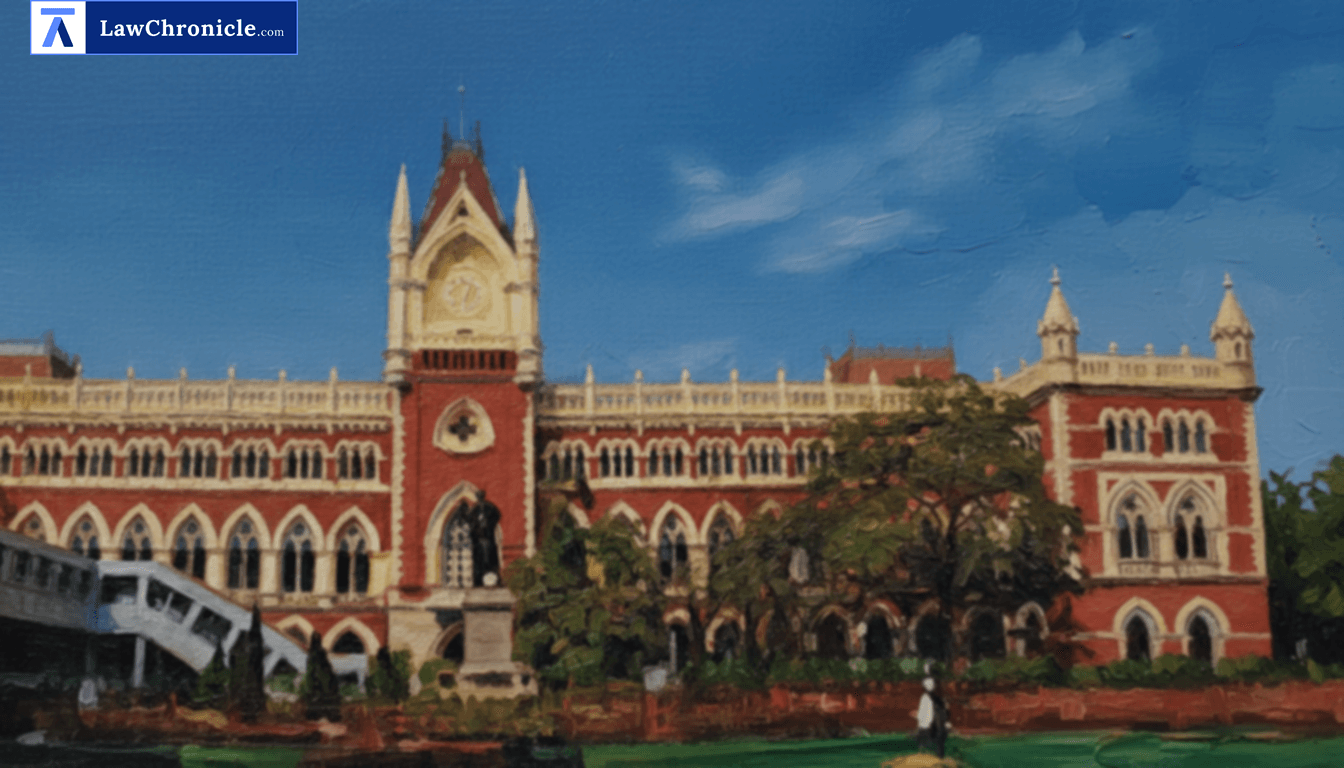
Striking a decisive blow against statutory restrictions on legal assistance, the Calcutta High Court held that senior citizens and other litigants have an absolute right to be represented by legal practitioners before Maintenance Tribunals. The ruling affirms that posterior statutory rights enabling advocates to practice nationwide override legacy statutory bars.
In a single-judge bench, Justice Krishna Rao addressed a constitutional challenge regarding the absolute bar on legal representation under Maintenance and Welfare of Parents and Senior Citizens Act, 2007 before Senior Citizen Tribunals. The dispute arose when a senior citizen was denied the right to be represented by his counsel before the Maintenance Tribunal in an eviction and protection proceeding against his family members.
Key Takeaways
Absolute Right to Counsel: Enforces an advocate's statutory right under Section 30 of Advocates Act, 1961 to practice before all tribunals authorized to take evidence.
Pan-India Operability of High Court Rulings: Clarifies that a High Court decision striking down a central statutory provision applies across India under Constitution of India, 1950.
Procedural Equity for Senior Citizens: Ensures vulnerable litigants receive expert legal assistance in complex property and maintenance disputes.
Court's Analysis on Legal Representation
The High Court observed that tribunals constituted under Maintenance and Welfare of Parents and Senior Citizens Act, 2007 possess extensive powers equivalent to a Civil Court under Societies Registration Act, 1860 and Code Of Criminal Procedure, 1973 for taking evidence on oath, enforcing attendance, and compelling discovery. Consequently, Section 30 of Advocates Act, 1961, which came into force on June 15, 2011, confers an unrestricted right on advocates to practice before any tribunal legally authorized to record evidence.
The Court cited previous rulings by the Punjab and Haryana High Court in Paramjit Kumar Saroya vs. The Union of India & Anr., the Kerala High Court in Advocate K.G. Suresh vs. Union of India, Represented by Secretary & Ors., and the Delhi High Court in Pawan Reley & Anr. vs. Union of India & Ors.. Furthermore, relying on Kusum Ingots & Alloys Ltd. vs. Union of India & Anr., the Court reiterated that when a High Court strikes down a parliamentary statute as unconstitutional, that declaration holds force across the country. The Court, in its reasoning, observed: "Section 17 of the Maintenance and Welfare of Parents and Senior Citizens Act, 2007 as ultra vires of Section 30 of the Advocates Act, 1961 and the petitioner is entitled to be represented by an Advocate/Advocates before the Tribunal, Appellate Tribunal and the Courts constituted under the Act of 2007."
Ratio
Section 30 of the Advocates Act, 1961, notified on June 15, 2011, is a posterior law that prevails over Section 17 of the Maintenance and Welfare of Parents and Senior Citizens Act, 2007. Any tribunal or authority legally empowered to record evidence falls within the ambit of Section 30, thereby granting advocates an absolute statutory right to represent litigants before it.
Background
The petitioner, a 63-year-old senior citizen, instituted proceedings before the Maintenance Tribunal seeking eviction of his wife and son from his residential property, alongside protection of his life and property under Section 4 and Section 5 of Maintenance and Welfare of Parents and Senior Citizens Act, 2007. When the petitioner appeared before the Tribunal with his advocate, the Tribunal refused to permit legal representation, pointing to the prohibition under Section 17 of Maintenance and Welfare of Parents and Senior Citizens Act, 2007.
Aggrieved by the refusal, the petitioner filed a writ petition before the Calcutta High Court under Constitution of India, 1950. The respondents conceded to the settled legal position following the Kerala High Court's declaration in Advocate K.G. Suresh vs. Union of India, Represented by Secretary & Ors.. Justice Krishna Rao allowed the writ petition, formally declaring Section 17 of Maintenance and Welfare of Parents and Senior Citizens Act, 2007 ultra vires Section 30 of Advocates Act, 1961 and permitting the petitioner to be represented by counsel before the Tribunal.
Case Details:
Case No.: W.P.O. No. 202 of 2026
Case Title: Kripal Singh Khurana Vs. State of West Bengal & Ors.
Appearances:
For the Petitioner(s): Mr. Srijib Chakraborty, Mr. Rittick Chowdhury, Mr. Pankaj Agarwal, Mr. Sohom Saha
For the Respondent(s): Mr. D.N. Ray, Mr. Atanu Basu, Mr. Nikhil Jhunjhunwala (for R1-3); Mr. Ramesh Chandra Paul (for R4); Mr. Raspreet Singh Khurana (R5-in-person)
Source: 2026 CaseBase(CAL) 1625
Similar Articles


 Breaking News


