


Section 498-A IPC Conviction Invalid If Dowry Demand Is Disproved: Andhra Pradesh HC
 Copy Link
 Share
 Save
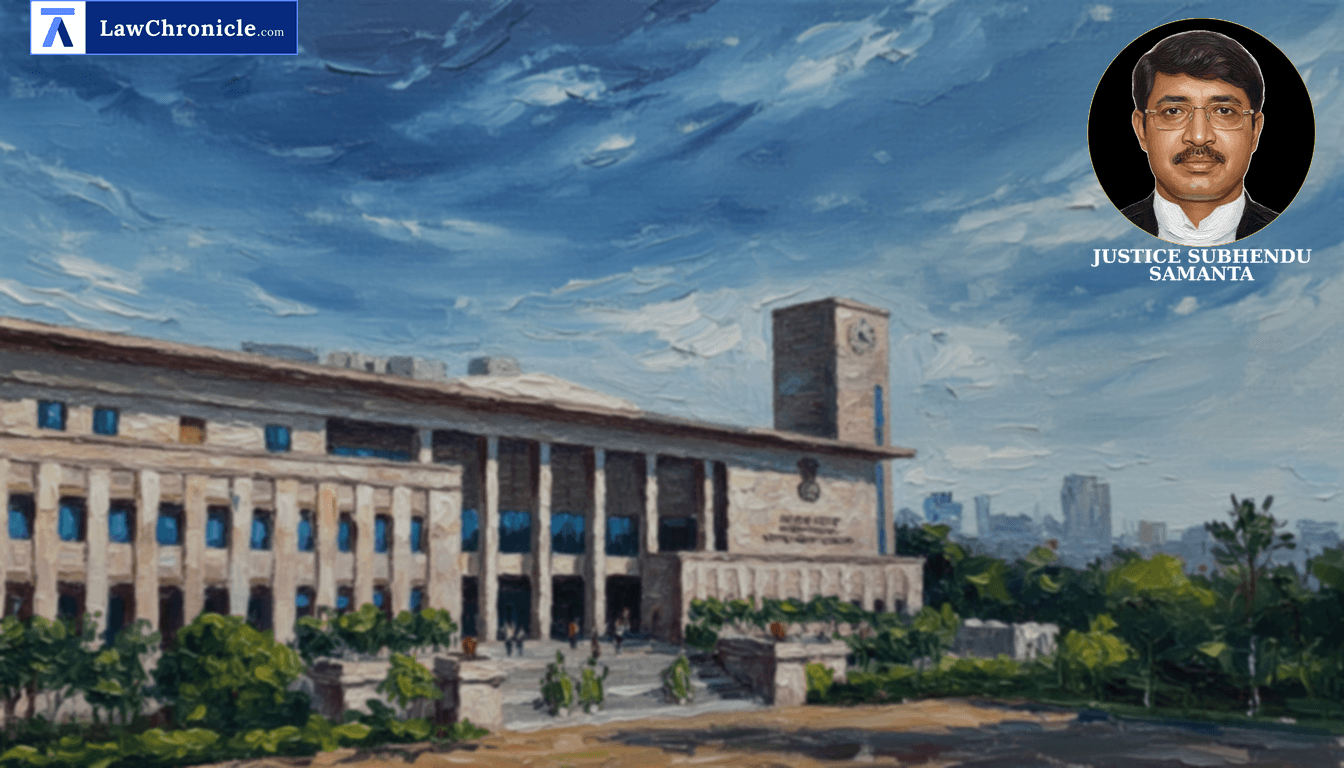
Striking down a husband's conviction for marital cruelty, the High Court of Andhra Pradesh established that allegations of harassment cannot survive independently once underlying claims of dowry demand are disproved. The Court emphasized that where cruelty is alleged specifically on account of additional dowry, an acquittal under the anti-dowry statute dismantles the foundation of the charge under cruelty laws.
In a revision petition challenging concurrent lower court rulings, a single-judge bench comprising Justice Subhendu Samanta evaluated the sustainability of a conviction under Section 498-A of the Indian Penal Code, 1860 after the appellate court had already exonerated the accused of charges under Sections 3 and 4 of the Dowry Prohibition Act.
Key Takeaways
- Interdependence of Charges: Allegations of harassment tied specifically to dowry demands cannot stand alone under Section 498-A of the Indian Penal Code, 1860 if the dowry demand itself fails to be proven.
- Principle of Parity in Evidence: Courts cannot arbitrarily convict one co-accused while acquitting another when both face identical evidence and allegations.
- Impact of Unexplained Delay: Delays in lodging an FIR, especially when drafted with legal assistance, diminish the prosecution's reliability if left unexplained.
Court Observations and Rationale
The High Court carefully evaluated the findings of the appellate court, which had acquitted the co-accused mother-in-law and dropped dowry prohibition charges against the husband, yet upheld the husband's conviction under Section 498-A of the Indian Penal Code, 1860. Examining the consistency of evidence, the Court referenced Matadin and another v. State of U.P. and Ram Singh v. The State of U.P. ( "2024 INSC 128": 2024 CaseBase(SC) 277) to highlight that courts cannot discriminate between co-accused on the same set of evidence without distinct reasons. The petitioner had also relied upon Ponnazhagu v. The State Represented by Inspector of Police, All Women Police Station in support of his contentions.
Addressing the core legal issue, the Court, in its reasoning, observed: "On a plain reading of the entire complaint/FIR, it appears that the allegation of torture was made against both A.1 and A.2 only for the demand of additional dowry. When the charges under Sections 3 and 4 of the Dowry Prohibition Act have not been proved, as observed by learned Appellate Court, it cannot be said that the allegation of torture can stand independently without the allegation of demand of dowry. That is to say, when there is an allegation of torture upon a married woman by her husband and relatives on account of a demand for additional dowry, after conclusion of the trial, if it appears that the demand for dowry has not been proved, the allegation of torture itself cannot stand independently."
The Court has following directions:
"The petitioner/A.1 is acquitted and set at liberty. The fine amount, if already deposited by the accused, shall be refunded to the petitioner in accordance with law. The bail bonds, if any, executed by the petitioner shall stand cancelled, and the sureties, if any, shall stand discharged."
Ratio
When a charge of marital cruelty under Section 498-A of the Indian Penal Code, 1860 is explicitly anchored to allegations of additional dowry demands, an acquittal under Sections 3 and 4 of the Dowry Prohibition Act renders the standalone charge of cruelty legally unsustainable on the same set of uncorroborated facts.
Background
The marriage between the petitioner (husband) and the complainant was solemnized on July 12, 2002. Subsequent to the birth of a female child, the complainant alleged that her husband and mother-in-law subjected her to physical and mental harassment, demanding an additional dowry of Rs. 50,000, gold ornaments, and a house plot. Following an alleged assault on April 11, 2006, the wife lodged a private complaint, leading to Crime No. 46 of 2006 under Sections 498-A and 506 of the Indian Penal Code, 1860 and Sections 3 and 4 of the Dowry Prohibition Act.
The Judicial First Class Magistrate, Guntakal, convicted both accused under Section 498-A IPC and Sections 3 and 4 of the Dowry Prohibition Act. On appeal, the Family Court-cum-Additional District & Sessions Judge, Anantapur, acquitted the mother-in-law completely and set aside charges under the Dowry Prohibition Act for both accused, but upheld the husband's conviction under Section 498-A IPC. The husband then filed a revision petition under Section 397/401 of the CrPC along with an application under Section 151 of the CPC.
Allowing the revision petition, the High Court set aside the conviction and sentence, ruling that the allegation of torture could not survive independently once the dowry demand was disproved.
Case Details:
Case No.: Criminal Revision Case No.1473 of 2009
Neutral Citation: 2026:APHC:32785
Case Title: G. Abdul Rafi v. The State of AP and another
Appearances:
For the Petitioner(s): Sri Rosedar SRA
For the Respondent(s): Sri Panini Somayaji (Assistant Public Prosecutor), Sri Nageswara Rao V
Source: 2026 CaseBase(AP) 9683
Similar Articles



 Breaking News


