


Sikkim HC Quashes Recovery Order In GST Budgetary Support Scheme Dispute
 Copy Link
 Share
 Save
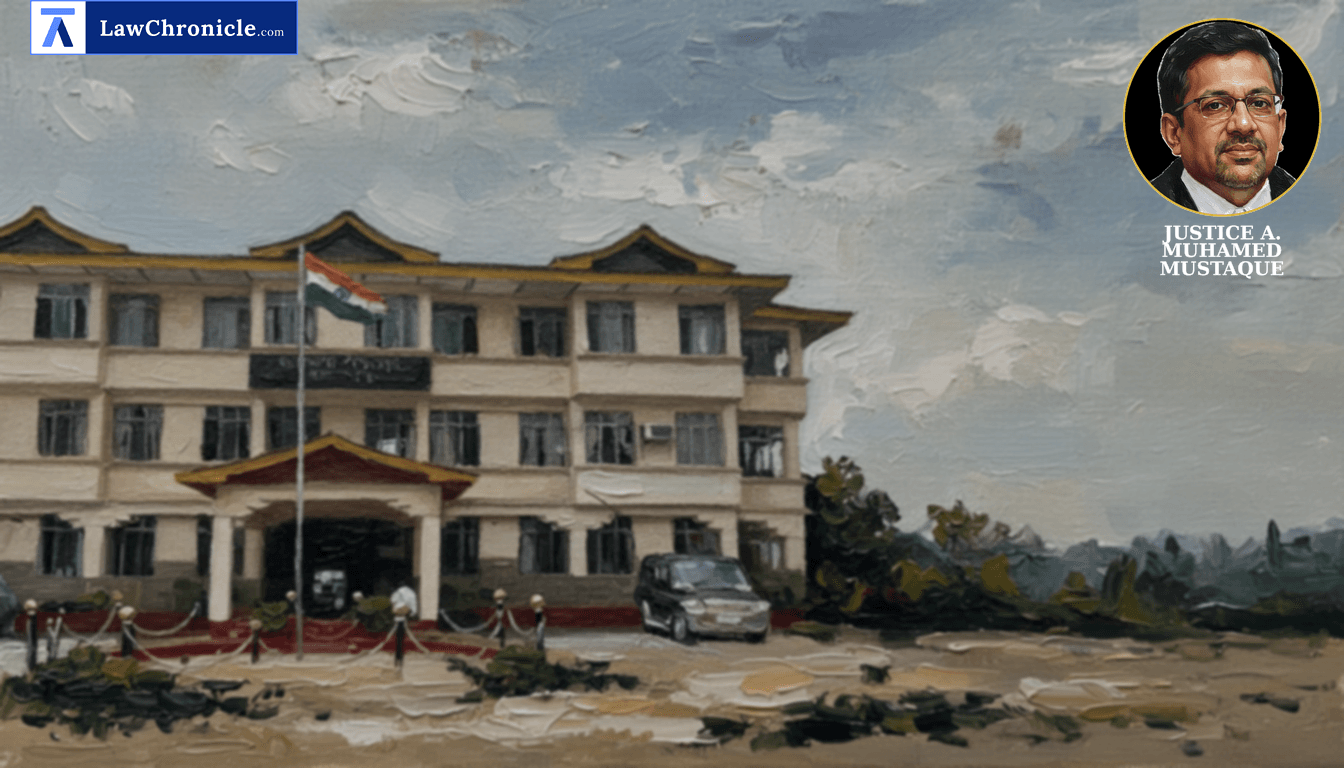
The Sikkim High Court has set aside a recovery order involving alleged excess GST Budgetary Support Scheme under the Central Goods and Service Tax framework, emphasizing the necessity for authorities to provide a reasoned analysis of reconciliation statements and input tax credit discrepancies. By mandating a fresh examination of the taxpayer's records, the Bench reinforced the principle that administrative actions involving financial recoveries must be backed by a clear consideration of all supporting evidence and explanations provided by the assessee.
Chief Justice A. Muhamed Mustaque, presiding over a Single Bench, addressed the challenge brought by a prominent pharmaceutical firm against orders issued by the Assistant Commissioner of Central Goods and Service Tax (CGST), Gangtok Division. The dispute centered on the recovery of over ₹37 lakhs, which the revenue authorities claimed was excess GST budgetary support granted to the petitioner for the period between July 2017 and March 2018.
Key Takeaways
Due Diligence in Reconciliation
Tax authorities cannot summarily reject explanations regarding inadvertent errors in GSTR-9 filings without a detailed verification of the underlying invoices and accounts.
Duty to Issue Reasoned Orders
Any order confirming the recovery of fiscal support must explicitly record the reasons for accepting or rejecting specific documents and materials produced by the litigant.
Impact on Budgetary Support Schemes
This ruling ensures that manufacturing units in special zones are not unfairly penalized for technical reporting discrepancies if they can demonstrate the actual non-availability of Input Tax Credit (ITC).
Court Observations on Evidence and Reasoning
The Sikkim High Court observed that the core of the dispute lay in whether the ITC reflected in GSTR-2A was legally available and capable of being utilized. The petitioner contended that an inadvertent disclosure in Table 8C of GSTR-9 led to the erroneous conclusion that they had received excess support. The Bench noted that while the petitioner was required to explain these discrepancies through reconciliation statements and account details, the tax authorities failed to adequately evaluate these materials.
The Bench observed that “If such explanations were supported by the necessary materials demonstrating that the ITC reflected in GSTR-2A was not actually eligible or available for utilisation, the Respondents were required to consider those explanations and record the documents relied on and reasons for accepting or rejecting the same in a reasoned order. This Court finds that such an exercise was not properly undertaken in the present matter.”
Ratio
Administrative authorities exercising quasi-judicial powers are legally bound to examine all relevant materials, including reconciliation statements and invoices, and must pass a speaking order that clearly delineates the reasons for rejecting a taxpayer's explanation regarding statutory credit discrepancies before proceeding with financial recoveries.
Background
The petitioner, a company incorporated under the Companies Act, 1956, operates a unit entitled to budgetary support under a scheme notified by the Ministry of Commerce and Industries in 2017. Under this scheme, eligible manufacturers receive support to the extent of 58% of Central Tax and 29% of Integrated Tax paid through cash ledger accounts after ITC utilization. For the period of July 2017 to March 2018, the petitioner received approximately ₹12.48 crores in support. However, the Respondents subsequently alleged excess payment and initiated recovery proceedings.
Following a previous round of litigation in W.P(C) No. 46 of 2022, where the Court directed a re-examination, the alleged excess was revised to ₹37,93,159. Despite this, an Order-in-Original dated 07.01.2025 confirmed the recovery with 15% interest, and a consequential adjustment of over ₹75 lakhs was made against the petitioner's subsequent refunds. The petitioner moved the Sikkim High Court under Articles 226 and 227 of the Constitution of India, arguing that their procedural explanations regarding GSTR-2A and GSTR-9 mismatches were ignored. The Sikkim High Court, finding a lack of proper administrative exercise, disposed of the writ petition with directions for a fresh, reasoned adjudication within two months.
Case Details:
Case No.: WP(C) No. 24 of 2025
Case Title: Lupin Limited vs. Union of India and Others
Appearances:
For the Petitioner(s): Mr. Prakash Shah, Senior Advocate; Ms. Menuka Gurung, Advocate
For the Respondent(s): Ms. Sangita Pradhan, Deputy Solicitor General of India; Ms. Sittal Balmiki and Mr. Amit Kumar Sharma, Advocates
Source: 2026 CaseBase(SIK) 72
Similar Articles
 Breaking News


