


Sikkim HC Upholds POCSO Conviction; Issues Directives for Legal Aid Reforms
 Copy Link
 Share
 Save
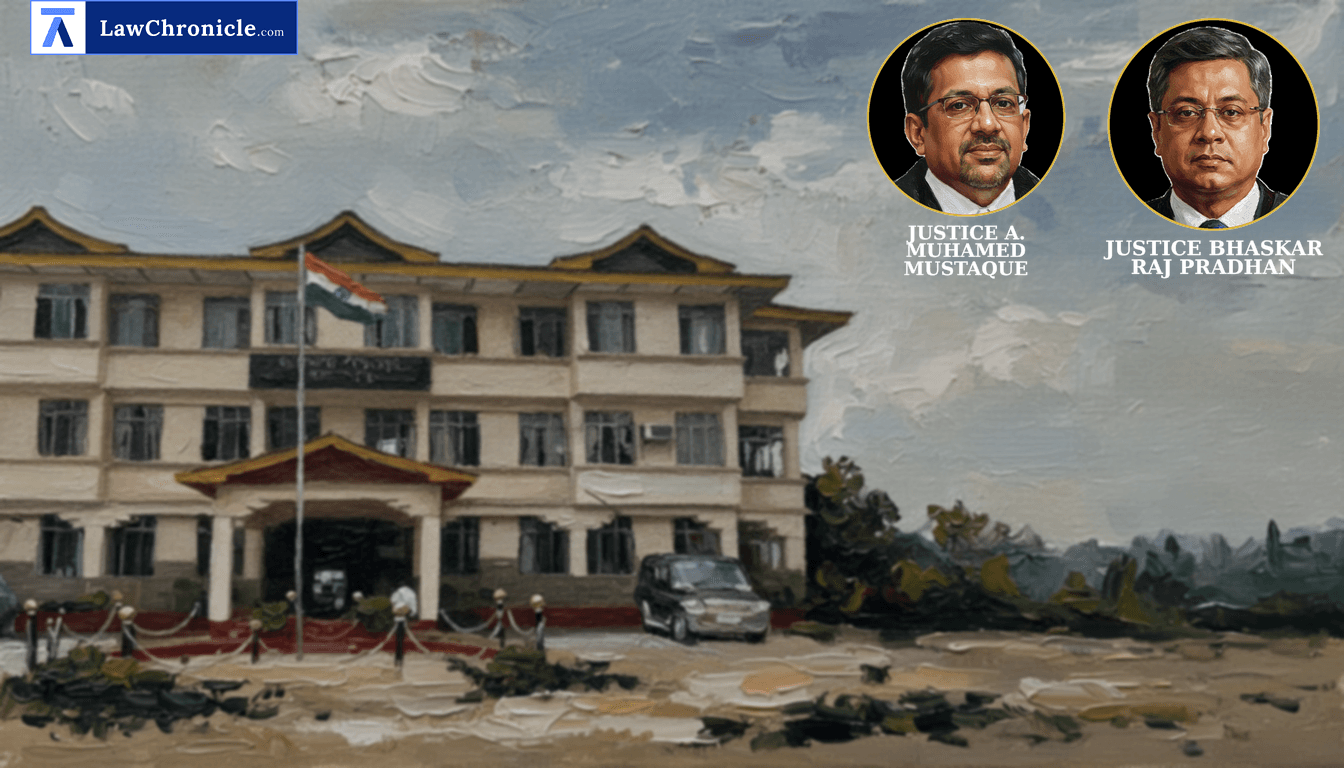
The Sikkim High Court has affirmed a 20-year sentence for child sexual assault while directing a complete overhaul of the state's legal aid monitoring and victim rehabilitation mechanisms.
A Division Bench comprising Chief Justice A. Muhamed Mustaque and Justice Bhaskar Raj Pradhan adjudicated the appeal filed by a man convicted of penetrative sexual assault against his eight-year-old niece. The Bench dismissed the appeal, finding the testimony of the child victim, supported by medical evidence, to be consistent and reliable despite technical challenges raised by the defense regarding the victim's age proof.
Key Takeaways
Legal Aid Standardisation
The Court mandated that the State Legal Services Authority must actively monitor the performance of legal aid counsel to ensure defense is not reduced to a mere formality.
Child Victim Rehabilitation
A call for a robust support system to prevent psychological trauma and ensure the reintegration of minor victims into mainstream society.
Reliability of Child Testimony
The judgment reinforces that the consistent testimony of a child victim, when corroborated by medical findings, is sufficient for conviction even in the absence of independent eyewitnesses.
Documentary Proof of Age
Minor discrepancies or the non-examination of the specific individual who made a birth register entry do not invalidate the proof of age if official records are otherwise authenticated.
Court Observations and Directions
The Sikkim High Court noted that the defense had largely confined its cross-examination to mechanical denials, failing to effectively represent the accused. Expressing concern over the quality of legal assistance, the Bench emphasized the need for specialized training. In the words of the Court, “Legal aid cannot be a mere formality. It is essential to ensure effective and qualitative legal aid to persons who are unable to secure legal representation on their own.” Regarding the lack of eyewitnesses, the Bench observed that in cases where the accused is a relative and the incident occurs within a private dwelling, the victim's testimony carries significant weight.
The Sikkim High Court issued the following directions:
"The Sikkim State Legal Services Authority (SSLSA), which engages Legal Aid Counsel, has the responsibility to supervise and monitor the manner in which Legal Aid Counsel conduct such cases. The SSLSA shall obtain a report from the Trial Court regarding the performance of all the Legal Aid Counsel of such cases. The SSLSA shall also undertake appropriate training and sensitisation of the Legal Aid Counsel, particularly with regard to effective cross-examination and the manner of defending an accused in a criminal trial. The SSLSA shall thereafter review the empanelment and engagement of Legal Aid Counsel and ensure that only competent Counsel are retained on its panel. Learned Member Secretary of the SSLSA shall call for periodical reports from the Trial Courts regarding the performance of the Legal Aid Counsel and take appropriate steps whenever deficiencies in representation are brought to notice. Another aspect which requires consideration is that, where the victim is a child below twelve years of age, unless an effective system put in place by the SSLSA to provide assistance and support in appropriate form, such victims may face a bleak future, including fear, psychological trauma, difficulty in reintegration and reluctance to return to mainstream society. An adequate support and rehabilitation mechanism for the victim, therefore, requires to be established, with appropriate mechanisms to ensure continued care, assistance and support to the victim."
Ratio
The core legal principle established is that the constitutional guarantee of legal aid necessitates qualitative and effective representation, requiring statutory bodies like the State Legal Services Authority to actively supervise counsel performance and provide comprehensive rehabilitation for minor victims of sexual offences.
Background
The case arose from an incident on July 21, 2021, where the appellant, the victim's uncle, committed sexual assault when the victim visited his house to see her grandmother. The matter came to light after the victim's mother noticed blood stains and sought medical help. The Trial Court convicted the appellant under Section 6 of the Protection of Children from Sexual Offences (POCSO) Act, 2012, sentencing him to twenty years of rigorous imprisonment.
In the appeal filed under Section 374(2) of the Code of Criminal Procedure, 1973, the appellant challenged the conviction primarily on the grounds of the proof of the victim's age and alleged contradictions in the mother's police statement. However, the Sikkim High Court found that the Registrar of Births and Deaths (PW-7) and the school Headmaster (PW-9) had sufficiently proved the victim's age. The Bench held that the minor discrepancies in the police statement were "trivial" and did not affect the core of the prosecution's case. Finding no reason to interfere with the Trial Court's findings, the High Court dismissed the appeal.
Case Details:
Case No.: Crl. A. No.01 of 2024
Case Title: Ashok Subba vs. State of Sikkim
Appearances:
For the Petitioner(s): Mr. R. C. Sharma, Legal Aid Counsel
For the Respondent(s): Mr. S. K. Chettri, Additional Public Prosecutor
Source: 2026 CaseBase(SIK) 68



 Breaking News


