


Sole Testimony Of Traumatised Child Victim Sufficient For POCSO Conviction: Bombay HC
 Copy Link
 Share
 Save
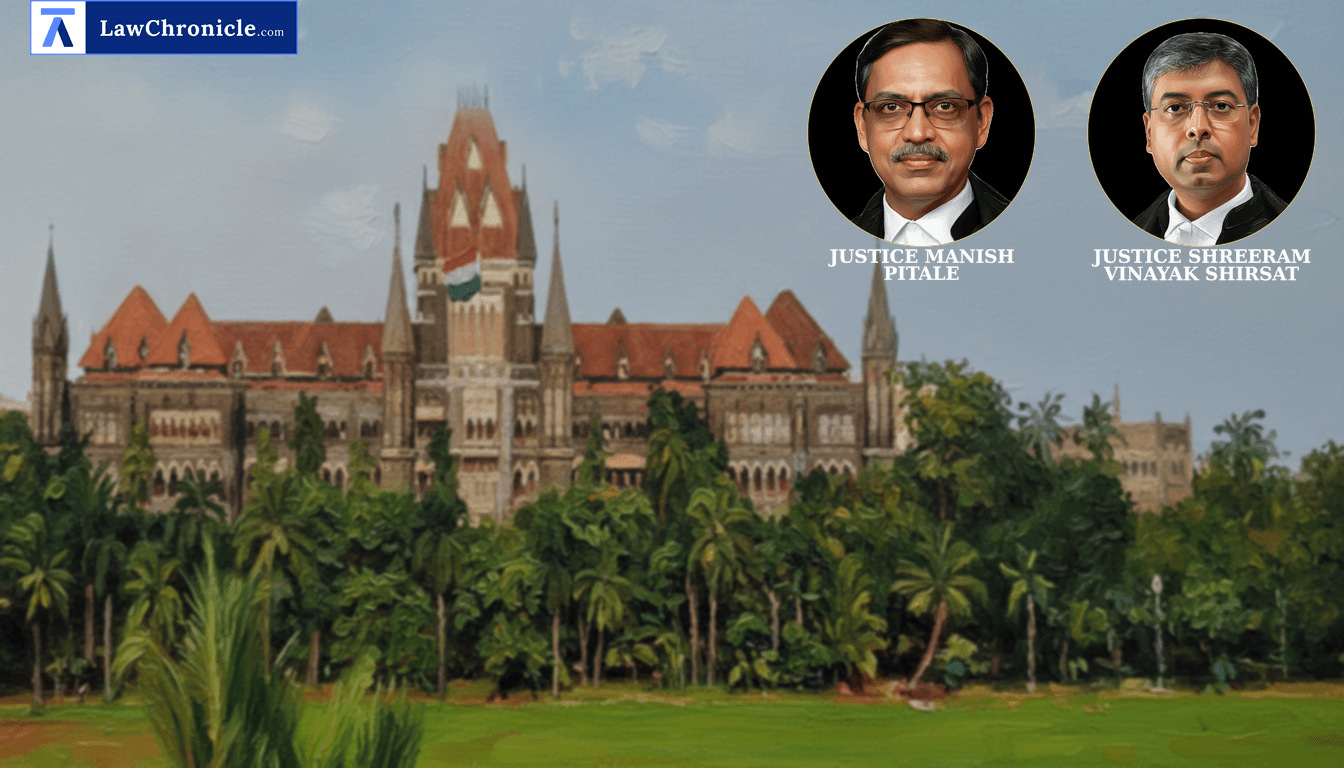
Minor discrepancies in the statement of a child victim of sexual assault regarding peripheral details do not undermine the core prosecution case, provided her substantive evidence remains cogent and inspires confidence. The Bombay High Court modified a life sentence imposed on an accused under the Protection of Children from Sexual Offences Act, 2012, affirming that the uncorroborated yet reliable testimony of a minor victim is legally sufficient to sustain a conviction for penetrative sexual assault.
A Division Bench comprising Justice Manish Pitale and Justice Shreeram V. Shirsat adjudicated an appeal challenging the conviction and life imprisonment awarded by a Special POCSO Court. The matter pertained to whether minor contradictions regarding the date of occurrence, exact clothing used to gag the victim, or absence of chemical corroboration could vitiate the trial's core findings.
Key Takeaways
- Credibility of Sole Child Witness: The testimony of a child victim of sexual assault can form the sole basis of conviction if it inspires confidence, making independent corroboration a rule of prudence rather than law.
- Peripheral Discrepancies Irrelevant: Inconsistencies regarding peripheral details like the exact date of occurrence or minor variations in narration do not weaken the core gravamen of sexual assault.
- Ossification Test Margin of Error: Age determination through radiological tests is not absolute, and a two-year margin of error must be applied, extending the benefit of doubt regarding statutory age thresholds to the accused.
- Absence of Semen Not Fatal: Forensic absence of seminal stains or lack of external injuries does not disprove penetrative sexual assault where ocular evidence and medical findings of internal injury exist.
Evaluating the victim's testimony and medical records, the High Court observed that the victim had clearly and consistently detailed the act of sexual assault. Addressing the evidential standards in sexual offence cases, the Court held that minor variations during cross-examination are natural for a traumatized minor witness.
The Court noted that the prosecution failed to conclusively prove the victim was under 12 years of age or that the assault occurred repeatedly. Applying a margin of error to the ossification test result, the Court modified the conviction from Section 6 to Section 4 of the Protection of Children from Sexual Offences Act, 2012. The Court has following directions:
"(i) The Appeal is partly allowed.
(ii) The conviction of the Appellant under Section 376 of the IPC passed by the Special Judge under POCSO Act, 2012 in POCSO Special Case No. 41 of 2015 is maintained. The conviction and sentence under Section 5 r/w Section 6 of the POCSO Act, 2012 is modified to a conviction and sentence under Section 3 r/w Section 4 of the POCSO Act, 2012. However, the sentence of life imprisonment is set aside. Instead, the Appellant is sentenced to suffer Rigorous Imprisonment for 12 years and to pay a fine of Rs. 1,000/- for commission of offence punishable under Section 4 of the POCSO Act, 2012. In default of payment of fine, he shall undergo simple imprisonment of one month. No separate sentence is imposed for the offence punishable under Section 376 of the IPC, in view of Section 42 of the POCSO Act, 2012.
(iii) The direction of the Special Court awarding the compensation of Rs. 25,000/- under section 33(8) of the POCSO Act is maintained.
(iv) Since the appeal is disposed of, all pending applications stand disposed of."
The Court, in its reasoning, observed: "Minor discrepancies or approximations surrounding the occurrence of the incident are natural and do not strike at the root of the prosecution case. The discrepancy, if any, is merely peripheral in nature and does not undermine the core substratum of the case of the prosecution. The victim's deposition cannot be discarded on account of such minor discrepancies when the gravamen of her testimony regarding the occurrence of the incident stands unshaken."
Reiterating the principles governing the sole testimony of a prosecutrix, the Bench placed reliance on Vijay @Chinee v/s State of Madhya Pradesh and State of Himachal Pradesh v/s Asha Ram to hold that judicial reliance does not require mandatory corroboration if the witness's account is trustworthy. Reaffirming State of Himachal Pradesh Vs. Prem Sing and The State of Punjab v/s Gurmit Singh & Ors., the Court reiterated that delay in lodging an FIR in sexual offences cannot be equated with other crimes due to socio-cultural factors. Regarding forensic evidence, the Bench referenced Madan Gopal Kakkad v/s Naval Dubey to establish that partial penetration without emission or rupture of the hymen is legally sufficient to establish rape.
On the question of child witness evaluation, the Court examined precedent from Nirmal Premkumar and Anr. v/s State represented by Inspector of Police, Lallu Manjhi and Anr. v/s State of Jharkhand ( "(2003) 2 SCC 401": 2003 CaseBase(SC) 737), and Radhe Shyam v/s State of Rajasthan ( "(2014) 5 SCC 389": 2014 CaseBase(SC) 80), clarifying that while child testimony requires careful scrutiny, wholly reliable evidence needs no further proof. The Court also relied on Munish Mubar v/s The State of Haryana ( "AIR 2013 Supreme Court 912": 2012 CaseBase(SC) 389), Bharwada Bhoginbhai Hirjibhai v/s The State of Gujarat ( "AIR 2009 SC 1010": 2008 CaseBase(SC) 556), and Ramesh Dada Kalel v The State of Maharashtra and another to emphasize that Indian courts must approach sexual assault cases without hyper-technicality or unwarranted suspicion toward the victim's account. Lastly, relying on Court on its own motion v/s State of NCT of Delhi, the Court applied the principle of applying a two-year margin of error to radiological age assessments.
Ratio
The testimony of a victim of sexual assault, if found reliable and inspiring confidence, is sufficient to sustain a conviction without the necessity of independent corroboration. Minor inconsistencies in peripheral details or delay in lodging an FIR do not defeat a credible core narrative. Furthermore, radiological age determination via ossification tests is not definitive proof, and the standard two-year margin of error must be extended to the accused in establishing statutory age thresholds.
Background
The prosecution alleged that in October 2014, the appellant, an acquaintance of the victim's father who resided on a Mumbai footpath, committed forcible penetrative sexual assault on the 11-year-old victim. The disclosure was made to an acquaintance when the child suffered physical distress, leading to an FIR registered under Section 376 of the Indian Penal Code alongside Sections 4, 8, and 12 of the Protection of Children from Sexual Offences Act, 2012.
In November 2017, the Special POCSO Judge convicted the appellant under Section 6 of the Protection of Children from Sexual Offences Act, 2012 and sentenced him to life imprisonment. The trial court recorded no separate sentence under Section 376 of the Indian Penal Code in terms of Section 42 of the Protection of Children from Sexual Offences Act, 2012. Aggrieved, the appellant approached the High Court arguing that there was an unexplained four-day delay in lodging the FIR, inconsistencies in the victim's Section 164 statement under the Cr.P.C, absence of external injuries, and negative Chemical Analyser reports.
The High Court found the victim's testimony wholly reliable regarding the penetrative act. However, since the victim stated in cross-examination that the act happened only once, Section 5(l) of the Protection of Children from Sexual Offences Act, 2012 was not attracted. Additionally, due to the lack of precise radiological age evidence, the Court extended the benefit of doubt regarding the age criterion under Section 5(m) of the Protection of Children from Sexual Offences Act, 2012. Consequently, the High Court modified the conviction to Section 3 read with Section 4 of the Protection of Children from Sexual Offences Act, 2012 and Section 376 of the Indian Penal Code, reducing the life sentence to 12 years of rigorous imprisonment considering the appellant's 11 years and 9 months of incarceration and good conduct.
Case Details:
Case No.: Criminal Appeal No. 101 of 2018
Case Title: Vijay Ramesh Dantani v. The State of Maharashtra & Anr.
Appearances:
For the Petitioner(s): Ms. Lakshmi Raman
For the Respondent(s): Ms. Sharmila Kaushik, APP (for State); Ms. Manisha Devkar (for Respondent No. 2)
Source: 2026 CaseBase(BOM) 4466
Similar Articles


 Breaking News


