


Software Engineers Are 'Workmen' Entitled To Interest On Security Deposits: Kerala HC
 Copy Link
 Share
 Save
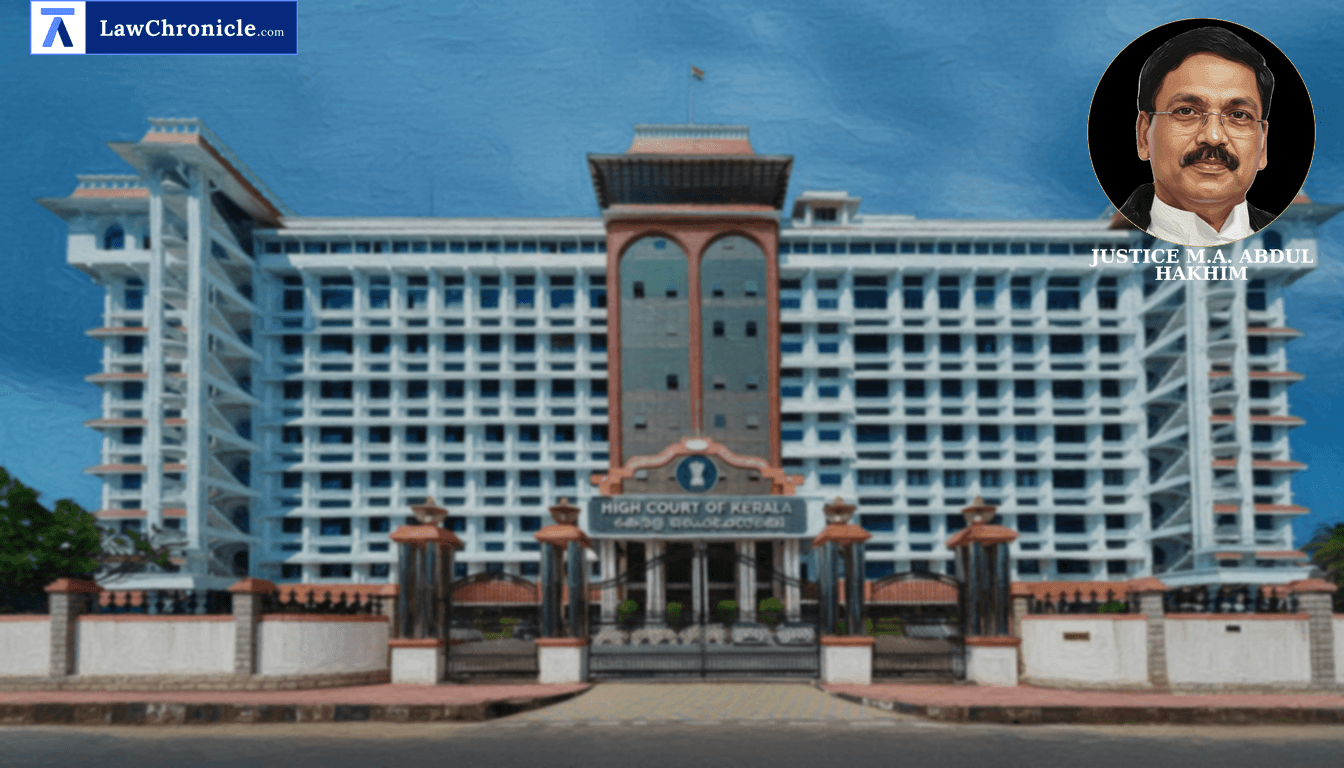
The Kerala High Court has fortified the rights of tech professionals by ruling that software engineers falling under the definition of 'workman' are entitled to interest on security deposits unlawfully withheld by employers. This decision effectively closes the gap for employers who utilize security bonds as interest-free capital, establishing that principles of equity mandate compensation for delayed refunds of such deposits.
In a combined hearing of two petitions, a bench of Justice M.A. Abdul Hakhim addressed the dispute between an IT management company and several employees over unpaid salary and the recovery of security deposits. The Court examined the applicability of the Industrial Disputes Act, 1947 to professionals in the software development sector.
Defining 'Workman' Beyond Designation
Justice M.A. Abdul Hakhim emphasized that the determination of whether an individual is a 'workman' depends on the nature of their duties rather than their formal designation. Referring to Sharad Kumar v. Government of NCT of Delhi and Others ( "(2002) 4 SCC 490": 2002 CaseBase(SC) 336), the Court noted that while the management claimed the engineers were involved in 'creative work' that would exclude them from the definition of a workman as per Sonepat Cooperative Sugar Mills Ltd. v. Ajit Singh, it failed to produce evidence of the specific nature of their training or daily tasks.
Regarding the status of the software engineers, the Court, in its reasoning, observed: "There is nothing on record to prove that the Petitioners were engaged in creative works. In such case, there is nothing to disturb the finding of the Labour Court that the Petitioners are ‘workman’ as defined under Section 2(s) of the Industrial Disputes Act. This question is answered in the affirmative and in favour of the Petitioners."
Equity and Interest on Unlawfully Withheld Deposits
One of the central legal issues was whether a Labour Court, under Section 33-C(2) of the Industrial Disputes Act, 1947, has the power to award interest on a security deposit when the agreement is silent on post-term interest. The Court relied on its own precedent in Joseph M.M. v. Labour Court and Another and supported by rulings like Union of India and Another v. S.B. Agnihotri and Another ( "(1991) II LLJ 603": 1990 CaseBase(ALL) 26), Sayal Mal Bhansali v. Judge, Labour Courts, Udaipur and Another ( "(1995) I LLJ 914": 1994 CaseBase(RAJ) 325), and State of Haryana v. Hisam Singh and Another ( "(1999) II LLJ 335": 1999 CaseBase(PNH) 134), to hold that such power exists under equitable jurisdiction.
Key Takeaways
Duties Over Designation
Professional degrees and high-sounding titles like 'Software Engineer' do not automatically exclude employees from the Industrial Disputes Act, 1947; the specific nature of tasks must be analyzed.
End of Interest-Free Bonds
Employers cannot retain security deposits beyond the agreed guarantee period without liability; delayed payments will now attract interest even if not explicitly mentioned in the employment contract.
Expanded Execution Powers
Section 33-C(2) of the Industrial Disputes Act, 1947 is not restricted to mere calculation; Labour Courts can decide 'incidental questions' like interest and worker status during execution-style proceedings.
Ratio
When an employer admits to a debt (such as a security deposit) but unlawfully withholds it to achieve undue enrichment, the Labour Court possesses the equitable jurisdiction under Section 33-C(2) of the Industrial Disputes Act, 1947 to award interest, as such a claim is an incidental question to the main computation of money due.
Court's Findings on Arrears and Closure
The Management had challenged the Labour Court's order directing payment of salary for the period between December 2002 and November 2003, claiming the establishment had closed. However, the Court noted that no evidence of closure was adduced. It upheld the Labour Court's jurisdiction to compute these benefits, citing CSB Bank Ltd. v. M.A. Rappai ( "2024 KHC 160": 2024 CaseBase(KER) 9873) and G4S Security Services (India) Pvt. Ltd. v. Satheeshkumar K. and Others to affirm that incidental inquiries are permissible during Section 33-C(2) proceedings.
The Court has the following directions:
"The Respondent No.1 to pay interest at the rate of 9% per annum on the Security Deposit of Rs.2,00,000/- from 19.01.2004 to 01.07.2007, to the Petitioners except the Petitioners in C.P. Nos.66 of 2003, 71 of 2003 and 8 of 2004."
Background:
The employees were appointed as Programmer Trainees and later Junior Software Engineers. As part of their employment, each deposited Rs. 2,00,000 as security and paid a training fee. While the company claimed closure in 2002, the employees contended they worked until November 2003 without regular salary. They moved the Labour Court under Section 33-C(2) of the Industrial Disputes Act, 1947. While the Labour Court originally granted salary arrears, it had refused to grant interest on the security deposits, leading to the current cross-petitions. The High Court ultimately dismissed the management's challenge and modified the order to include 9% interest on the withheld deposits.
Case Details:
Case No.: WP(C) NOS.693 OF 2009 & 17521 OF 2008
NeutralCitation: 2026:KER:56064
Case Title: Bindu O & Others v. Dataware Design Labs (P) Limited & Others
Appearances:
For the Petitioner(s): Sri. Gopakumar R. Thaliyal (Advocate)
For the Respondent(s): Sri. N. Sukumaran (Senior Advocate), Sri. Vinay Kumar Varma (Advocate)
Source: 2026 CaseBase(KER) 3387
Similar Articles


 Breaking News


