


Speaker Must Decide Disqualification Within Two Months Despite Accepting Resignations: Madras HC
 Copy Link
 Share
 Save
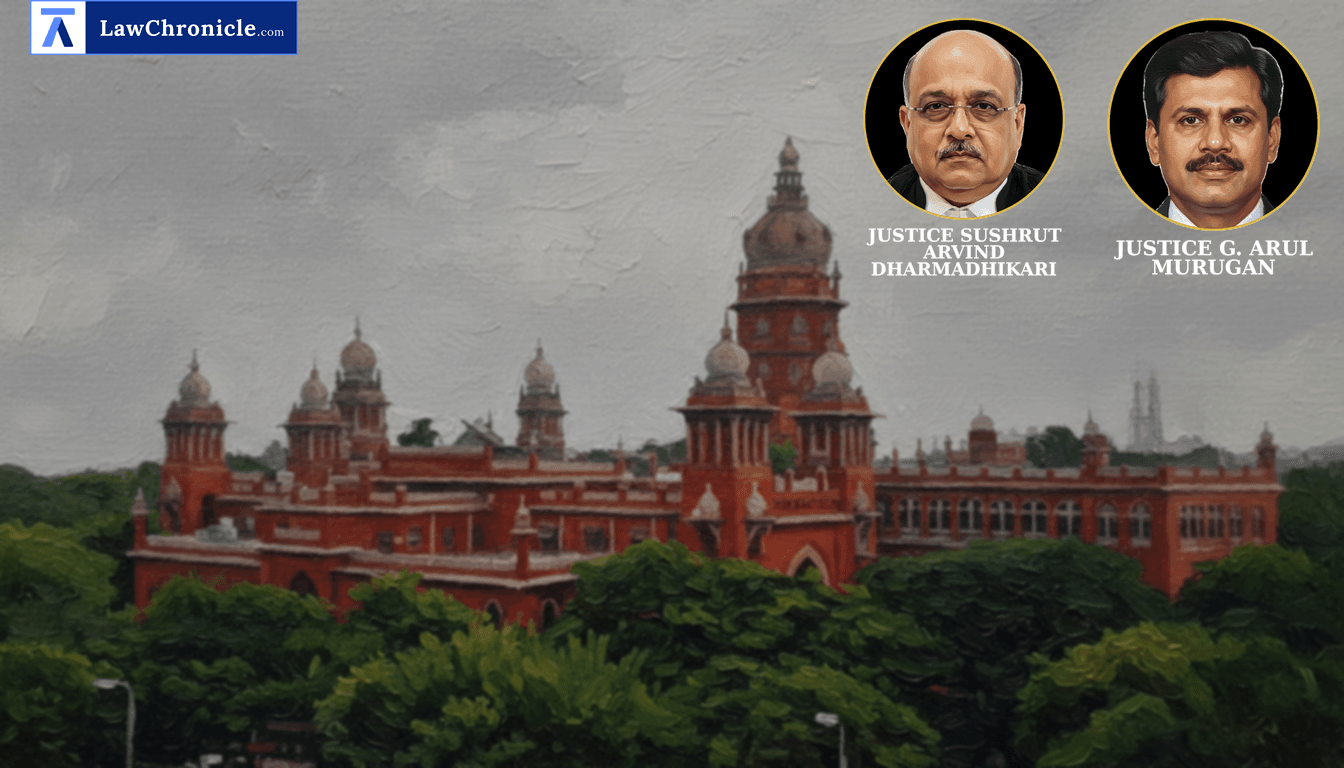
The Madras High Court has ruled that a Speaker’s acceptance of a Member’s resignation does not extinguish pending disqualification proceedings under the anti-defection law. The Bench issued a time-bound mandamus directing the Speaker to adjudicate disqualification petitions within two months, ensuring that the 'taint of defection' is not washed away by strategic resignations.
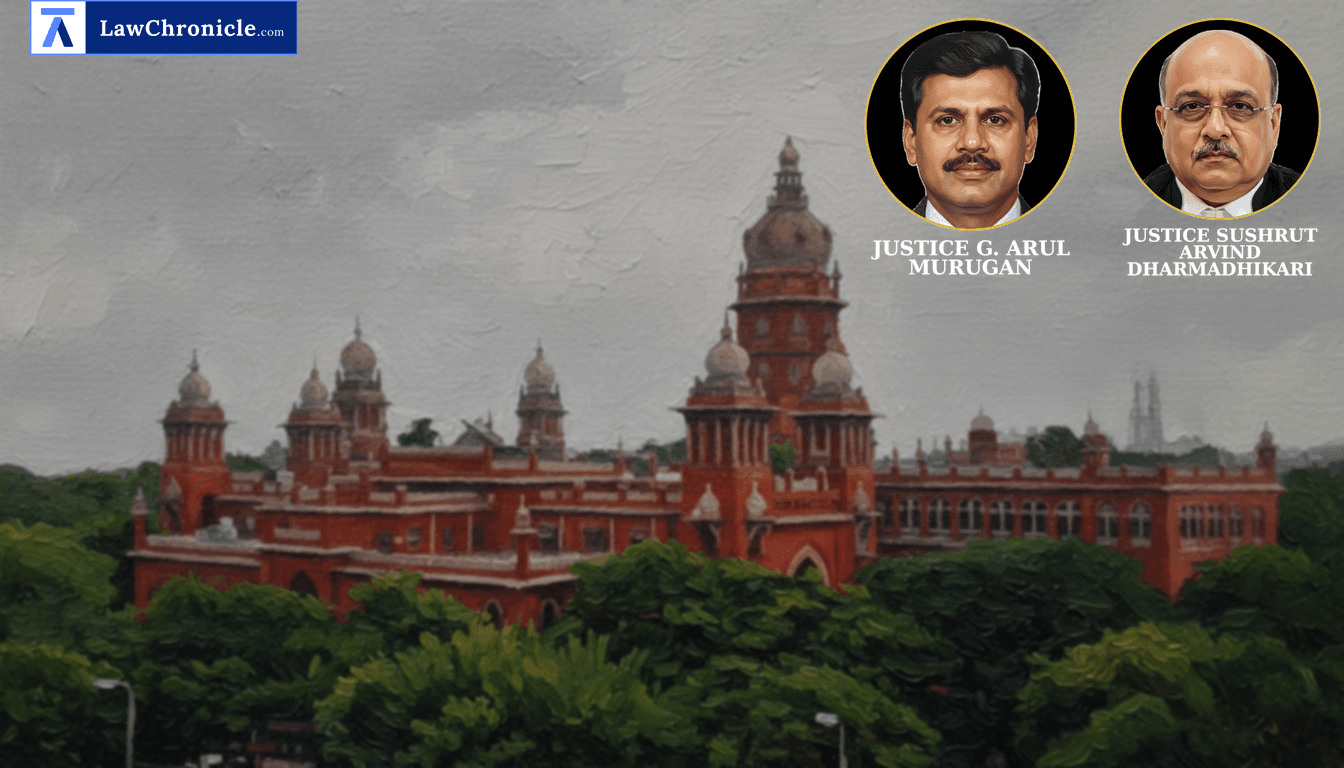
A Division Bench comprising Chief Justice Sushrut Arvind Dharmadhikari and Justice G. Arul Murugan adjudicated a batch of writ petitions challenging the Tamil Nadu Assembly Speaker’s decision to accept the resignations of six MLAs who switched allegiances from the AIADMK to the TVK party. The petitioners alleged that the Speaker acted with undue haste, accepting resignations within two hours to circumvent the Tenth Schedule to the Constitution of India.
Key Takeaways
Resignation vs. Disqualification
The Madras High Court clarified that resignation and disqualification are distinct constitutional mechanisms; one is a voluntary exit, while the other is a punitive consequence for defection.
No 'Cart Before the Horse'
The mere institution of a disqualification petition does not freeze the Speaker’s power to accept a voluntary resignation under Article 190(3)(b) of the Constitution of India.
Persistence of Stigma
The 'taint' of disqualification relates back to the date of the proscribed act and is not vaporized by a subsequent resignation, impacting the member's eligibility for remunerative political posts.
Judicial Mandamus to Speaker
While the High Court generally avoids interlocutory interference, it can issue a time-bound direction to the Speaker to prevent the frustration of the anti-defection law through indefinite delay.
Speaker’s Role and Constitutional Morality
The Madras High Court observed that for upholding the Constitution, the judiciary must trust high institutions while ensuring they act as sentinels of constitutional morality. The Bench emphasized that the Speaker, acting as a Tribunal under the Tenth Schedule to the Constitution of India, is expected to rise above political ideologies. The Bench observed that "The coalesce of the consistent view taken by the Supreme Court is that nothing prevents the Speaker from taking a decision either on the matter of resignation or disqualification despite the resignations having being tendered after the institution of disqualification proceedings. There is no breach of any ‘constitutional ethos’ or ‘a fraud on the Constitution’, if the Speaker chooses in his discretion to accept the resignations whilst keeping the disqualification proceedings pending."
The Requirement of Inquiry under Article 190(3)(b)
Addressing the challenge to the Speaker's summary acceptance of resignations, the Court held that the inquiry under Article 190(3)(b) of the Constitution of India is limited. Referring to Shrimanth Balasaheb Patil v. Karnataka Legislative Assembly ( "(2020) 2 SCC 595": 2019 CaseBase(SC) 511), the Bench noted that the Speaker is not required to conduct a 'fishing inquiry' into the hidden motives or political pressure behind a resignation. If the resignation is manually signed and the MLA appears personally, it satisfies the facial requirements of being 'voluntary' and 'genuine'.
Ratio
The Speaker’s power to accept a resignation under Article 190(3)(b) is independent of the adjudicatory function under the Tenth Schedule to the Constitution of India. However, because disqualification carries punitive consequences that resignation does not, such as bars under Article 164(1-B) and Article 361-B, the acceptance of a resignation does not render pending disqualification proceedings infructuous. A writ of mandamus can be issued to ensure the Speaker decides such petitions within a reasonable timeframe (typically three months) to uphold the constitutional objective of the anti-defection law.
Background
The dispute arose following the 17th Tamil Nadu Legislative Assembly elections, which resulted in a fractured mandate. During a floor test on May 13, 2026, several AIADMK MLAs defied the party whip to support the TVK-led government. While AIADMK filed disqualification petitions, the Speaker accepted the resignations of several defecting members with significant speed, notifying the vacancies in the Government Gazette. The petitioners argued this was a 'constitutional fraud' intended to allow defectors to contest by-elections without the stigma of disqualification. The Madras High Court, relying on Subhash Desai v. State of Maharashtra ( "(2024) 2 SCC 719": 2022 CaseBase(SC) 841) and Kihoto Hollohan v. Zachillhu ( "(1992) Supp (2) SCC 651": 1992 CaseBase(SC) 944), held that while the resignations were validly accepted, the Speaker remains duty-bound to conclude the disqualification trials.
Case Details:
Case No.: W.P.Nos. 23081, 23085, 26422, 26155 and 22397 of 2026
Neutral Citation: 2026:MHC:4196
Case Title: Agri S.S.Krishnamurthy v. The Speaker, Tamil Nadu Legislative Assembly & Ors.
Appearances:
For the Petitioner(s): Mr. V.Giri, Senior Counsel; Mr. S.R.Rajagopal, Senior Counsel; Mr. T.Sivagnanasambandan
For the Respondent(s): Mr. C.S.Vaidyanathan, Senior Advocate; Mr. Vijay Narayan, Advocate General; Dr. Menaka Gurusamy, Senior Advocate; Mr. Sathish Parasaran, Senior Counsel
Source: 2026 CaseBase(MAD) 28624
Similar Articles
 Breaking News


