


State Cannot Arbitrarily Oust L-1 Bidder Based on Trivial Grounds: Patna HC
 Copy Link
 Share
 Save
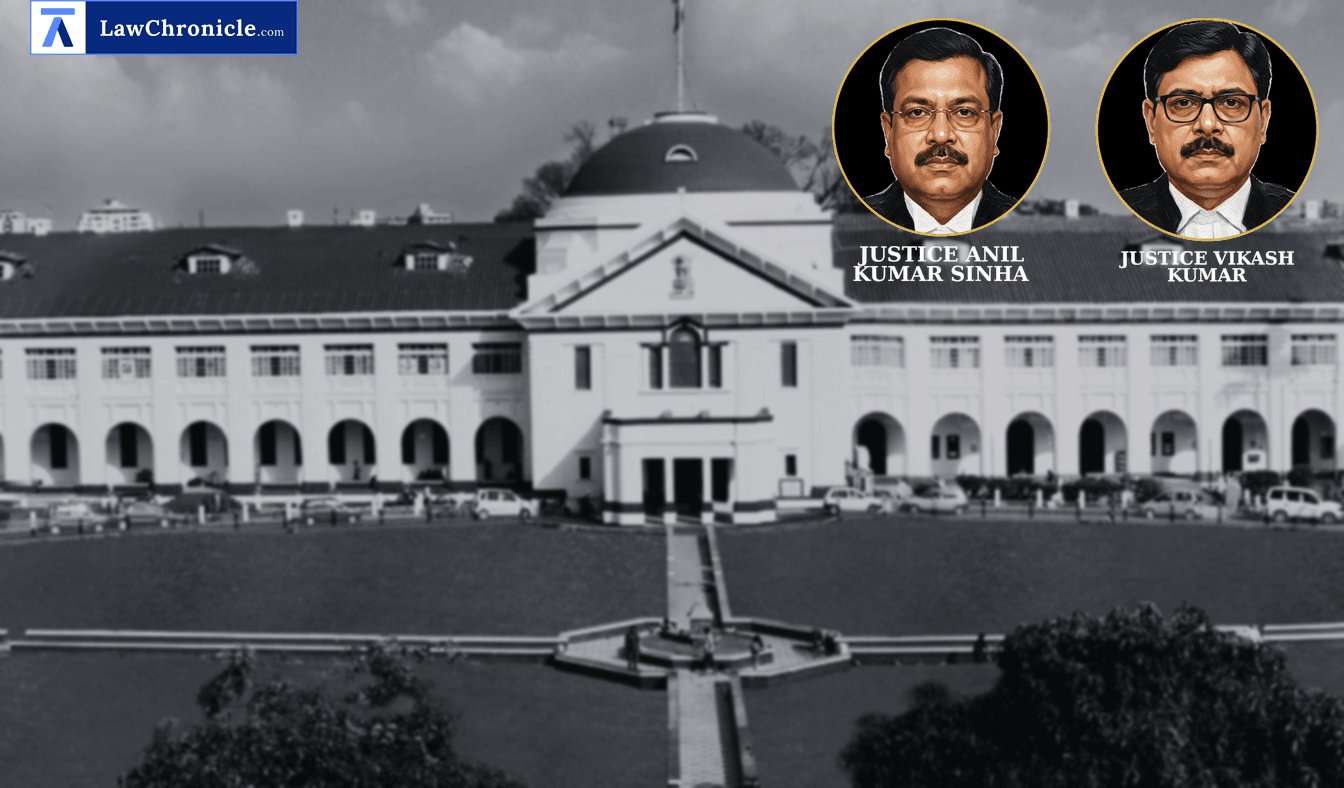
In a stern rebuke of arbitrary executive action in public procurement, the Patna High Court has upheld a compensation award against the State for ousting the lowest bidder on grounds not stipulated in the tender, ruling that political intervention cannot override established bidding norms. The Court emphasized that while the State may avoid disturbing ongoing public works, it remains liable for financial restitution when its tender committees act with intrinsic arbitrariness.
A division bench of Justice Anil Kumar Sinha and Justice Vikash Kumar dismissed an intra-court appeal filed by the State of Bihar against a Single Judge's order. The bench was hearing a challenge to a 2018 judgment which had imposed a cost of Rs. 5,00,000 on the Rural Works Department for unfairly disqualifying a valid bidder after they were declared L-1, following an external complaint by a Member of the Legislative Assembly (MLA).
Key Takeaways
Tender Finality Protected
State authorities cannot introduce new eligibility criteria after bids are opened to disqualify successful participants.
Curbing Political Interference
Administrative decisions in tender processes influenced by external political pressure (like MLA complaints) are inherently arbitrary and legally unsustainable.
Moulding of Relief
Where public work has progressed significantly (e.g., 80%), courts may award monetary compensation instead of disrupting the project, balancing private rights with public interest.
Financial Liability of State
Arbitrary ouster from a tender process is a compensable wrong even in the absence of a concluded contract if the rejection ground is found to be trivial and non-existent in the NIT.
Invalidation of Technical Bid Rejection
The Court scrutinized the Tender Committee's decision to disqualify the respondent on the ground that the stamp paper for the affidavit was not purchased in the name of the person making the affidavit. Upon inquiry, the State admitted no such condition existed in the Notice Inviting Tender (NIT). The Court found that such a trivial and non-stipulated ground could not be used to declare an L-1 bidder ineligible.
In its reasoning, the Court observed: "In absence of such a stipulation in the NIT, the respondent -writ petitioner could not have been declared ineligible on such trivial ground. The learned Single Judge came to the conclusion that ouster of the writ petitioner- respondent from the tender process was arbitrary. Learned Single Judge was therefore justified in holding that rejection of the technical bid was unsustainable."
Court Directions
Considering the advanced stage of the work performed by the subsequent contractor, the Court maintained the relief granted by the Single Judge. The Court has following directions:
"The learned Single Judge therefore did not direct the award of tender in favour of the writ petitioner at the advanced stage of the work but has rightly moulded the relief and directed for payment of Rs. 5,00,000/- as compensation. The action of the respondent authority was intrinsically arbitrary and award of compensation in the facts of the case cannot be said to be illegal."
Ratio
The State's power to reject a tender is subject to the rule of law and the principle of non-arbitrariness under Constitution of India, 1950. When a bidder is ousted on grounds extraneous to the NIT conditions at the behest of political intervention, the action is void. Even if a concluded contract does not exist, the Court may exercise its discretionary power to award compensation if the work has progressed too far to permit a re-tender, ensuring that the victim of arbitrary state action is not left remediless.
Background
The dispute originated from NIT No. RWD / NABARD / SBD / 11 / E- Tender / 2015-16. The respondent-writ petitioner was declared the lowest bidder (L-1) on February 3, 2017. However, an MLA's complaint triggered an enquiry that led the Tender Committee to disqualify the L-1 and L-2 bidders for a supposed technical flaw in the stamp paper. While the writ petition was pending, the State issued a fresh tender and awarded the work to another firm, which completed nearly 80% of the project.
The Appellants argued that since no contract was signed, the petitioner suffered no compensable loss and had no vested right to the work. They relied on Rabindra Nath Ghosal v. University of Calcutta ( "(2002) 7 SCC 478": 2002 CaseBase(SC) 946), Sube Singh v. State of Haryana ( "(2006) 3 SCC 178": 2006 CaseBase(SC) 665), W.B. SEB v. Dilip Kumar Ray, and Municipal Corporation of Delhi v. Uphaar Tragedy Victims Association to argue against the award of damages in writ jurisdiction. The High Court, however, distinguished these precedents, noting that the State's action was "intrinsically arbitrary" and the Single Judge had correctly balanced the need to continue public work with the need to penalize departmental illegality.
Case Details:
Case No.: Letters Patent Appeal No.1630 of 2018
Case Title: The State Of Bihar & Ors. v. Kamakshi Minakshi Construction Private Limited & Anr.
Appearances:
For the Petitioner(s): Mr. Pratik Kumar Sinha, AC To GA- 5, Mr. Saurav Kumar, Adv., Mr. Rakesh Kumar Ranjan, Adv.
For the Respondent(s): Mr. Ashish Kumar Lal, Adv.
Source: 2026 CaseBase(PAT) 3962
Similar Articles


 Breaking News


