


State Tender Acceptance For School Uniforms Is Upheld; Writ Petition Dismissed
 Copy Link
 Share
 Save
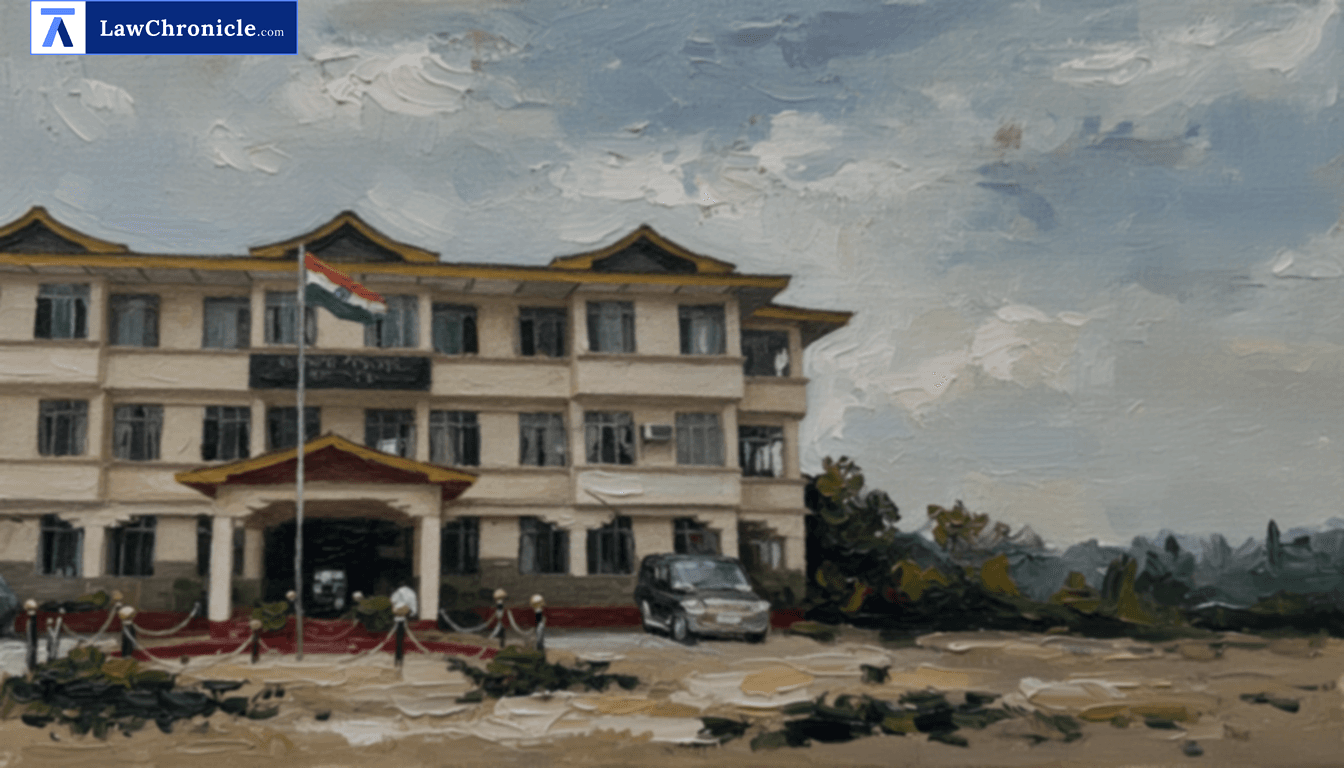
A bench led by Chief Justice R. K. Patra delivered the judgment in a writ petition challenging the State Government’s Education Department decision to accept tenders of four private firms for supply of school uniforms for the academic session 2004. The petitioner, a small-scale industry registered with the State, contested the selection on grounds that the Government ignored the “lowest rate and acceptable quality” principle in the Sikkim Financial Rules, 1979 and thereby caused loss to the State exchequer.
The Court dismissed the writ petition and upheld the tender awards to respondents 2 to 5, holding that the tender committee and the Planning Cell properly evaluated samples and rates, and no extraneous or unreasonable factor vitiated the decision-making process. The Court reiterated that when the State entered into contracts its action was amenable to judicial review under Article 14 and that “action of the Government must pass the twin test of reasonableness and public interest.” It further observed that “Every action of the State executive authority must be subject to rule of law and must be informed by reason.” The Court, in its reasoning, observed: "The duty of the Court was to confine itself to the question of legality. Its concern should be: (1) whether a decision-making authority exceeded its powers, (2) committed an error of law, (3) committed a breach of the rules of natural justice, (4) reached a decision which no reasonable tribunal would have reached, or (5) abused its powers." Applying these principles, the Court found no illegality, irrationality or procedural impropriety warranting interference and therefore declined to set aside the Government’s decision.
Background The dispute arose after a notice inviting sealed tenders for supply of uniforms (published in the Sikkim Herald dated 13-11-2003) resulted in 15 bids, including that of the petitioner and respondents 2 to 5. The petitioner claimed that, despite complying with tender conditions, its lower rates were ignored and the State approved higher rates—allegedly causing a potential loss of about Rs. 25 lakhs.
The State explained that the Government’s policy provided free uniforms to children from pre-primary to Class V and that a seven-member Tender Committee (chaired by the Director of Education, M.K. Panicker, and comprising officers from Education, Text Book, Finance, Planning, Accounts and other units) opened tenders on 15-12-2003. The Committee evaluated both samples and rates under main criteria: close examination and comparison of samples with quoted rates; reputation and past experience of tenderers; and quality of stitching, pleats/folds and pockets. Although some bids were lowest on price, the Committee found the corresponding quality deficient and recommended respondents 2 to 5 whose samples and rates were “reasonable and of acceptable quality.” The Planning Cell compared current recommended rates with those of earlier years and noted that overall financial outlay had reduced from earlier peaks (Rs. 220–253 lakhs in 1997–98) to projections around Rs. 150.66 lakhs for 2004, and that accepting the recommended rates would yield savings. The Cabinet approved the recommendations on 30-1-2004 and work orders issued on 4-2-2004.
The petitioner argued that preference/weightage in the tender notice to local small-scale units required acceptance of its offer; it also challenged the composition of the selection committee and contended that absence of a State Trading Corporation officer breached Sikkim Financial Rules. The Court rejected these contentions, holding that the preference clause did not permit sacrificing quality for locality, that the procurement did not fall under the category mandating inclusion of a State Trading Corporation officer, and that no clear prohibition vitiated the committee’s constitution. The Court relied on precedents including Mahabir Auto Stores v. Indian Oil Corporation and Tata Cellular to frame the scope of judicial review in contractual and tender matters. Ultimately, the petition was dismissed with no costs. No interim directions or further liberty were recorded.
Case Details: Case No.: Not available Case Title: Writ petition challenging State decision accepting tenders for supply of school uniforms for academic session 2004 Appearances: For the Petitioner(s): Not indicated in judgment For the Respondent(s): Not indicated in judgment
Similar Articles



 Breaking News


