


Strangulated, Burnt inside Matrimonial Home: Allahabad HC Upholds Life Sentence for Dowry Death
 Copy Link
 Share
 Save
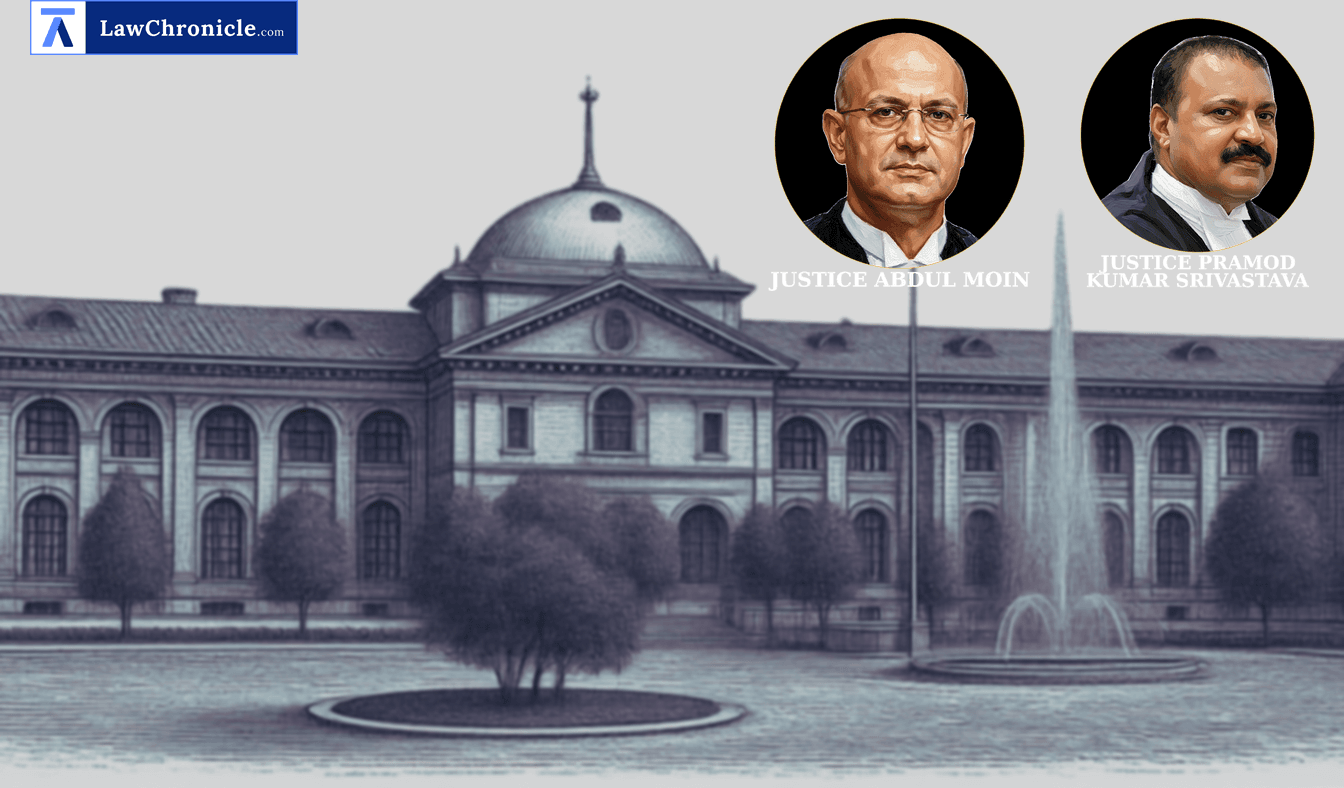
The Allahabad High Court has upheld a life sentence for a husband after finding that strangulation followed by post-mortem burning inside a matrimonial home constitutes an irrebuttable failure to explain unnatural death under Section 106 of the Indian Evidence Act, 1872.
A Division Bench comprising Justice Abdul Moin and Justice Pramod Kumar Srivastava delivered the judgment while hearing an appeal against a conviction for dowry death. The Bench meticulously examined the trial court's findings, emphasizing that the appellant's failure to provide a credible explanation for the presence of strangulation marks and post-mortem burns on his wife's body within their shared residence was fatal to his defense.
Key Takeaways
Privacy Burden Reinforced
When an offense occurs within the exclusive privacy of a matrimonial home, the husband bears a higher burden under Section 106 of Indian Evidence Act, 1872 to explain the circumstances of the death.
Strangulation Belies Suicide Plea
Medical evidence of manual strangulation followed by burning effectively negates defense theories of suicide or mental instability, as it is physically impossible for a victim to self-strangle and then set themselves ablaze.
Proximity Test for Cruelty
The term "soon before death" does not imply a rigid time limit but requires a proximate and live link between the dowry harassment and the consequential death, focusing on the course of conduct.
Statutory Presumption Invoked
Upon proving that death occurred otherwise than in normal circumstances within seven years of marriage due to dowry demands, the court shall presume the husband caused the death under Section 113-B of Indian Evidence Act, 1872.
Medical Evidence and Death in Matrimonial Home
The Allahabad High Court observed that the medical testimony provided by Dr. Vinod Chandra Pandey (appearing as PW-3) was conclusive. The post-mortem report revealed a hyoid bone fracture and ecchymosis, indicating ante-mortem strangulation. Furthermore, the presence of post-mortem burns indicated by the lack of soot particles in the trachea and no line of redness, suggested an attempt to destroy evidence after the homicide.
Therefore, the ALlahabad High Court dismissed the appeal to affirm conviction and sentence of the appellant under Sections 304-B, 498-A of the IPC and Section 4 of the Dowry Prohibition Act. The accused is in jail. The trial court record be sent back to the court concerned alongwith a copy of the judgment of this appeal for necessary compliance."
The Court, in its reasoning, observed: "It is very surprising and ridiculous that in case of suicide how the mark of strangulation occurred on the throat of the deceased and her body was burnt, as found by the doctor during autopsy of the deceased. As we have discussed earlier that it is not possible for the deceased to have herself put pressure on her throat by putting her hands and after death she managed to set her body on fire. Therefore, the plea taken by the accused persons is of no significance."
Ratio
In cases where a woman dies an unnatural death within the privacy of her matrimonial home within seven years of marriage, and foundational facts of dowry-related cruelty are established, the husband is mandated by Section 106 of the [Indian Evidence Act, 1872 to explain the circumstances. A failure to provide a cogent explanation, coupled with medical evidence of homicidal violence disguised as suicide, justifies the invocation of the presumption under Section 113-B of the Indian Evidence Act, 1872 and Section 304-B of the Indian Penal Code, 1860.
Background
The dispute arose from the death of Suneeta Devi, who was married to the appellant about five years prior to the incident. According to the complainant (PW-1), the appellant and his relatives persistently demanded Rs. 1,00,000 and a motorcycle. On January 08, 2014, the victim was found dead with severe burn injuries. While the appellant contended that the marriage was nine years old and the victim was mentally unstable, the Court found these claims unsubstantiated by records.
The Allahabad High Court relied on Kans Raj Vs. State of Punjab ( "(2000) 5 SCC 207": 2000 CaseBase(SC) 1149) to interpret the proximity of dowry demands and Trimukh Maroti Kirkan v. State of Maharashtra ( "(2006) 10 SCC 681": 2006 CaseBase(SC) 500) to establish the duty of house inmates to explain crimes committed in secrecy. Reference was also made to Surinder Singh Vs. State of Haryana ( "(2014) 4 SCC 129": 2013 CaseBase(SC) 662) regarding the absence of independent witnesses in bride-burning cases. Ultimately, the Allahabad High Court found no perversity in the Trial Court's decision to convict the husband while acquitting other relatives who were living separately.
Case Details:
Case No.: CRIMINAL APPEAL No. - 1157 of 2018
Neutral Citation: 2026:AHC-LKO:74153-DB
Case Title: Karunesh Tiwari Versus State of U.P
Appearances:
For the Petitioner(s): Manoj Kumar Misra, Akshay Singh, Amresh Kumar, Arshad Siddiqui, Devanshu Pratap Singh, Dinesh Kumar, Ravi Kant Pandey, Shrvan Singh (Advocates)
For the Respondent(s): G.A. (Government Advocate)
Source: 2026 CaseBase(ALL) 1207
Similar Articles
 Breaking News


