


Extensive Body Burns Rule Out Accidental Kitchen Fire In Dowry Death Cases: Jharkhand HC
 Copy Link
 Share
 Save
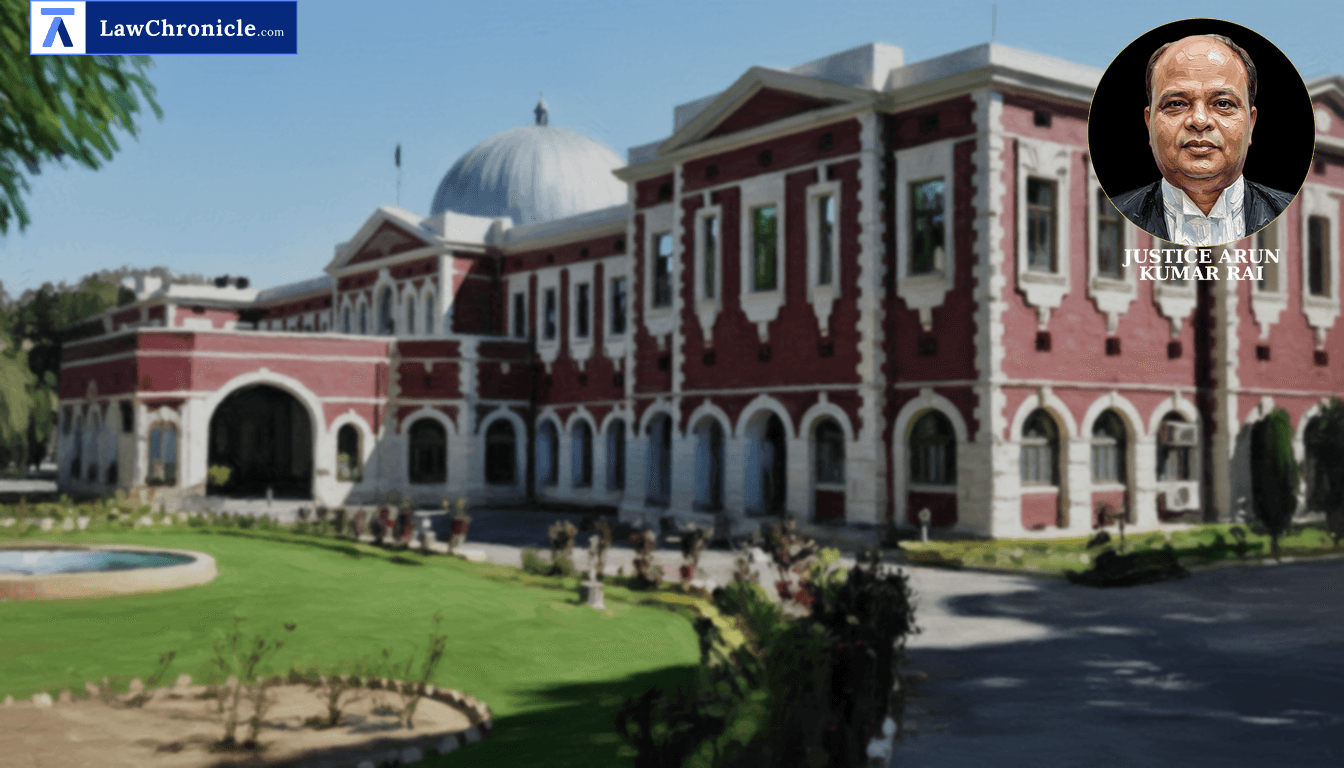
The Jharkhand High Court has fortified the stringent application of dowry death laws, ruling that the nature and extent of burn injuries can decisively rebut claims of accidental kitchen fires when liquid accelerants are suspected. The court affirmed that the mandatory presumption of guilt under Section 113-B of the Indian Evidence Act, 1872 remains unshakable unless the accused provides substantial evidence to prove an alternative cause of death.
A bench of Justice Arun Kumar Rai heard the criminal appeal challenging a trial court's conviction of a husband for the death of his wife within three years of marriage. The Court examined whether the prosecution successfully established a 'proximate and live link' between dowry demands and the victim's death to invoke the statutory presumption against the appellant.
Key Takeaways
Scientific Rebuttal of Accidental Fire Claims
Uniform 80% burns across both the front and back of the body are inconsistent with accidental coal stove fires, suggesting the deliberate use of liquid accelerants like kerosene.
Mandatory Presumption Shifts Onus
Once the prosecution proves a death occurred under abnormal circumstances within seven years of marriage following dowry harassment, the burden of proof strictly shifts to the accused to prove innocence.
Interpretation of 'Soon Before' Death
The phrase 'soon before' is a relative term indicating a course of conduct rather than a specific time-limit, requiring a pragmatic approach by the courts.
Court Observations and Directions
The Court noted that the appellant's defense that the victim caught fire while cooking on a coal stove was physically improbable given the medical evidence. The Court observed that accidental burns from such stoves typically follow a vertical path and rarely cover the entire body uniformly. The presence of smoke stains on the bedroom walls further contradicted the kitchen-accident theory.
The Court, in its reasoning, observed: "The extensive, uniform 80% burns over the front and back of the body strongly suggest the use of a liquid accelerant such as kerosene or petrol, rather than accidental burning from a coal stove... The appellant/convict failed to rebut the presumption under Section 113-B of the Indian Evidence Act, 1872, as no evidence was adduced on his behalf to discharge the burden."
The Court has the following directions:
"Let a copy of this judgment along with the trial court records be sent back forthwith to the court concerned for information and needful. Pending I.A., if any, stands disposed of."
Ratio
To sustain a conviction under Section 304-B of the Indian Penal Code, 1860, the prosecution must establish that the death occurred under non-normal circumstances within seven years of marriage and that the victim was subjected to cruelty for dowry 'soon before' her death. Once these ingredients are met, Section 113-B of the Indian Evidence Act, 1872 mandates the court to presume the accused caused the death, shifting the legal burden to the defense to prove the death was accidental, suicidal, or homicidal by someone else.
Background
The case originated from an incident in February 2012, where the deceased, Mahi Devi, sustained 80% burn injuries and died four days later during treatment. Her father alleged that the appellant and his mother had been demanding Rs. 1,00,000/- and had threatened to burn her if the demand remained unfulfilled. A trial court in Dhanbad convicted the husband under Section 304-B of the Indian Penal Code, 1860 while acquitting the mother-in-law.
In the appeal, the convict argued that the non-examination of the police officer who prepared the inquest report was fatal and that the witnesses were 'interested' relatives. However, the High Court relied on precedents like Major Singh v. State of Punjab ( "(2015) 5 SCC 201": 2015 CaseBase(SC) 30) and Satbir Singh v. State of Haryana ( "(2021) 6 SCC 1": 2021 CaseBase(SC) 1059) to hold that the prosecution had established the 'proximate and live link' required by law. The Court further cited Surinder Singh v. State of Haryana ( "(2014) 4 SCC 129": 2013 CaseBase(SC) 662) and State of M.P. v. Jogendra ( "(2022) 5 SCC 401": 2022 CaseBase(SC) 1117) to emphasize that Section 304-B must be interpreted to curb the social evil of bride burning. Finding no evidence of an accidental fire, the High Court dismissed the appeal and affirmed the seven-year simple imprisonment sentence.
Case Details:
Case No.: Criminal Appeal (S.J.) No. 55 of 2017
Neutral Citation: 2026:JHHC:28475
Case Title: Dilip Kumar Mahto @ Dilip Mahto v. The State of Jharkhand
Appearances:
For the Petitioner(s): Mr. Kumar Nilesh, Advocate
For the Respondent(s): Mr. Shiv Shankar Kumar, A.P.P.
Source: 2026 CaseBase(JHKD) 3159
Similar Articles
 Breaking News


