


Striking Off Tenant's Defence Under Order XV Rule 5 CPC Not a Mechanical Process: SC
 Copy Link
 Share
 Save
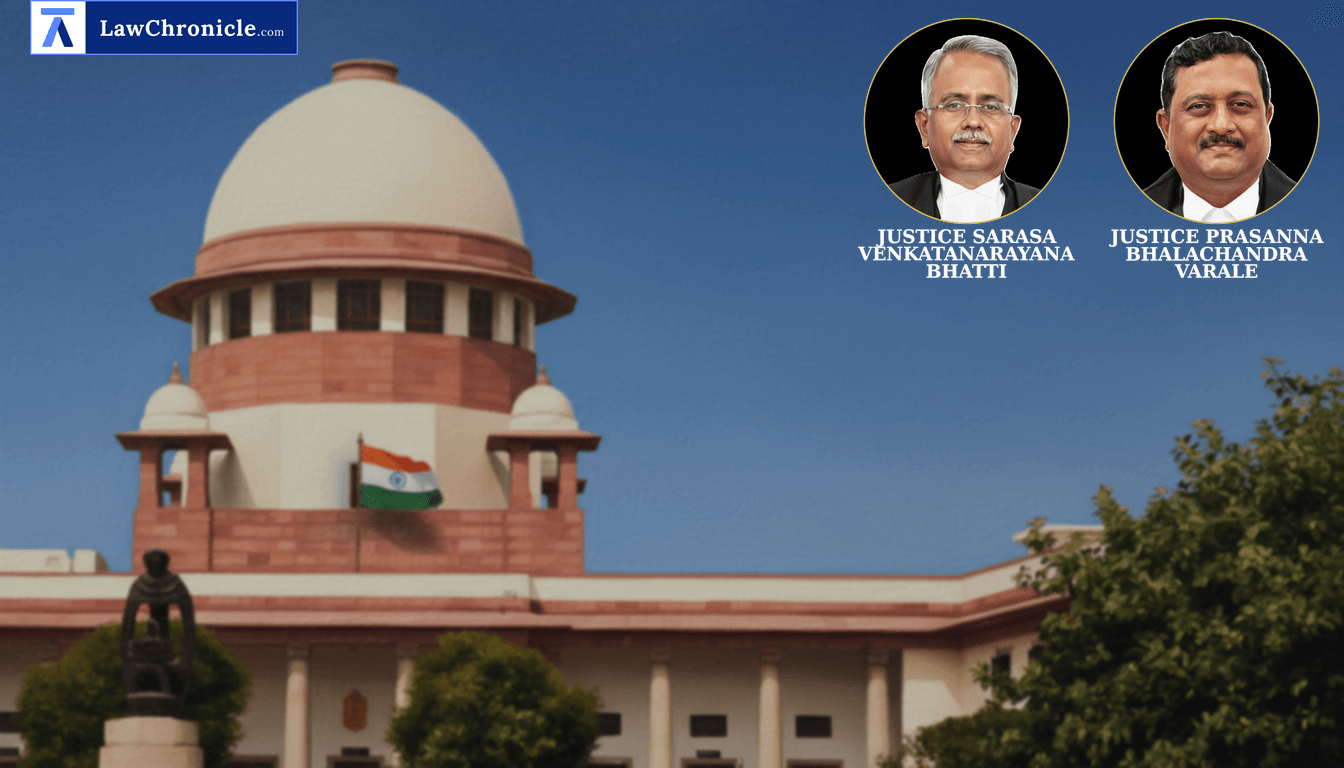
The Supreme Court has set aside orders striking off a tenant's defence, emphasizing that the penal consequences under Order XV Rule 5 of the Code of Civil Procedure, 1908, should not be invoked mechanically and require a determination of the 'first date of hearing'.
A bench comprising Justice S.V.N. Bhatti and Justice Prasanna B. Varale was hearing an appeal against the Allahabad High Court's decision which had initially allowed a revision petition by a tenant and subsequently granted an extension of time to deposit rent arrears. The primary issue before the Court was the interpretation of discretionary powers under Order XV Rule 5 of the Code of Civil Procedure, 1908 and whether the High Court erred in extending timelines despite a previous 'final' conditional order.
Judicial Discretion and Substantial Compliance
The Court observed that while the provision is intended to ensure tenants do not occupy premises without paying admitted rent, the striking off of a defence is a 'drastic' and 'penal' measure. Relying on the principles in Bimal Chand Jain v. Sri Gopal Agarwal ( "(1981) 3 SCC 486": 1981 CaseBase(SC) 421), the bench noted that the word 'may' in the rule vests power in the court but does not oblige it to strike off the defence in every case of default.
The Court, in its reasoning, observed: "The power to strike off the defence under Order XV Rule 5 CPC, though couched in mandatory terms, is not to be exercised mechanically. The Court must consider whether there has been substantial compliance and whether the default is wilful or contumacious."
Furthermore, referencing Santosh Mehta v. Om Prakash ( "(1980) 3 SCC 610": 1980 CaseBase(SC) 188), the bench highlighted that such powers are meant for 'grossly recalcitrant situations' where a tenant shows a mood of defiance. The Court noted that in the present case, the Trial Court had not conclusively determined the ‘first date of hearing’ a foundational requirement as established in Siraj Ahmad Siddiqui v. Prem Nath Kapoor ( "(1993) 4 SCC 406": 1993 CaseBase(SC) 65).
The Handmaid of Justice: Procedural Flexibility
Addressing the appellants' grievance regarding the High Court extending time after a 'final' order, the Supreme Court invoked Salem Advocate Bar Association v. Union of India ( "(2005) 6 SCC 344": 2005 CaseBase(SC) 49) to reiterate that rules of procedure are the 'handmaid of justice' and not its mistress. The Court found that the tenant's delay was not 'gross' or 'wholly unexplained'. However, it criticized both the Trial Court for its mechanical approach and the High Court for failing to reconcile its conditional orders with subsequent indulgences.
Directions Issued to the Trial Court
The Court has the following directions:
"The Trial Court shall, upon remand:
- Determine, in accordance with law, the “first date of hearing” of the suit;
- Examine whether there has been due compliance or substantial compliance with the requirements of Order XV Rule 5 CPC;
- Consider whether the default, if any, is wilful or bonafide;
- Pass a reasoned order after affording adequate opportunity to both parties."
Background:
The dispute originated from a suit filed by the appellants (landlords) against the respondent (tenant) for eviction and recovery of rent arrears for a commercial premises in Kanpur. The landlords alleged that the tenant stopped paying the revised rent of Rs. 25,000 from November 2020. A suit was filed under Section 15 of the Provincial Small Causes Court Act read with Section 106 of the Transfer of Property Act.
The Trial Court initially struck off the tenant's defence under Order XV Rule 5 of the Code of Civil Procedure, 1908 because the tenant failed to deposit the admitted rent and interest on the first date of hearing. The Allahabad High Court, in revision, allowed the tenant to deposit a monthly rent of Rs. 1,500 by a specific date, failing which the defence would be struck off. When the tenant defaulted and sought an extension, the High Court granted it despite the landlords' objections. The Supreme Court has now remanded the matter for fresh adjudication to ensure all legal parameters are met.
Case Details:
Case No.: Civil Appeal No. of 2026 (@ SLP (C) No. 7116 of 2025)
NeutralCitation: 2026 INSC 492
Case Title: Dharmendra Kalra & Ors. v. Kulvinder Singh Bhatia
Source: 2026 CaseBase(SC) 429
Similar Articles
 Breaking News


