Substantial Justice Overrules Hyper-Technical Delays: Supreme Court
 Copy Link
 Share
 Save
Prioritizing substantial justice over procedural rigidities, the Supreme Court has ruled that administrative delays in state instrumentalities must be evaluated cumulatively rather than in isolation when deciding applications for condonation of delay.
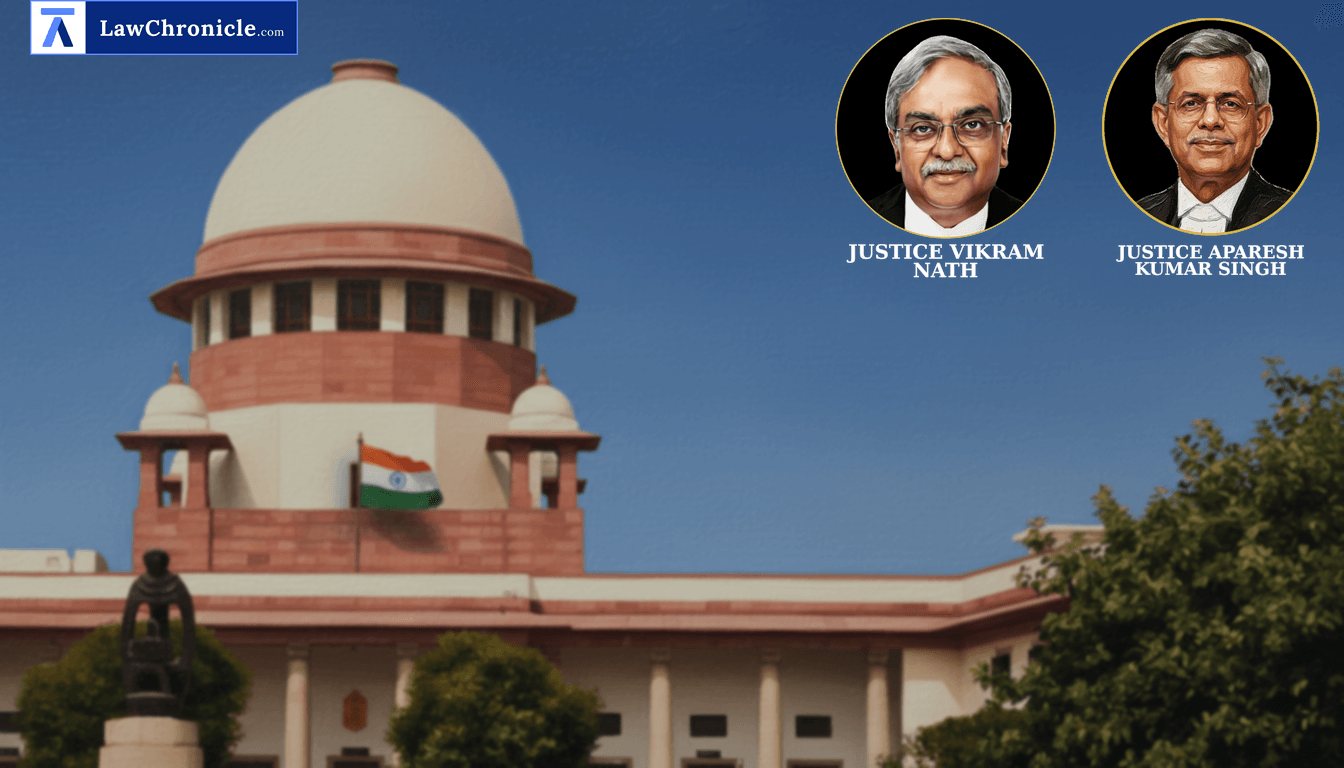
A Division Bench comprising Justice Vikram Nath and Justice Aparesh Kumar Singh set aside the orders of the Delhi High Court and the National Consumer Disputes Redressal Commission (NCDRC), which had refused to condone a 95-day delay by the Delhi Development Authority (DDA) after factoring in the pandemic-era limitation extensions.
Key Takeaways
Pragmatic Approach to Condonation
Courts must adopt a liberal, justice-oriented approach to evaluating "sufficient cause" rather than dismissing matters on hyper-technical procedural grounds.
Cumulative Assessment of Delays
Internal administrative approvals, change of panel counsel, and procurement of certified copies must be assessed cumulatively to judge diligence.
Merits Over Threshold Terminations
Where conflicting findings exist between lower forums, courts should lean towards deciding disputes on merits rather than terminating proceedings at the threshold.
Evaluating "Sufficient Cause" for Delay
The Supreme Court analyzed the statutory limits and precedents governing condonation of delay. Referring to Collector, Land Acquisition, Anantnag and Another v. Mst. Katiji and Others, the Bench reaffirmed that the expression "sufficient cause" must receive a liberal interpretation to advance substantial justice. It further relied on N. Balakrishnan v. M. Krishnamurthy ( "(1998) 7 SCC 123": 1998 CaseBase(SC) 331) to emphasize that length of delay is not decisive, and the acceptability of the explanation furnished remains the primary consideration. Referring to the pandemic-related orders in In Re: Cognizance for Extension of Limitation, the Court noted that the period from March 15, 2020, to February 28, 2022, stood rightfully excluded. Addressing the remaining 95-day delay, the Court observed that administrative approvals and procedural transitions, when viewed cumulatively, revealed a genuine effort to pursue legal remedies without deliberate intent to secure undue advantage.
The Apex Court observed that “In our considered view, the National Commission adopted an unduly restrictive approach in assessing the explanation furnished by DDA. The High Court, while affirming that decision, also failed to give sufficient weight to the cumulative circumstances in which the delay had occurred. Having regard to the principles laid down by this Court and the particular facts of the present case, we are satisfied that sufficient cause has been made out for condonation of delay.”
Ratio
The expression "sufficient cause" for condonation of delay under procedural laws must receive a liberal and pragmatic interpretation to advance substantial justice. The length of delay is not the sole decisive criterion; rather, the acceptability of the explanation assessed cumulatively dictates whether legal remedies should be adjudicated on their merits.
Background
The dispute originated from an application filed by Smt. Bachhi Devi under DDA's Expandable Housing Scheme, 1996, leading to the allotment of a residential flat in Narela, Delhi, in March 1997. DDA subsequently cancelled the allotment on grounds of non-payment following a demand letter sent to her correspondence address. The allottee denied receiving the demand letter. Her legal heirs challenged the cancellation before the District Consumer Disputes Redressal Forum, which dismissed the complaint in 2015. However, the State Consumer Disputes Redressal Commission reversed this in April 2021, directing DDA to allot an alternative flat at original rates after finding lack of due service.
DDA challenged this decision before the NCDRC in December 2022 with a 512-day delay. While the period covering the COVID-19 pandemic was excluded under Supreme Court directions, NCDRC refused to condone the remaining 95 days. DDA then approached the Delhi High Court under Article 227 of the Constitution of India, which affirmed the NCDRC's order citing lack of due diligence.
Allowing the appeal, the Supreme Court restored the revision petition before the NCDRC for fresh consideration on merits without expressing any view on the substantive merits of the property dispute.
Case Details:
Case No.: Civil Appeal No. of 2026 (@ SLP (Civil) No. 9105 of 2025)
Neutral Citation: 2026 INSC 1254
Case Title: Delhi Development Authority v. Sudarshan Manjhi & Ors.
Source: 2026 CaseBase(SC) 10316
Subscribe to Our Newsletter for receiving Weekly Updates on your E-Mail
Similar Articles
 Breaking News